
How Facebook Ad Targeting Works in 2026
How Facebook ad targeting actually works in 2026: Advantage+ audience, controls versus suggestions, the January 2026 interest consolidation, the conversion signal you send, and why creative now does the qualifying.
Updated November 2026 · Likit Sae Lee, CTO

In 2026, Facebook ad targeting runs on Advantage+ audience by default: you give Meta inputs and its AI finds the converters across Facebook, Instagram, Messenger and the Audience Network. The mental model is controls versus suggestions. Controls are hard guardrails Meta will not cross (age minimum, location, language, Special Ad Category rules, and custom-audience exclusions), while suggestions (interests, age, gender, custom and lookalike audiences) are soft hints it starts from but expands past. Meta states plainly that audience suggestions will not be shown outside your audience controls. The granular interest long tail is also shrinking: Meta stopped letting deprecated interests be selected in new ad sets on December 15, 2025, and ad sets still containing them stopped delivering on January 15, 2026, so the creative, not the interest filter, now decides who self-selects to stop and buy.
You picked the perfect interests, set the age range, narrowed the geography, and then Meta spent your budget on people you never selected. That is not a bug in 2026, it is the design. The audience box you used to control like a thermostat has become a set of suggestions, and the levers that still bind are fewer than most advertisers realize. Once you know which inputs are guardrails and which are hints, which conversion signal you are really asking Meta to chase, and which mistakes quietly choke delivery, targeting stops feeling like a fight with the machine and starts working with it.
Targeting in 2026 is a steering wheel, not a thermostat
For a decade, Facebook targeting felt like setting a thermostat: pick the interests, dial the age range, draw the geography, and delivery stayed inside the box you built. That box is mostly gone. In 2026 the default is Advantage+ audience, where you hand Meta a set of inputs and its AI decides who actually sees the ad across Facebook, Instagram, Messenger and the Audience Network. You are still steering, but the wheel turns a system that wants to expand past your inputs whenever it predicts a better result.
The scale behind that confidence is real. DataReportal's January 2025 figures put Facebook's addressable ad audience at 2.28 billion users, which is 27.9% of every person on Earth and 39.4% of all the world's adults, and that pool grew by 93.3 million people (up 4.3%) in a single year. When the candidate set is that large, narrowing to a handful of interests is no longer the smart constraint it once was: it throws away the very reach that lets an AI find a buyer you would never have thought to select.
This guide maps what targeting actually looks like now: the controls-versus-suggestions model, what happened to detailed targeting (including the January 2026 consolidation that made ad sets go dark), where custom and lookalike audiences still earn their place, why the conversion signal you send is itself a targeting input, the mistakes that quietly kill delivery, and why, as the audience layer automates, the creative quietly took over the job of qualifying who converts.
Controls versus suggestions: the only model that matters
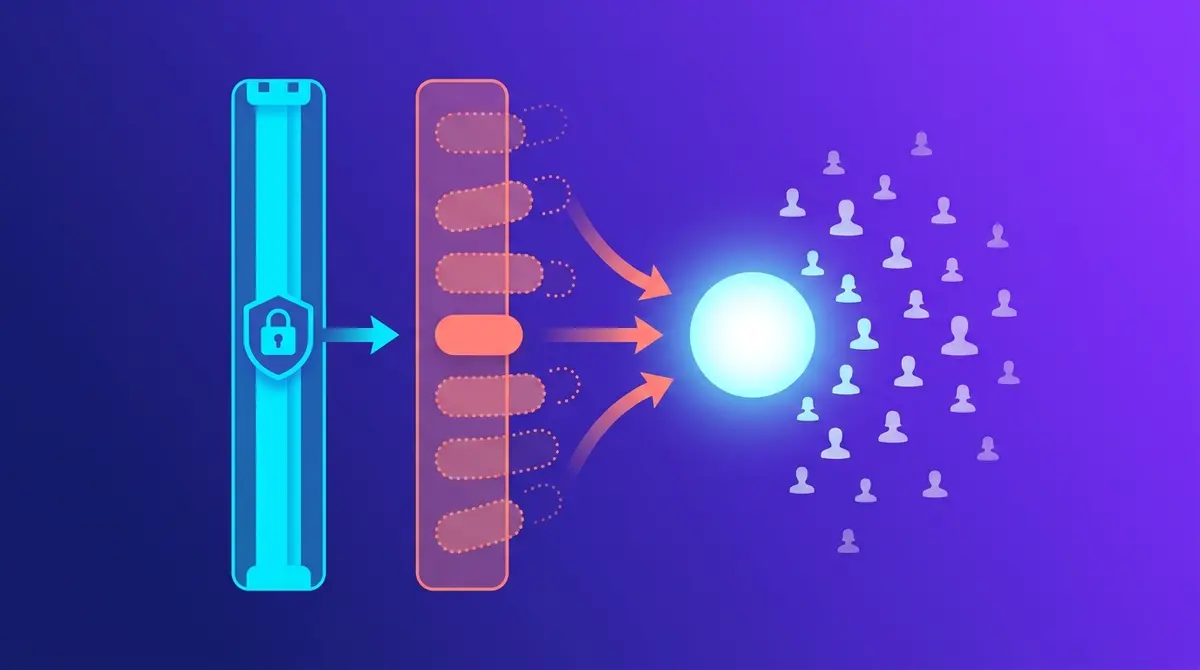
Everything in the 2026 audience flow sorts into two buckets, and getting them straight is the whole game. Controls are hard guardrails Meta will not cross. Suggestions are soft hints Meta starts from and then expands past. Meta puts it bluntly: audience suggestions will not be shown outside your audience controls. So your exclusions and your Special Ad Category rules genuinely bind delivery, while your interest picks merely point the system in a direction.
| Layer | What it includes | How Meta treats it |
|---|---|---|
| Audience controls | Age minimum, location, language, Special Ad Category restrictions, custom-audience exclusions | Hard guardrails. Meta will not deliver outside them. |
| Audience suggestions | Detailed targeting and interests, age, gender, custom audiences, lookalike audiences | Soft hints. Meta begins here, then expands when it predicts better results. |
The practical consequence trips people up daily. Set "interested in skincare" and watch the ad reach people with no skincare interest in their profile, and that is working as intended: skincare was a suggestion. Set a custom-audience exclusion of existing customers, and they will genuinely be left out, because that is a control. Confusing the two leads to the most common complaint in any ad account, which is the subject of the next section.
Why Meta keeps expanding your audience beyond who you picked
Open a campaign, select a tight interest stack, and watch the delivery report fill with people you never chose. The instinct is that something broke. Nothing did. Inside Advantage+ audience, your interests are suggestions, so the system treats them as a seed and then goes looking for converters wherever it can find them, including well outside your list.
The rationale is performance, and Meta makes the case with its own numbers. When it removed detailed-targeting exclusions, Meta reported a 22.6% lower median cost per conversion in its tests, the figure Social Media Today cited as the justification for loosening targeting. Meta also publishes median cost-per-result improvements for Advantage+ audience of 14.8% at the top of the funnel, 9.7% in the middle and 7.2% at the bottom, measured at 99.9% confidence. On the company's own earnings calls the story is the same direction of travel: Meta told investors a refreshed AI recommendation model drove roughly 5% more ad conversions on Instagram and 3% more on Facebook in a single quarter, per Social Media Today's reporting in 2025. Those are all Meta's own vendor-supplied figures, not independent benchmarks, so treat them as directional. The pattern they point at, though, is consistent across neutral coverage: hand the system more room and healthy signal, and it tends to find cheaper conversions than a human-drawn box does.
There is a real-world reason this holds. WordStream and LocaliQ's 2025 benchmarks (US data, useful as direction) put the average Facebook cost per lead at $27.66, up from $22.87 the year before, while Search Engine Land's comparison shows that same $27.66 still sits roughly 2.5 times cheaper than Google's $70.11 cost per lead. Facebook's edge has always been finding intent the searcher never typed, and broad delivery is how the 2026 system leans into that strength.
What happened to detailed targeting (and what changed in January 2026)
Detailed targeting did not disappear. You can still add interests, behaviors and demographics, and on a low-signal or niche campaign they remain a useful steer. Three things changed, though, and each one reshapes how you use them.
First, exclusions went away. Meta removed detailed-targeting exclusions during 2024, and the hard deadline mattered: existing campaigns that relied on interest exclusions stopped delivering by January 31, 2025, the cessation date Social Media Today reported from Meta's notice. If you previously excluded "interested in competitor X" or any other interest, that lever is gone.
Second, Meta has been steadily consolidating the interest list itself, not just the exclusions. Social Media Today reported the rounds: an early-2024 pass, another in August 2024, a June 2025 pass, and a fresh round that Meta began surfacing to advertisers through Ads Manager around August 2025. Each round merges granular tags (narrow music, vehicle, food and hobby interests) into broader groupings, trimming the long tail advertisers used to stack.
Third, and this is the one most "how targeting works" articles dated 2026 still miss: that August 2025 round came with teeth. Per Social Media Today and Meta's own advertiser notices, you could no longer select the deprecated interests in new ad sets as of December 15, 2025, and on January 15, 2026 any ad set still containing a deprecated interest stopped delivering entirely. Accounts that ignored the orange warning banner in Ads Manager watched live ad sets go dark on that date. The fix was manual: re-select a supported interest, or drop the interest and lean on Advantage+, before the cutoff. If a campaign of yours quietly stalled in mid-January, this is the first thing to check.
The combined effect is a targeting panel that is simpler, looser, and far less of a precision instrument than it was three years ago. Detailed targeting is now a hint you offer, not a fence you build, and even the hint is a moving target Meta keeps pruning. The honest read: if your account is new, your conversion data is thin, or your category is genuinely niche or high-consideration, a tighter interest seed still earns its place because it gives Meta a credible starting point. Once you have steady conversion volume and strong creative, that seed matters less and often costs you reach. For the full case on when to keep a seed and when to let go, the deeper comparison of broad versus detailed targeting works through the trade-off campaign by campaign.
Advantage+ audience versus original audiences: the toggle and what it does
At the ad-set level you usually still get a fork. Advantage+ audience is the default mode, where everything you enter is a suggestion and the AI expands past it. Switching to the more constrained "original audiences" path tightens that behavior, but the option is quietly disappearing on the objectives Meta most wants automated. On Advantage+ catalog ads running the sales objective, Meta removed the manual "Audience Types" selection from the ad set entirely, as Search Engine Land reported, so Advantage+ audience is effectively mandatory there and you steer through catalog custom audiences and exclusions instead of a manual mode.
Where the toggle still exists, what does "original audiences" actually buy you? Less than it used to. Even in the constrained mode, the controls layer (age minimum, location, language, Special Ad Category rules, custom-audience exclusions) is the only part Meta treats as a hard wall. Meta's own wording is that choosing the more limited path can "further limit the reach of your ads," which is the polite way of saying you are trading the AI's expansion room for tighter human control. On a healthy account with strong signal, that trade usually costs more than it saves. On a thin or sensitive account, the tighter mode can be the safer starting point. The point is to choose deliberately, not to assume the default is always right or always wrong.
Custom and lookalike audiences as seeds, not cages
With interests demoted to suggestions, the durable audience signal in 2026 is your own first-party data, expressed as a custom audience. Custom Audiences remain fully available across every type that mattered before: website and pixel visitors, customer lists, app activity, offline events, and engagement audiences built from your Page, Instagram, video views or lead forms.
The clarifying 2026 idea is that the same list behaves completely differently depending on which slot you drop it into. Enter a customer list or a lookalike as a suggestion, and it is a seed: the AI starts from those people and expands past them to find others who resemble your buyers. Enter the identical list as an exclusion, and it is a control: Meta will not deliver to it, full stop. One list, two opposite behaviors, decided entirely by the slot. Lookalikes still exist, but the best-practice shift follows directly from this: rather than freezing a 1% lookalike and handing it over as a fixed audience, you feed your high-value customer list in as a suggestion and let Advantage+ expand from it dynamically, which tends to outperform a static lookalike percentage because it is not locked to a snapshot of who looked like your buyers on the day you built it.
This is the orchestration layer; the mechanics live in the deep-dives. For building and refreshing the lists themselves, see how custom audiences work end to end, and for the seed-and-expand pattern in detail, the guide to lookalike audiences covers source quality, percentages, and when a lookalike still beats a raw broad audience.
This is also where excluding customers gets practical. A supplement brand running a clear price-lane offer, an introductory price held for new buyers only, has an obvious reason to keep that price away from people who already bought: a custom-audience exclusion of existing purchasers does exactly that, replacing the interest exclusion that no longer exists. For a higher-ticket, higher-consideration purchase, the same logic flips toward retargeting. A furniture brand advertising a bedroom set on an instalment plan sells something few people buy on a first impression, so a custom audience of recent site visitors (a retargeting pool) still earns its place alongside broad Advantage+ prospecting, because the consideration window is long enough that a second touch genuinely converts.
The signal layer: why Pixel plus Conversions API decides everything
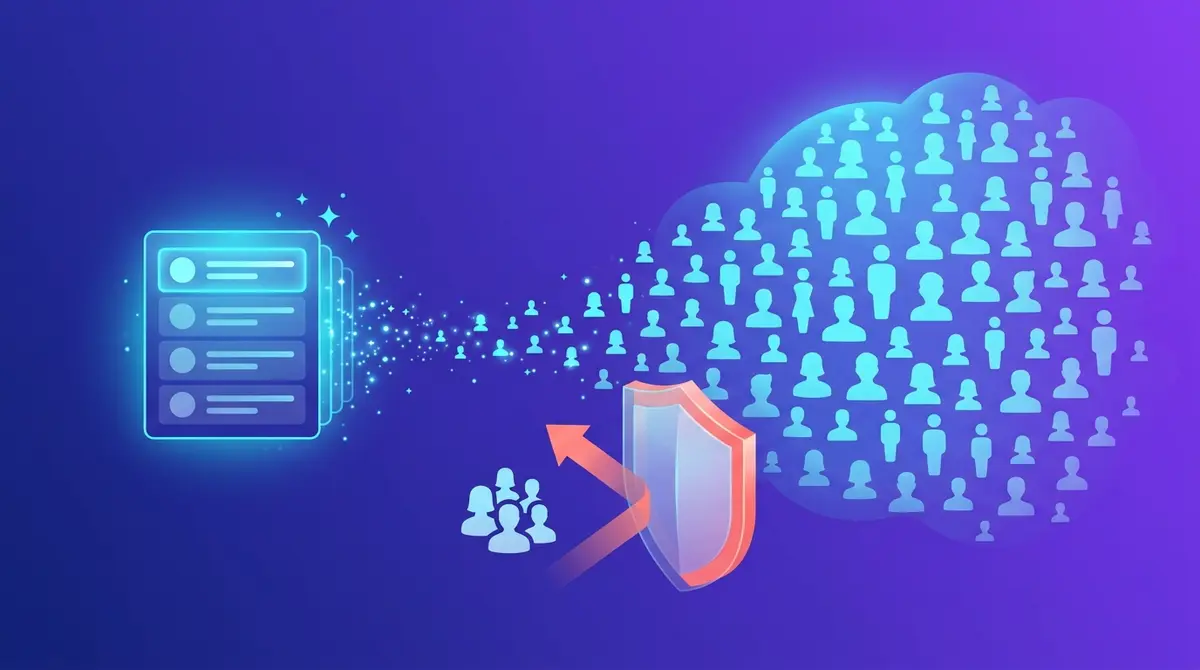
None of the automation works without signal, and signal is where a lot of accounts quietly lose. Targeting and optimization in 2026 run on the events your Meta Pixel and Conversions API send back. The Pixel captures browser-side actions; the Conversions API (CAPI) sends them server-side. Meta recommends running both as a hybrid, because browser and iOS restrictions erode pixel-only data, and a thin signal feed starves Advantage+ of the very information it needs to find converters.
| Setup | What it sends | Why it matters in 2026 |
|---|---|---|
| Pixel only | Browser-side events | Eroded by iOS and browser privacy limits; underfeeds the AI. |
| Pixel + Conversions API | Browser and server-side events | Meta's recommended hybrid; the fullest signal for targeting and optimization. |
One constraint loosened along the way: Aggregated Event Measurement dropped its old eight-event limit back in May 2023, giving advertisers more room to track the conversions that actually matter to a given business. If your signal feed is shaky, the practical setup steps are in the Meta Pixel walkthrough and the Conversions API setup guide, and the cleanliness of the data you send back is measured by event match quality.
The optimization event is a targeting decision, not just plumbing
There is a subtler point hiding in the signal layer, and it is the part most guides skip. The optimization event you pick (Purchase, Add to Cart, Lead, Landing Page View) is itself a targeting input, because it tells the AI which humans to go find. Optimize for Purchase and Meta hunts for people who tend to buy; optimize for Landing Page View and it hunts for people who tend to click, who are a measurably different and usually cheaper crowd. So the event is not neutral plumbing, it shapes the audience the system builds for you.
That creates two opposite traps. Optimize for a thin event (a handful of weekly Purchases) and you starve the learning phase, because the system never collects enough signal to stabilize. Optimize for a high-funnel event when you actually want sales, and you pollute the audience: Meta dutifully finds cheap clickers, your cost per click looks great, and your revenue does not move. The discipline is to optimize for the deepest event you can still feed at volume. If real Purchases are too rare to hit a healthy weekly count, step up one rung (Add to Cart, Initiate Checkout) to feed the system, then move back down to Purchase as volume grows. The signal you choose to send is, quite literally, a description of the customer you are asking the AI to chase.
Common targeting mistakes in 2026
The intro promised three failure modes (audiences too narrow, overlap, over-exclusion), and they deserve a section because the mechanism behind each one is specific to how the 2026 delivery system works. None of these are taste; each one starves the AI of something it needs.
Audiences too narrow. The deepest reason narrow targeting fails now is data fragmentation. The learning phase needs roughly 50 optimization events within a 7-day window per ad set before delivery stabilizes, a threshold Social Media Examiner and Meta's documentation both put at "50 result actions in ideally 7 days." Split one budget across five narrow ad sets and you get five pools of about 10 conversions each instead of one pool of 50, so none of them exits learning and the AI never stops guessing in any of them. The same logic sets a practical reach floor: practitioners typically want a potential reach in the hundreds of thousands (commonly cited around 500,000 or more) for a conversion campaign, because below that the system runs out of room to find 50 converters a week before fatigue sets in. Treat the reach number as a directional rule of thumb rather than a Meta-published floor, but treat the 50-event threshold as the real gate. The full mechanics of that gate are in the learning-phase guide.
Audience overlap. Run several ad sets that bid for the same people and you are bidding against yourself in the auction. The symptoms are an inflated CPM, ad sets that each stall in learning, and a spend report that does not add up. Meta's Audience Overlap tool in Ads Manager exists precisely to flag this, and a common practitioner trigger is to consolidate when overlap climbs past roughly 25-30%. Consolidating those overlapping ad sets into one usually lowers CPM and pools the conversions back into a single learning-phase-clearing signal. The dedicated overlap guide covers how to read the tool and when to merge.
Over-exclusion. Now that custom-audience exclusions are the one hard lever left, it is tempting to stack them: exclude purchasers, exclude engagers, exclude every lookalike seed, exclude staff and existing leads. Each list is reasonable on its own, but stacked they can shrink the addressable pool below the learning-phase floor and choke delivery the same way a too-narrow audience does. The discipline is to exclude only what genuinely costs you money to re-reach (current customers on a new-buyer offer is the classic case) and to check the resulting potential reach before you launch. The exclusions guide works through which exclusions are worth the reach they cost.
Which targeting setup for which situation
Because the audience layer is now an orchestration problem more than a precision one, the useful question is not "broad or narrow" in the abstract but "which setup for this account, this week." Here is a compact way to route the decision.
| Situation | Targeting setup to start with |
|---|---|
| New account, thin or no pixel signal, sub-$30/day budget | Seed Advantage+ with a tight custom audience, or use original audiences for a credible starting point |
| Niche or specialised B2B, hyper-local catchment | A focused custom audience or original audiences; broad has too little to anchor to |
| Healthy signal (around 50+ weekly conversions) plus 3 or more genuinely different creatives | Broad Advantage+ audience; let the AI expand and let creative qualify |
| Long-consideration or high-ticket purchase | Broad prospecting for reach plus a retargeting pool of recent visitors for the second touch |
The thread through all four rows is the same: give the system enough signal to learn, then get out of its way. A new account fakes the missing signal with a tight seed; a mature account stops faking it because the pixel already knows. None of these are permanent settings. As an account accumulates conversions, the right answer drifts from the top rows toward the bottom one, which is the whole arc of the 2026 model in miniature. If you are wiring this into a fresh build from scratch, the end-to-end beginner walkthrough and the full campaign setup flow show where each of these choices sits in the rest of the build.
Advantage+ Sales and the campaign-level shift
The automation did not stop at the audience layer. Advantage+ Shopping Campaigns, long abbreviated ASC, were renamed Advantage+ Sales in February 2025, and the format expanded well past pure ecommerce: it now covers sales, leads and app installs, supports multiple ad sets with up to 50 ads each, and accepts audience suggestions plus custom exclusions. The old ASC structure is on a firm deprecation path: Meta's Marketing API v24.0 (released October 8, 2025, per PPC Land) blocked creating new legacy ASC and AAC campaigns through the API, and v25.0, scheduled for the first quarter of 2026, removes the legacy ASC API and the existing_customer_budget_percentage field entirely across all API versions. The rename is not cosmetic; it is the path forward.
What this means for targeting is continuity, not a new rulebook. The controls-versus-suggestions logic carries straight into Advantage+ Sales: your custom-audience exclusions and Special Ad Category rules still bind, your interest and audience picks still act as suggestions, and the system still expands to find converters. The campaign type changed names and broadened its objectives; the targeting philosophy underneath stayed the same. If you have learned the two-bucket model, you already know how to think about delivery here.
Creative is the new targeting
Here is the quiet conclusion the whole 2026 stack points at. As the audience layer automates, the job of qualifying who converts moves to the creative. When delivery is broad and Meta expands past your inputs, the hook, the format and the offer become the filter: they decide who stops scrolling, who self-selects as a buyer, and who keeps moving. The interest box used to do that qualifying. Now the ad does. "Creative is the new targeting" is an industry framing rather than a Meta quote, but it describes what every advertiser running broad delivery feels: change the creative and the audience that converts changes with it.
Real ad examples show what that looks like in practice. A skincare brand running before-and-after creative, dark spots visibly faded without laser, lets that visible result do the audience selection that interest targeting used to do: the people whose problem the image names are the ones who stop. Another skincare brand leans on a social-proof angle (a long track record stocked in hundreds of pharmacies), which reassures a scam-wary buyer the way a "skeptical shopper" behavior filter once might have, except that filter no longer exists, so the creative carries it. Three different angles, three different self-selecting audiences, all qualified by the ad rather than the ad set.
That shifts where your effort pays off. The benchmarks reward it: WordStream and LocaliQ put the average Facebook traffic-campaign click-through rate at 1.71% in 2025 (up from 1.57%) while the average cost per click eased to $0.70 from $0.77, which is the texture of a system where stronger creative, not tighter targeting, increasingly drives efficiency. Because creative now does the qualifying, the discipline that matters is testing it: since creative now does the qualifying, test hooks systematically, treat the hook as the new targeting lever, and study rivals' angles in the free Meta Ad Library to see what is already converting in your category. Keeping that research-to-creative loop in one place is exactly the gap a tool like AdPlay.ai is built to close. The targeting box got simpler. The creative got harder. That is the trade 2026 asks every advertiser to make.
By the numbers
Frequently asked questions
How does Facebook ad targeting work in 2026?
By default, you build an Advantage+ audience: you give Meta a set of inputs and its AI finds the people most likely to convert across Facebook, Instagram, Messenger and the Audience Network. Some of those inputs are controls Meta will not cross (age minimum, location, language, Special Ad Category rules, and custom-audience exclusions). The rest, including your interests, are suggestions Meta starts from but expands past when it predicts better results. You still steer; you no longer cage delivery the way the old hard-targeting flow let you.
What changed with Facebook targeting in January 2026?
Meta finished a round of detailed-targeting consolidation it had been surfacing to advertisers since around August 2025. Per Social Media Today and Meta's own notices, you could no longer select the deprecated interests in new ad sets as of December 15, 2025, and on January 15, 2026 any ad set still containing a deprecated interest stopped delivering entirely. Accounts that ignored the orange warning banner in Ads Manager watched live ad sets go dark on that date. The fix was manual: re-select a supported interest or drop it and lean on Advantage+ before the cutoff. If a campaign stalled in mid-January, this is the first thing to check.
Why is my Facebook ad reaching people I didn't target?
Because inside Advantage+ audience your interests and audiences are suggestions, not rules. Meta treats them as a seed, then expands to find converters wherever it can, including well outside your list. That is working as intended, not a bug. The only inputs Meta will not deliver outside are the controls: age minimum, location, language, Special Ad Category rules, and custom-audience exclusions. If you genuinely need to keep someone out, that has to live in the controls layer as an exclusion, not as an interest you skipped.
Can I still turn off Advantage+ audience and use the original manual audience?
On many objectives you still get an ad-set-level toggle to switch from Advantage+ audience to the more constrained original-audiences path, which Meta warns can further limit your reach. But the option is disappearing where Meta most wants automation: on Advantage+ catalog ads using the sales objective, Meta removed the manual Audience Types selection entirely, so Advantage+ audience is effectively mandatory there and you steer through catalog custom audiences and exclusions instead.
How many conversions do I need before broad Advantage+ targeting works?
Use the learning-phase threshold as your go/no-go gate. An ad set needs roughly 50 optimization events within a 7-day window to exit the learning phase and stabilize, a figure Social Media Examiner and Meta's documentation both put at about 50 result actions in ideally 7 days. If your account reliably produces 50 or more weekly conversions of your chosen event and you have several genuinely different creatives, broad Advantage+ usually wins. If you are well below that, seed Advantage+ with a strong custom audience or start tighter so the system has a credible place to learn from.
Why are my narrow audiences performing worse than broad ones?
Usually data fragmentation. Split one budget across several narrow, overlapping ad sets and you get several small pools of conversions instead of one large pool, so none of them reaches the roughly 50 events a week the learning phase needs, and the AI keeps guessing in all of them. Overlapping ad sets also bid against each other in the auction, which inflates CPM and starves each one of signal. Consolidating into one broader ad set pools the conversions back into a single learning-clearing signal and usually lowers cost.
Which conversion event should I optimize for, and does it affect who sees my ad?
It is a targeting decision, not just plumbing. The optimization event you pick tells the AI which humans to find: optimize for Purchase and Meta hunts for buyers; optimize for Landing Page View and it hunts for cheaper clickers who are a different crowd. Optimize for a thin event and you starve learning; optimize for a high-funnel event when you want sales and you pollute the audience. The rule is to optimize for the deepest event you can still feed at volume, stepping up a rung (Add to Cart, Initiate Checkout) only if real Purchases are too rare to hit a healthy weekly count.
Do I still need the Meta Pixel, or is the Conversions API enough?
You want both. The Pixel captures browser-side events and the Conversions API sends server-side events, and Meta recommends a hybrid setup because browser and iOS restrictions erode pixel-only signal. That combined signal is what actually powers targeting and optimization in 2026, so a thin or pixel-only setup starves Advantage+ of the data it needs to find converters. Aggregated Event Measurement dropped its old eight-event limit back in May 2023, which loosened one of the tighter post-iOS constraints.
Sources
- 1.DataReportal, Essential Facebook Stats (Kepios) (2025)
- 2.Meta Reports Fourth Quarter and Full Year 2024 Results (official release) (2025)
- 3.Meta for Business, Advantage+ Audience (2025)
- 4.Meta Business Help Centre, Updates to Detailed Targeting (2025)
- 5.Social Media Today, Meta Removes Detailed Targeting Exclusions From Ad Campaigns (2024)
- 6.Social Media Today, Meta Is Consolidating More of Its Detailed Ad Targeting Options (2025)
- 7.Brandwatch Help Center, Meta Changes to Detailed Targeting Interests (2025)
- 8.Search Engine Land, Meta Streamlines Advantage+ Catalog Ad Targeting (2025)
- 9.Social Media Examiner, How to Exit the Facebook Ads Learning Phase Quicker (2025)
- 10.PPC Land, Meta Deprecates Legacy Campaign APIs for Advantage+ Structure (2025)
- 11.WordStream / LocaliQ, Facebook Ads Benchmarks 2025 (2025)
- 12.Search Engine Land, Facebook Ad Costs Jump 21% in 2025, But Still Beat Google (2025)
Keep exploring
Turn ad research into winning ads
Research the ads that work, generate the creative on-brand, and launch to Meta, all in one tool.
7-day free trial · No credit card required