
Modular Ad Creative: Build Once, Test Many
Modular Facebook ad creative explained: build interchangeable blocks (hooks, bodies, proof, CTAs, backgrounds) once, then recombine them into many ads.
Updated October 2026 · Xanny Lee, CEO
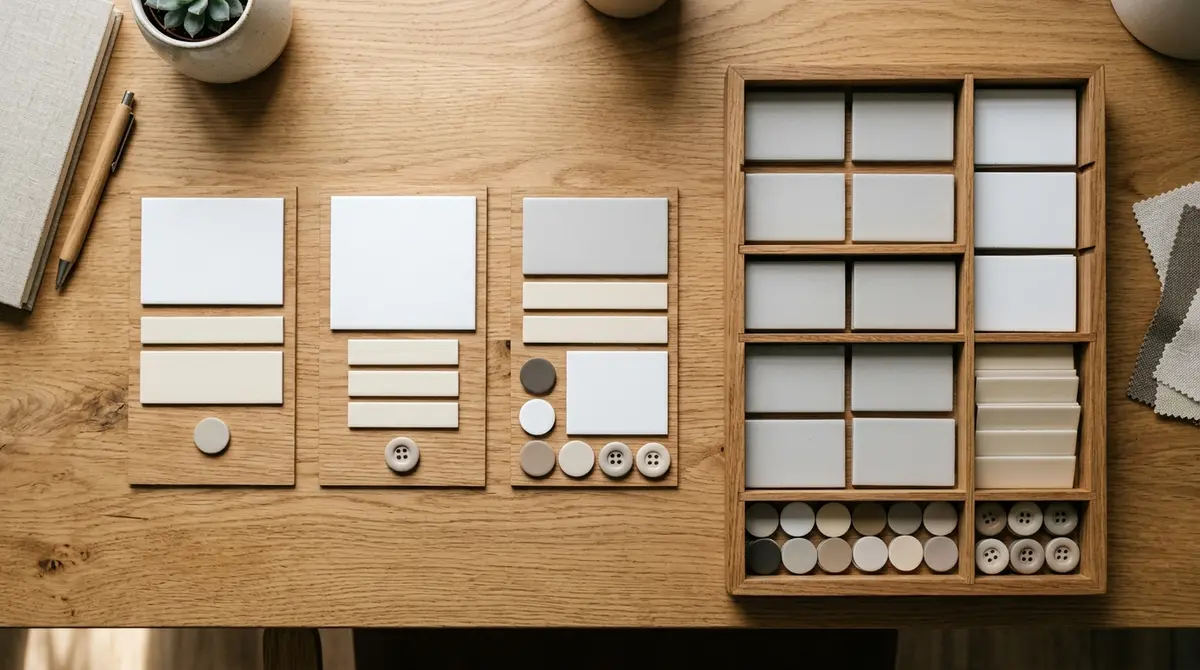
Modular Facebook ad creative is a production system, not a Meta setting: you build a library of interchangeable blocks once (hooks, body copy, proof elements, calls to action, and backgrounds), then recombine those parts into many finished ads instead of designing each ad from a blank canvas. It matters because creative is the biggest lever you control: Nielsen's analysis of 500 campaigns found creative drives about 47% of a campaign's sales contribution, more than reach and targeting, so the real constraint is producing enough distinct creative fast. A block library removes that bottleneck, a handful of hooks and bodies assemble into dozens of clean test variations, and when one ad tires you swap the fatigued block rather than rebuild the ad. This is a human assembly workflow, distinct from Meta's Dynamic Creative, which auto-combines assets at delivery and never tells you which full combination won.
You are shipping ads one at a time, and each one starts from a blank canvas: a new concept, a new shoot, a new layout, another week gone. Meanwhile the account needs a steady supply of fresh, distinct creative, because that is the lever the delivery system reads and the first thing that fatigues. Modular creative fixes the throughput problem by changing what you produce. Instead of finished ads, you build a set of reusable parts once, then assemble them into many ads in an afternoon. This guide covers the build-once, test-many system, how it differs from one-off creative and from Meta's automatic assembly, and how a block library feeds a clean testing matrix.
What modular creative actually is
Most teams produce ads the way a tailor makes a suit: one at a time, cut to measure, from scratch. A concept meeting, a shoot or a design session, a round of copy, a layout, an export. The result is a single finished ad, and the next ad starts the whole process over. That is one-off creative, and it has a hard ceiling. Your output is capped by how many complete ads your team can build in a week, which is almost never enough to keep an account fed.
Modular creative flips the unit of production. Instead of building finished ads, you build interchangeable parts once, then assemble them into ads by recombination. Think of it as a component system rather than a bespoke one. You make a set of hooks, a set of body-copy angles, a few proof elements, a couple of calls to action, and a handful of background treatments. None of those is an ad by itself. Together they are a kit that snaps into hundreds of possible ads, and you compose the ones you actually want to run.
The reason this is worth the mental shift is simple economics of attention. Creative is the part of the ad you have the most control over, and it does the most work. Nielsen's analysis of 500 campaigns found that creative accounted for about 47% of a campaign's contribution to sales, a larger share than reach, targeting, and recency, and roughly as much as all the other factors combined. If creative is the biggest lever, the binding constraint is how much good, distinct creative you can produce, and how fast. A one-off process throttles that. A modular process opens it.
There is a second, quieter benefit that shows up later: because you built each ad from known parts, you know exactly what each ad is. That is the foundation of clean testing and clean refreshes, and it is the single thing that separates a modular system from Meta handing your assets to an algorithm. We will come back to that distinction, because it is the one people get wrong.
The five blocks: a parts library you build once
A good block system starts by decomposing an ad into its functional parts. Almost every Facebook or Instagram ad, whatever the format, is doing five jobs at once, and each job is a block you can build and swap independently.
| Block | The job it does | How to build it modularly |
|---|---|---|
| Hook | Stops the scroll in the first line or first frame | Write several openings that each attack a different motivation (fear, curiosity, a hard number, a question) |
| Body | Carries the argument in the primary text | Draft a few angles (problem-solution, testimonial voice, feature-led, offer-led); keep the visible part tight |
| Proof | Makes the claim believable | Assemble reusable evidence: a review card, a star rating, a before-and-after, a UGC clip, a founder note |
| CTA | Tells the viewer what to do and lowers friction | Pair a button (Shop Now, Learn More) with a short lead-in line; make two or three versions |
| Background | Sets the scene and the format | Produce a few visual treatments: a clean product shot, a lifestyle setting, a bold color field, a vertical video base |
The body block is worth a specific note, because Meta's own layout constrains it. Meta recommends keeping primary text to about 125 characters, since that is roughly what shows on smaller screens before the See More link truncates the rest, and only a small fraction of viewers ever tap to expand. So your body blocks are effectively one or two sentences that have to land on their own. That constraint is a gift for a modular system: short, self-contained blocks are far easier to make interchangeable than sprawling paragraphs that assume a specific opening.
The discipline that makes the library work is that each block has to be genuinely swappable. A hook block should make sense on top of any body. A proof element should slot onto any background without a redesign. If a part only works in one specific ad, it is not a block, it is a bespoke piece, and it belongs in the one-off world. The upfront work of designing for interchangeability is what pays off every time you assemble later.

Build the library with variety, not volume. Five hooks that each come at the product from a truly different angle are worth more than fifteen rewordings of the same promise. The same holds for every block type. The value of the library is measured by how far apart your parts sit, because that is what determines whether recombining them produces distinct ads or cosmetic clones. More on that trap shortly.
The combinatorial math: why a small kit goes a long way
The payoff of a block library is multiplicative, and it is worth seeing the arithmetic once, because it reframes how you plan production.
Suppose you build a modest kit: 5 hooks, 3 body angles, 3 proof elements, 2 calls to action, and 3 background treatments. That is 5 plus 3 plus 3 plus 2 plus 3, which is 16 blocks produced. The number of distinct ads you can assemble from them is 5 x 3 x 3 x 2 x 3, which is 270. Sixteen units of work unlock 270 possible finished ads.
You would never ship 270, and you should not want to. Most of those combinations are barely different from their neighbors, and flooding an account with near-duplicates trains the delivery system on noise. The point of the 270 is not that you run them all. The point is that your production effort was additive (16 parts) while your assembly space is multiplicative (270 ads), so you will never again be stuck for a fresh, distinct combination to run.
Set the two workflows side by side to feel the difference. Say you want to launch 12 test ads this week.
- One-off approach: 12 finished ads is 12 separate builds. Twelve concepts, twelve layouts, twelve exports. Effort scales one-to-one with the number of ads, so 12 ads cost roughly twelve times one ad.
- Modular approach: build the 16-block kit once, then assemble 12 ads by recombination in an afternoon. Effort scales with the number of blocks (16, produced once), not the number of ads. The 13th, 20th, or 40th ad is nearly free.
That is the whole thesis in one line. One-off production is additive per ad; modular production front-loads a fixed cost into the block library and then makes each additional ad almost free. The moment you need more than a handful of ads, or you need to keep making them week after week, the modular curve wins decisively. And you keep needing more, because the auction eats creative faster every year, which the last section returns to.
There is a governor on the math, and it is quality. Sixteen mediocre blocks assemble into 270 mediocre ads. The combinatorial leverage amplifies whatever you put in, good or bad, so the standard for a block has to be higher than the standard for a single ad. A weak one-off ad wastes one slot. A weak block infects every combination it appears in.
Modular production is not Dynamic Creative
This is the distinction that trips people up, so it deserves a clean line. Modular creative and Meta's Dynamic Creative both involve blocks and combinations, but they are opposite things happening at opposite ends of the process, and confusing them costs you the one advantage that makes modular worth doing.
Modular creative is a human production system. You assemble each finished ad yourself, from your own block library, before it ever reaches Ads Manager. You decide that this hook goes with that body, that proof, that CTA, and that background, and you upload a complete, known ad. Dynamic Creative is a Meta Ads Manager setting: you hand the platform a pool of assets (up to 10 images or videos, and up to 5 headlines, primary-text options, descriptions, and CTA buttons each), and Meta automatically assembles combinations of them and tests which perform at delivery. One system has a person doing the assembly upfront. The other has the algorithm doing it after the ad goes live.
The difference that matters is attribution. Because you built the modular ad, you know precisely which complete combination it is, so when it wins or loses, you learn something you can act on. Dynamic Creative cannot give you that. Its By Dynamic Creative Element breakdown reports how each individual piece performed on average across all the combinations it appeared in, but it never tells you which full combination won, nor how two elements performed together. A strong hook that happened to run mostly with a weak background looks mediocre in the averages, and the winning ad hides inside numbers that only describe its parts. If you want to learn what actually works, that blind spot is disqualifying.
| One-off creative | Modular creative | Dynamic Creative (DCO) | |
|---|---|---|---|
| Who assembles the ad | You, one at a time | You, from reusable blocks | Meta, automatically at delivery |
| Unit of production | A finished ad | A reusable block | A pool of assets |
| Effort to make N ads | Scales with N (additive per ad) | Scales with block count, not ad count | You supply the pool once |
| Attribution | Clean; you know the full ad | Clean; you assembled each full ad | Element averages only, never the winning combination |
| Refreshing a tired ad | Rebuild the ad | Swap the fatigued block | Add or replace assets in the pool |
| Best for | A single hero concept | Fast, clean, repeatable testing and refresh | Quick discovery across several assets |
Read the table as a division of labor, not a contest. The two are complementary. Dynamic Creative is a fast way to discover which assets seem promising when you are not sure yet. A modular library is how you build a supply of distinct, on-brand assets in the first place, and how you run the clean, attributable tests that a Dynamic Creative element breakdown cannot. You can absolutely feed your best blocks into a Dynamic Creative ad for discovery, then take the leading parts into a controlled test you assemble by hand. The modular system is the production engine underneath either path.
How the block system feeds a testing matrix
Here is where interchangeability earns its keep. Because your blocks are swappable, you can run the one experiment that one-off creative can never run cleanly: change exactly one thing and hold everything else constant.
Lay it out as a matrix. Fix a body, a proof element, a CTA, and a background, then rotate your five hooks across five ads that are identical in every other respect. Whichever hook wins, wins on its own merit, because nothing else varied. Now freeze the winning hook and rotate your three body angles the same way. Then the proof, then the background. Each row of the matrix isolates a single variable, and the reads stack into a compounding picture of what your audience responds to.
| Test round | Held constant | Variable rotated | What you learn |
|---|---|---|---|
| 1 | Body, proof, CTA, background | 5 hooks | Which opening stops the scroll |
| 2 | Winning hook, proof, CTA, background | 3 body angles | Which argument carries |
| 3 | Winning hook and body, CTA, background | 3 proof elements | Which evidence converts |
| 4 | Winning hook, body, proof, CTA | 3 backgrounds | Which visual treatment performs |
Try to run that matrix with one-off ads and it collapses, because every rebuild quietly changes several things at once. When you remake an ad to test a new hook, the layout shifts, the copy gets tweaked, the image is re-shot, and now three variables moved together and the result is unreadable. Interchangeable blocks are the precondition for a clean read, not a nice-to-have. This is the mechanical reason modular production and disciplined creative testing are the same habit seen from two angles.

The matrix also changes what a refresh looks like. When an ad fatigues, one part is usually responsible, most often the hook or the background, while the body and proof are still doing their job. In a one-off world you rebuild the whole ad. In a modular world you swap the single tired block for a fresh one and keep everything that still works. A refresh becomes a five-minute assembly instead of a shoot, which means you can do it the moment the fatigue signature appears (frequency climbing while click-through rate and cost per result slip together) rather than weeks later when you finally have a new ad ready.
One caution keeps the matrix honest: the variations you test have to be genuinely different, or you are measuring noise. Rotating five hooks that all say roughly the same thing in different words teaches you nothing and wastes the budget. Each block in a rotation should represent a real, distinct idea, which loops back to building the library with variety in the first place.
Why the 2026 auction rewards a modular library
None of this would matter much if the platform were indifferent to creative. It is the opposite. Meta's delivery has become a creative-reading machine, and the machinery specifically rewards teams that can supply a steady stream of distinct, high-quality ads, which is exactly what a block library produces.
In December 2024, Meta detailed Andromeda on its engineering blog: a personalized ads retrieval engine, built on NVIDIA Grace Hopper hardware, that scans an enormous pool of candidate ads and surfaces the relevant ones for each person. Meta reported it lifted retrieval recall by 6% and ad quality on selected segments by 8%, with model capacity scaled up to 10,000 times the prior system. In November 2025 it added GEM, a ranking model that scores the retrieved ads, which Meta credited with raising ad conversions by 5% on Instagram and 3% on Facebook Feed in its own testing. The practical consequence for a marketer is that the system reads your creative to decide who sees it, and it can only match different ads to different people if you give it genuinely different ads. A modular library is the most efficient way to keep supplying that diversity.
The other force is cost, which makes production efficiency a direct lever on results. Media stays expensive: Gupta Media's tracker put the blended Meta CPM at about $8.19 across 2025, and the seasonal swing is sharp, with Black Friday 2024 running about $16.85, roughly double the year's baseline. Costs also drift up structurally, with Meta reporting the average price per ad rose about 9% across full-year 2025. You cannot out-bid that. The reliable way to lower your cost per result is a sharper hook and a fresher, more distinct creative, and the reliable way to produce those on demand is a block library rather than a bespoke pipeline that stalls whenever the designer is busy.
Put the two together and the case is straightforward. The auction rewards creative diversity and freshness, and it penalizes staleness through fatigue and rising prices. A one-off pipeline cannot keep up with that demand. A modular pipeline can, because it turns the expensive, slow act of making an ad into the cheap, fast act of assembling one from parts you already own. Before a seasonal peak, when CPMs spike, a shelf of fresh blocks ready to assemble is the difference between launching with new creative and launching with the same tired ad everyone else is running.
Keeping a block library on-brand and organized
A parts system introduces its own risk: fifty recombinations can drift into fifty slightly different looks if the blocks were not standardized first. The fix is to push all the consistency work upstream, into the blocks, so that any combination is on-brand by construction rather than by a cleanup pass at the end.
That means locking the non-negotiables into every background and copy block from the start. Fonts, brand colors, logo placement, the safe zones that keep text out of the cropped edges on Stories and Reels, and the tone of voice all get standardized once and baked into the parts. When those are fixed, it does not matter which hook lands on which background, the result reads as one brand because every ingredient already conformed. The alternative, assembling first and fixing brand inconsistencies after, defeats the speed the system exists to deliver.
Organization is the other half. A library only saves time if you can find the part you want, so name and version your blocks: a clear naming scheme for hooks, bodies, proof, CTAs, and backgrounds, with versions so you know that the second hook you wrote replaced the first. Track which blocks appear in which live ads, so that when a hook fatigues you can see every ad it touches and refresh them together. This is unglamorous filing, and it is the difference between a library that compounds and a folder of orphaned files nobody can navigate after a month.
This upfront investment is also where an integrated production tool earns its place. A platform such as AdPlay.ai can generate on-brand blocks from a brand kit and keep the whole assemble-launch-measure loop in one place, so the parts stay consistent and the recombinations stay fast, but the principle holds with any workflow you can keep disciplined: standardize the blocks, name them, version them, and the combinations take care of themselves. The tool is a convenience. The system is the standardization.
Guard against one failure mode as the library grows: variation drift, where you keep adding blocks that are only trivially different from ones you already have. Ten hooks that split into three real ideas and seven near-duplicates is a library that feels rich and tests poorly. If two blocks would be described as the same idea by a stranger, keep the stronger one and cut the other, so the library stays a set of distinct options rather than a pile of synonyms.
A build-once workflow you can start this month
You do not need to overhaul your process to begin. Modular production is a habit you can layer onto how you already run Facebook ads, one block type at a time.
Start with an audit of your best-performing ads and take them apart. Every ad that worked contains a hook, a body, a proof element, a CTA, and a background, and pulling those apart gives you your first blocks for free, already proven in the feed. Write down each part as a separate, reusable component. That inventory is the seed of your library, and it is built from things you already know convert, not guesses.
Then fill the gaps deliberately. Look at your block inventory and find the thin spots: maybe you have plenty of backgrounds but only one hook, or three proof elements and no distinct body angles. Produce a few blocks to round out each type, aiming for variety over volume, until you have enough parts in every category to assemble a real testing matrix. A starter kit of roughly five hooks, three bodies, a few proof elements, a couple of CTAs, and three backgrounds is enough to run for weeks.
From there, the loop is short and repeatable. Assemble a small slate of distinct ads from the library, run a one-variable test matrix to see which blocks carry, promote the winners, and retire the losers. When an ad fatigues, swap the single tired block rather than rebuilding. Keep a few spare blocks in production at all times so a refresh is always a quick assembly. And feed every result back into the library: a hook that wins becomes a template for the next hook, a background that fatigues fast gets replaced, and the library gets sharper with every cycle.
The mindset shift is the whole game. Stop thinking of an ad as a finished object you build and ship, and start thinking of it as a temporary arrangement of parts you own. When ads are arrangements rather than artifacts, making the next one is nearly free, testing them cleanly is trivial, and refreshing before fatigue is a swap instead of a scramble. That is what build-once, test-many buys you: not more ads for their own sake, but a fresh, distinct, on-brand ad ready the moment the account needs one.
By the numbers
Frequently asked questions
What is modular ad creative?
Modular ad creative is a way of producing ads from reusable parts instead of building each one from scratch. You create a library of interchangeable blocks once (several hooks, a few body-copy angles, proof elements, calls to action, and background or visual treatments), then recombine those blocks into many finished ads. The key idea is that your production effort scales with the number of blocks you make, not the number of ads you ship, so a dozen distinct test variations can come out of a single afternoon of assembly rather than a dozen separate builds.
How is modular creative different from Facebook Dynamic Creative (DCO)?
They operate at opposite ends of the process. Modular creative is a human production system: you assemble each finished ad yourself from your block library, so you know exactly which full combination each ad is and you can test them cleanly. Dynamic Creative is a Meta Ads Manager setting where you hand the platform a pool of assets and it auto-assembles and tests combinations at delivery. The trade-off is attribution: because you build the modular ad, you can read which complete ad won, whereas Dynamic Creative's element breakdown only reports how each piece did on average and never which full combination performed best.
What are the building blocks of a modular ad?
Most ads decompose into five block types. The hook is the first line or first frame that stops the scroll. The body is the primary text that carries the argument (Meta recommends keeping the visible part to about 125 characters before the See More cutoff). Proof is the evidence layer: a testimonial, a star rating, a before-and-after, a founder note. The call to action is the button and its lead-in line. The background is the visual treatment: the setting, the product shot, the color field, the format. Build a few interchangeable versions of each and you have a parts library.
How does modular creative help me test faster?
Because the blocks are interchangeable, you can hold every element constant and swap exactly one to isolate a variable. Fix the body, proof, CTA, and background, then rotate five hooks, and the result tells you which hook wins with nothing else muddying the read. Take the winning hook forward, then rotate bodies, and so on. That is a testing matrix, and it only works when your parts are truly swappable. One-off ads cannot do this cleanly, because each rebuild changes several things at once.
How many ads can I make from one block library?
The combinations multiply fast. A modest library of 5 hooks, 3 bodies, 3 proof elements, 2 CTAs, and 3 backgrounds is 5 x 3 x 3 x 2 x 3, or 270 possible ads, from just 16 produced parts. You would never ship all 270, and you should not: most are near-duplicates. The point is that a small, additive production effort (16 blocks) unlocks a large, multiplicative assembly space, so you can always compose a fresh, distinct slate without producing a single new asset.
Is modular creative just making lots of small variations?
No, and this is the trap to avoid. Recombining blocks can produce genuinely different concepts or it can produce twenty near-identical ads, depending on how distinct your blocks are. The delivery system rewards diversity, not volume: three concepts that pull in different directions beat ten tints of the same idea. Build blocks that represent real, different angles (a testimonial versus a demo versus a price-led hook), so that recombining them yields distinct ads, not cosmetic variants of one.
How do I keep modular ads on-brand when I recombine so many parts?
Standardize the blocks before you scale the combinations. Lock your fonts, colors, logo placement, safe zones, and tone into every background and copy block from the start, so any assembled combination is on-brand by construction rather than by a final cleanup pass. A shared component library, with named and versioned blocks, keeps fifty recombinations looking like one brand. The discipline is upstream: get the parts right once and every ad you assemble inherits it.
When should I refresh a modular ad, and how?
Refresh when the fatigue signature appears: frequency climbs while click-through rate and cost per result slip together. The advantage of a block system is that you rarely rebuild the whole ad. Usually one part is tired, most often the hook or the background, so you swap that single block for a fresh one from your library and keep the parts that still work. Because you always keep a small stock of spare blocks in production, a refresh is a quick assembly, not an emergency shoot.
Sources
- 1.Nielsen, Want a Successful Ad? Get Creative (creative drives sales) (2017)
- 2.Meta Business Help Center, Creative best practices for text in ads (2026)
- 3.Meta Business Help Center, About Dynamic Creative (2026)
- 4.Engineering at Meta, Andromeda Personalized Ads Retrieval Engine (2024)
- 5.Engineering at Meta, GEM Generative Ads Recommendation Model (2025)
- 6.Gupta Media, The True Cost of Social Media Ads (CPM Tracker) (2025)
- 7.Meta, Fourth Quarter and Full Year 2025 Results (2025)
Keep exploring
Turn ad research into winning ads
Research the ads that work, generate the creative on-brand, and launch to Meta, all in one tool.
7-day free trial · No credit card required