
Black Friday Ads for Malaysian Brands (2026)
How Malaysian DTC brands run Black Friday on Meta in the trough between 11.11 and 12.12: RM-led offers, urgency creative, and FB/IG launch.
Updated October 2026 · Xanny Lee, CEO
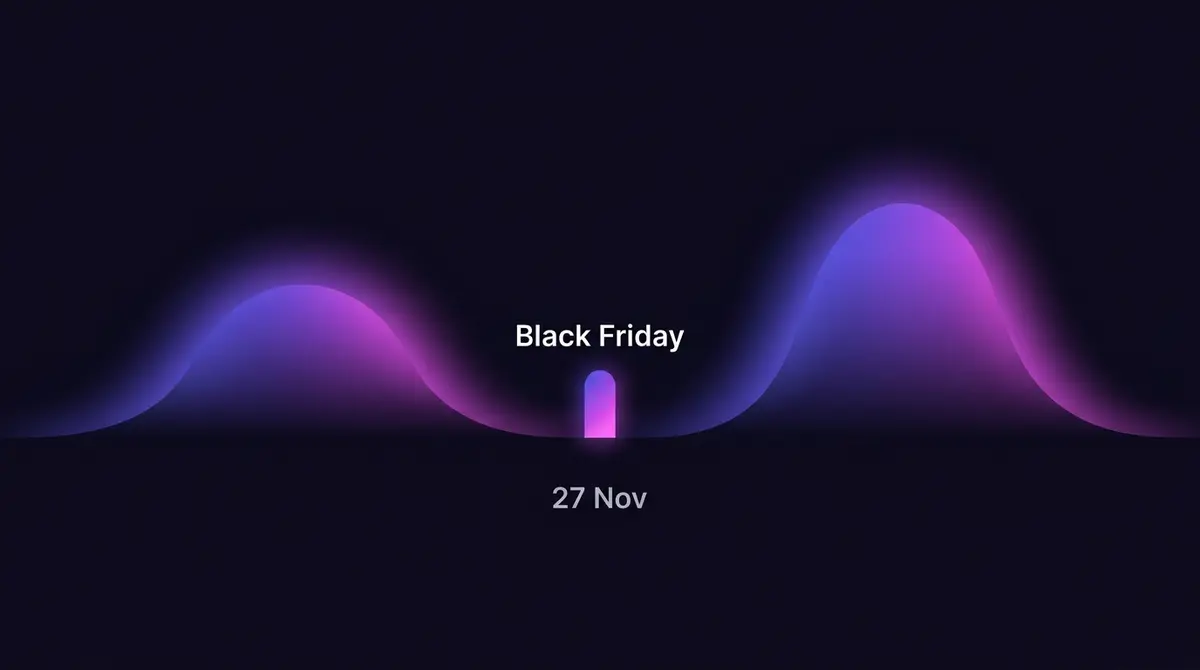
In Malaysia, Black Friday (Friday, 27 November 2026) is not the main event. Janio notes Black Friday hype in Malaysia is far smaller than the 11.11 and 12.12 mega-sales, so it sits in the narrow trough between those two peaks. So a Malaysian DTC brand treats Black Friday as its own RM-led, store-owned offer that captures shoppers who held back at Singles' Day and aren't ready for 12.12 yet. Lead the creative with a concrete RM saving and a real deadline, run vertical Reels-first video on Facebook and Instagram (FB reaches 23.1 million Malaysians, IG 15.5 million, per DataReportal), and book budget and creative early because Q4 is the most expensive Meta auction of the year.
Your Malaysian shoppers just survived 11.11. Their feeds were a price war, their carts are half-emptied, and 12.12 is two weeks out. Then Black Friday lands on 27 November, an imported sale that means far less here than it does in the United States. The temptation is to either skip it or to bolt a red SALE banner onto whatever ran at Singles' Day. Both are mistakes. Black Friday is a quiet gap in the Malaysian calendar where a sharp, RM-led, store-owned offer can pull the shoppers who hesitated at 11.11 and aren't warmed up for 12.12, and the brands that win it do three things: they frame Black Friday as a distinct event with its own deadline, they research the urgency angles that already convert in the local feed, and they ship the creative early before the auction heats up. This playbook walks the framing, the numbers, the creative, and the launch.
Where Black Friday actually sits in the Malaysian calendar
Black Friday 2026 lands on Friday, 27 November, the day after US Thanksgiving on 26 November, per Awareness Days. In the United States it is the busiest shopping day of the year. In Malaysia it is a guest at someone else's party. The local calendar is built around the platform mega-sales, and Black Friday is wedged into the narrow trough between two of them.
Count the days. 11.11 peaks around 11 November. 12.12 peaks around 12 December. Black Friday sits roughly 16 days after Singles' Day and about 15 days before 12.12. So your Malaysian shopper has just been carpet-bombed with marketplace discounts, and another wave is coming in two weeks. Janio, a regional logistics source, is blunt about the gap: Black Friday hype in Malaysia is far smaller than the dominant 11.11 and 12.12 sales, though the lift is still real. Janio cites 11Street recording a roughly 50% rise in GMV on Black Friday versus a normal Friday (2017). Compare that to the spend the local peaks pull: shoppers averaged RM277 per transaction during 11.11 in Malaysia in 2019, per Janio's figures.
That gap is not a reason to skip Black Friday. It is the strategy. The marketplaces are quiet between their two peaks, attention is cheaper to win, and your own store is free to run an offer the platform vouchers cannot. The brands that profit from Black Friday in Malaysia stop treating it as a second 11.11 and start treating it as a brand-owned offer aimed at the shoppers who hesitated.
There is a second reason the trough rewards a focused brand. During 11.11 and 12.12 your ad competes against a wall of marketplace banners all bidding for the same impressions; in the quieter Black Friday window your offer has more room to breathe, even though the imported peak still lifts costs. You are not out-shouting the marketplace, you are reaching the same shoppers when they are not being shouted at, and that is the cheaper kind of attention that lets a small, sharp offer pay for itself between two sales that dwarf it.
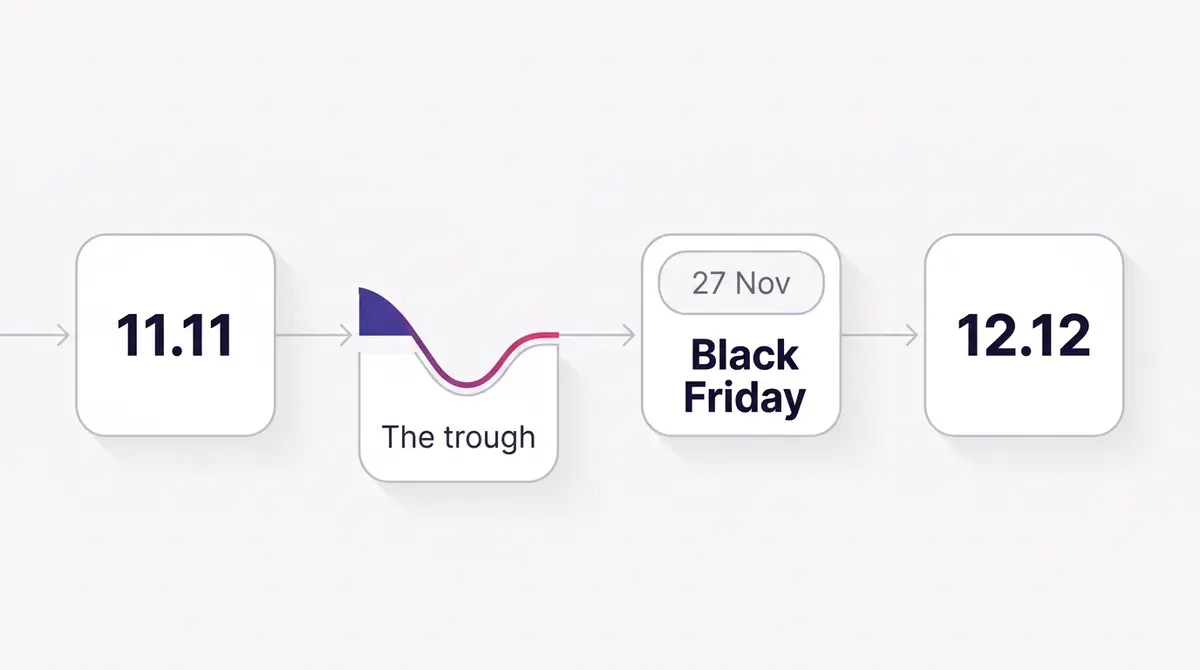
Why the trough is an opportunity, not a write-off
Two kinds of shopper are reachable on Black Friday weekend. The first held back at 11.11: they wishlisted, they compared, they did not commit, and the marketplace voucher expired. The second is not yet thinking about 12.12, because the next platform sale has not started shouting. Both are sitting in a quieter feed than they were two weeks ago, and a concrete RM offer can move them.
The reachable base is large. DataReportal's Digital 2025: Malaysia report put Facebook ad reach at 23.1 million people, 64.4% of the population, and Instagram at 15.5 million, 43.2%. Malaysia counted 43.3 million active cellular mobile connections, 121% of the population, so this is a mobile-first audience that lives in vertical video. The channel is settled: Meta is where the Malaysian sale runs, and the format is Reels and Stories first.
The catch is that you are buying into the most expensive media window of the year. Gupta Media's cost tracker, a vendor source that should be read as directional rather than as hard fact, put the Thanksgiving and Black Friday week at the priciest of 2024 at $13.42 CPM, with Cyber Monday at $17.70, which is 138% above the year's annualized average of $7.43. Malaysia's Black Friday sits inside that same Q4 auction. The lesson is not "avoid the window." It is "do not waste it on cold prospecting at peak prices." Spend the expensive impressions on warm, high-intent audiences and let the cheaper days before the sale do the audience-building.
How Black Friday differs from the X.X mega-sales
A Malaysian shopper does not experience Black Friday the way an American one does, and the creative has to respect that. The 11.11 and 12.12 sales are platform events: the marketplace owns the calendar, stacks the vouchers, runs the livestreams, and trains shoppers to wait for the date. Black Friday is imported and undefined, which is exactly what makes it yours to shape.
| Dimension | 11.11 / 12.12 mega-sale | Black Friday in Malaysia |
|---|---|---|
| Who owns it | The marketplace (Shopee, Lazada) | Your own brand and store |
| Shopper expectation | High, trained, calendar-locked | Low, imported, undefined |
| Where it converts | Marketplace app and listings | Your own store and checkout |
| Best offer type | Stacked platform vouchers, free shipping | Exclusive RM bundle, gift with purchase |
| Creative job | Stand out in a flood of red banners | Define a distinct event with its own deadline |
| Audience to prioritise | Broad reach plus retargeting | Warm shoppers who held back at 11.11 |
The practical takeaway: do not recycle your 11.11 creative with the price swapped. Your audience scrolled past that set two weeks ago. A Black Friday ad has to signal "this is a new, separate offer," or it reads as leftovers. Name the event, name the RM saving, name the deadline, and make the offer one the marketplace could not give them.
Frame the RM offer so it reads as a real event
The offer is the campaign. A Black Friday ad does not sell your product so much as it sells the gap between the everyday price and the sale price, and the way you frame that RM number decides whether the shopper believes it. The strongest framing is concrete and verifiable: an exact saving, an honest anchor, and a fulfilment you can actually honour.
Anchor the RM figure to a price the shopper recognises. "RM89, normally RM149" works because the RM60 saving is doing the persuasion, not the word "sale." If your everyday price is genuinely RM149, the anchor is honest and the offer is sharp. If it is not, the shopper who saw your product at 11.11 will spot the inflated strike-through and trust drops, which is the fastest way to burn a warm audience you paid to build. The bundle is often the cleanest Black Friday mechanic for a Malaysian DTC brand, because it lets you offer a real RM saving without devaluing the hero product: two or three SKUs at a price that beats buying them separately, framed as a set the marketplace listing does not carry.
Then attach urgency that is true. A deadline only works once. "BF price ends midnight, 27 Nov" converts because it is specific and final; quietly extending it on 28 November teaches your audience the deadline is fiction and the next one will not move them. The same honesty applies to stock: "while stock lasts" is fine if stock can actually run out, and hollow if it cannot. Malaysian shoppers have been trained by years of marketplace flash sales to read these mechanics fluently, so a framing that does not hold up is more damaging here than a soft offer.
An offer menu that beats a flat price cut
The bundle is a strong default, but it is not the only mechanic, and a flat percentage off is the weakest play in this feed. A blunt "20% off" is exactly what the marketplace vouchers already trained shoppers to expect, so it neither stands out nor protects your margin on the most expensive media weekend of the quarter. Pick a mechanic the marketplace listing cannot copy and that fits what you sell.
| Mechanic | How it reads to the shopper | Best for |
|---|---|---|
| Bundle | Two or three SKUs for less than buying them apart | A real RM saving without discounting the hero product |
| Gift with purchase | Spend RM150, get a free add-on worth RM40 | Protecting the strike-through price while feeling generous |
| Buy-2-get-1 | A volume reward that moves more units per order | Consumables and restock-driven categories |
| Tiered spend threshold | Spend RM150 save RM20, spend RM300 save RM50 | Lifting average order value, not just conversion |
| Early VIP access | The list shops the deal a day before everyone | Rewarding past buyers and building urgency before peak |
Whatever you pick, the honesty rule still holds: the RM number has to be real and the deadline has to stick. A gift with purchase that protects your strike-through price often beats a deep cut, because you keep margin on the day a click costs the most, while a tiered threshold lifts average order value instead. Map one primary mechanic to the peak weekend and keep it simple. A shopper who has to decode three stacked offers usually closes the tab.
Build an early-access list before the peak
The cheapest, highest-return move on a store-owned Black Friday happens before the sale starts. In the calm days while the auction is still cool, run a lead-generation ad that offers early access: "Join the Black Friday early list, shop the deal a day before everyone, and get an extra RM20 off." Capture an email or a WhatsApp opt-in, not a sale. You are buying intent at pre-peak prices and building a warm pool you can hit on the day for a fraction of cold-prospecting cost.
This is the engine that makes the expensive peak window pay. A shopper who raised their hand for early access is a known, warm audience by 27 November, so your peak budget goes to people already leaning in rather than to strangers. The list doubles as a retargeting and exclusion source: hit it with the offer, then exclude the ones who buy so you stop paying to re-sell them. The Facebook retargeting guide covers how to build and use those warm pools. WhatsApp earns its place here too, because it is how many Malaysian shoppers prefer to hear from a brand: a broadcast opt-in that lands the deal the moment early access opens often beats an email that never gets read.
Research proven urgency angles in the Meta Ad Library
Before you write a word of copy, look at what already works. The free Meta Ad Library shows every active ad on Facebook and Instagram, which means you can study how local DTC brands frame sale urgency and offer mechanics without guessing. Search a competitor or a brand in your category, filter to Malaysia, and read the live offers: how they state the RM saving, where they place the deadline, whether they lead with the product or the price.
A few patterns repeat in the Malaysian feed, and they map cleanly onto the allowlist of brands you can study. A skincare DTC brand like Skinlycious runs a Discount or Offer ad for a limited-time bundle, using a Reels countdown so the price feels like it expires tonight, and frames it as a separate set from the 11.11 promotion the audience already saw. A supplement brand like Beyond Collagen+ runs a static bundle-and-save card that names the exact RM off versus the usual price, positioning the deal as the gap-filler between Singles' Day and 12.12. A K-beauty brand like Medicube runs a carousel that walks the deal tiers, leading the first card with the RM saving and closing the last card with a stock-runs-out push.
What you are looking for is not a graphic to copy. It is the angle: the exact mechanic that earns the tap. Save the ones that run for weeks, because longevity in the Ad Library is a signal the angle converts. If you want the mechanics of building one of those archives into a process, the Meta Ad Library guide walks the filters and search moves, and the mega-sale ad playbook covers how the same research feeds a full sale calendar.
Build the RM-led offer creative
Once you know the angle, the creative writes itself around three fixed elements: the saving, the proof, and the deadline. Lead with the RM number, because in a discount-fatigued feed the offer is the hook. "RM89, normally RM149" stops a scroll faster than "Black Friday is here." Put the figure on the first frame of a Reel or the centre of a static, where a thumb-stopping viewer sees it before reading anything else.
Then add the proof and the deadline. A before-and-after or a testimonial earns trust that a price tag alone cannot; a hard deadline ("BF price ends midnight, 27 Nov") converts the interest into action. The Shopping, Collectibles and Gifts vertical is the highest-clicking Facebook category on the traffic objective at 4.13% CTR per WordStream's 2025 benchmarks, well above the 1.71% all-industry traffic average, which tells you a clean sale offer can clear the bar if the creative is sharp. WordStream also pegs the all-industry traffic CPC at $0.70 and cost per lead at $27.66, useful directional anchors for what a click and a captured lead tend to cost before your local auction adjusts them.
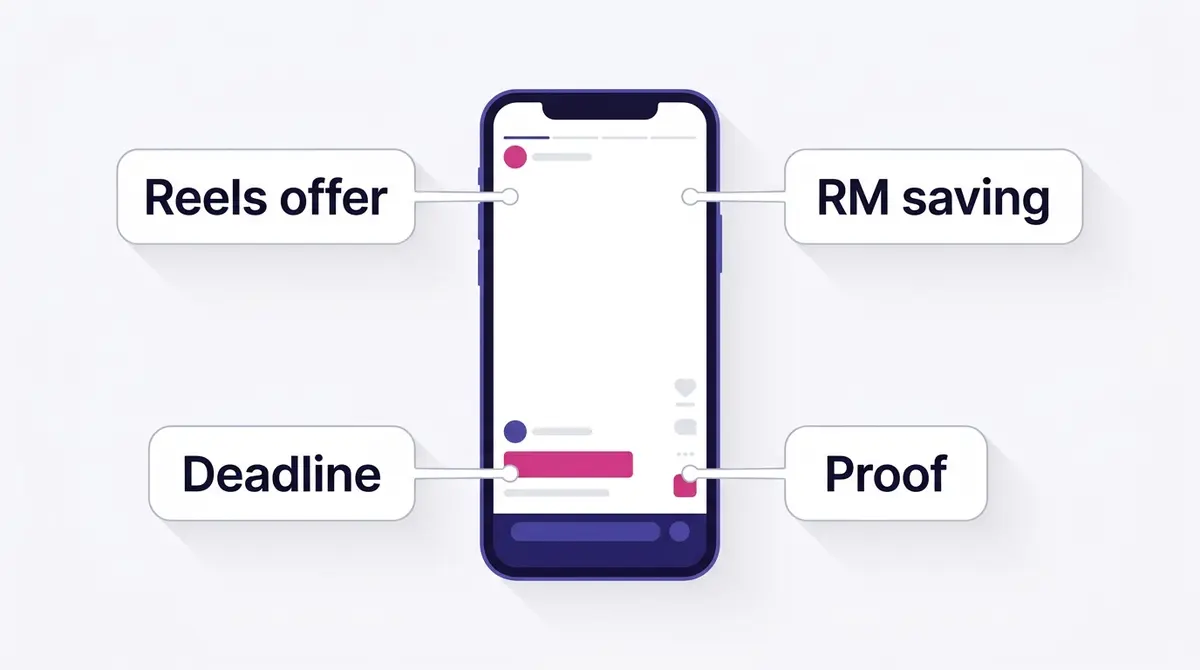
Format follows the job. Vertical video carries urgency best and suits the mobile-first Malaysian base; a single static is cleanest for a straight price-drop announcement; a carousel works when several deal tiers share one budget. Whatever the format, the rule holds: an AI-generated set can spin out ten variations of an offer card in minutes, but the RM saving and the deadline on every one of them must be true. A discount you cannot fulfil or a deadline you quietly extend trains your warmest audience to ignore the next one.
Get your tracking right before the auction heats up
Peak spend is wasted if Meta is optimizing on broken signal. Before you put a ringgit behind the offer, confirm the Meta Pixel is firing on your store and the Conversions API is sending the same events server-side. The browser Pixel alone loses data to ad blockers, cookie limits, and iOS restrictions; the Conversions API feeds Meta a server-side copy of each event, deduplicated against the Pixel by a shared event ID, so the system still sees the Purchase when the browser drops it. On the most expensive weekend of the quarter, that signal is what decides whether the algorithm finds buyers or burns budget guessing.
Check the events fire before the sale, not during it. In Events Manager, use the Test Events tab to run your own checkout and watch a Purchase land with the right value and currency in RM. If your Purchase event has been quietly broken for a week, you will not find out until your Black Friday ROAS reads wrong on the one weekend it matters, and by then the spend is gone. Set the Pixel up early (the Meta Pixel setup guide walks the install) and wire the server-side feed alongside it (the Conversions API setup guide covers the deduplication). Clean signal in the cheap pre-sale days also means your retargeting pools are complete and accurate when the peak hits.
Stand the campaign up early so it finishes learning
Launching cold on the morning of 27 November is the single most common way to lose a Black Friday. A new ad set enters Meta's learning phase, where delivery explores who responds before it stabilises. Meta's Business Help Center puts the exit at roughly 50 optimization events within about a 7-day window. An ad set that has not gathered them is still learning, which means you are buying the most expensive impressions of the quarter while delivery is at its least efficient.
So stand the offer ad set up several days early, around 22 to 24 November, on a real conversion event, and let it gather data while impressions are cheaper. Then freeze it during the peak. Editing the budget by a large jump, swapping the creative, or changing the targeting counts as a significant edit and sends the ad set back into learning, throwing away the data you just paid for. Lock the creative and the audience before 27 November and resist the urge to tinker. The learning phase guide covers what does and does not reset it. Ship the creative early for one more reason: Meta's Business Help Center notes that ad review is typically completed within 24 hours, though it can take longer, and a rejection the morning of the sale leaves no time to fix and resubmit, so submit days ahead.
Two campaign types carry the structure. Use an Advantage+ sales campaign (Meta renamed Advantage+ Shopping to Advantage+ sales campaigns in February 2025, per Social Media Today) to let the algorithm prospect broadly with your strongest creatives, and run a manual ad set for retargeting where you want tight control over who sees the offer and who you exclude. The Advantage+ sales campaigns guide walks the setup. A simple split, broad AI-driven prospecting plus a manual retargeting layer, is the lever most brands actually pull on a sale weekend.
Audiences and budget for an expensive window
The audience plan for Black Friday is the same discipline as 11.11, scaled down. Build warm pools before the sale: past buyers, website visitors, cart abandoners (the abandoned cart ads guide covers that play), and the people who watched your teaser video. Layer lookalikes off your best customers to find new buyers who resemble them. Then exclude recent purchasers from prospecting so you do not pay to re-sell someone who already bought.
The budget pacing matters more on Black Friday than at most sales, because you are buying into a peak auction for a secondary event. Three slices work:
| Phase | Dates | Audience | Job |
|---|---|---|---|
| Teaser | 22-24 Nov | Lookalikes and cold interest | Build pools cheaply, warm the offer |
| Peak | 26-28 Nov | Warm custom audiences, engagers | Spend the expensive impressions on intent |
| Bridge | 29 Nov to 12.12 | Retargeting, cart abandoners | Carry warm shoppers into the next sale |
The logic is to never spend a $13-plus CPM impression on a cold prospect who has never heard of you. Use the cheaper pre-sale days to build the pool, then concentrate the costly peak-day budget on the audiences most likely to buy. The retargeting slice you hold back is the most efficient money you will spend all quarter, because by 12.12 those audiences are already warm and the cost per result usually beats the November auction.
A note on creative volume inside that plan: each phase wants its own angle, not the same ad reused. The teaser can run a soft "something is coming" tease or a value-stack explainer; the peak runs the hard RM offer with the deadline; the bridge runs a "last chance before it goes" or a "miss Black Friday, catch 12.12" message. Within each angle, three to five distinct creatives is a sensible spread (practitioner guidance, not a Meta-published number) so delivery has options and you can read which hook lands; dynamic creative is one way to test several images, headlines, and hooks inside a single ad and let Meta assemble the combinations that perform. That is a lot to produce by hand for a sale that only runs a weekend, which is the main reason brands either under-invest in Black Friday creative or recycle the wrong set. Producing the variations quickly, with the RM saving and deadline locked correctly on each, is what keeps a secondary sale from eating a designer's whole week.
Make the store ready for a Malaysian checkout
You can win the click and still lose the sale at the checkout. A Malaysian shopper who taps your Black Friday ad expects to pay the way they always do, and if their usual method is missing they abandon the cart you paid a peak-CPM click to fill. Offer the rails they actually use: FPX bank transfer (the default for online banking payments here), the major e-wallets (Touch 'n Go eWallet, GrabPay, Boost, ShopeePay), and a buy-now-pay-later option such as Atome for higher-ticket orders. Card-only checkout leaks Malaysian sales.
Two more checks before the weekend. First, make the RM discount apply automatically at checkout, or hand out one clean code, and do not make the shopper hunt for it. Confirm the strike-through and the final RM price both show, so the saving you advertised is the saving they see. Second, test the store on a phone over mobile data, because this is a mobile-first audience and a slow or broken mobile checkout on Black Friday is money set on fire. Load the page, add to cart, and run a test purchase end to end before you spend a ringgit on traffic.
Launch to Facebook, Instagram, and Reels, then measure
A sale is only as good as the speed you can ship it. Once the offer is set, the creative is built, and the store is ready, the launch is the easy part: publish the vertical video to Reels and Stories, the static to the feed, the carousel where a tiered deal needs room, all on Facebook and Instagram.
Then watch the numbers that tell you to act. Cost per result and ROAS say whether the spend is profitable at sale prices. Hook rate says whether the first frame stops the scroll. Click-through rate, measured against that 1.71% traffic baseline, says whether the offer is worth tapping. Frequency rising while returns fall is the signal to swap creative, which is why having a few variations ready beats running one tired set into the ground; the ad frequency guide covers how high is too high before a swap. If a launch stalls or an ad gets stuck, the Facebook ad not delivering guide covers the usual culprits.
Run Cyber Monday, then bridge into 12.12
Black Friday is not a single day in the calendar, and you should not treat it as one. Cyber Monday 2026 falls on Monday, 30 November, the Monday after Black Friday, so the cyber weekend runs Friday 27 to Monday 30 November. The cheapest incremental sales of the weekend often come from re-hitting your now-warm pool on the Monday before the offer closes. Run a short "last chance" wave to everyone who clicked, watched, or added to cart over the weekend but did not buy. The audience is already warm, the creative is already made, and the cost per result usually beats the Friday auction.
Then bridge. The retargeting slice you held back is the most efficient money of the quarter, because by 12.12 those audiences are warm and the offer practically sells itself. A "missed Black Friday, catch it at 12.12" message carries the same shoppers into the next platform peak. For how that next sale fits the wider calendar, the 11.11 ad ideas guide maps the run-up, and the CNY and Raya playbooks pick up the Malaysian calendar into 2027.
Mistakes that kill a Malaysian Black Friday
The cautions are easy to lose in the prose, so here is the failure-mode checklist in one place. Each of these wastes spend on the most expensive media weekend of the year:
- Recycling the 11.11 creative with a new price. Your audience scrolled past that set two weeks ago, so it reads as leftovers. Build a distinct Black Friday concept that signals a new, separate event.
- Inflating the anchor price. A strike-through your warm audience knows is fake destroys trust faster than a soft offer does. Anchor to a price the shopper actually recognises.
- Cold prospecting at peak CPM. Spending the year's most expensive impressions on strangers who have never heard of you is the costliest mistake here. Build warm pools early and spend the peak on intent.
- Launching cold on the morning of 27 November. A brand-new ad set is still in the learning phase on the day prices peak. Stand it up days early and let it stabilise first.
- Extending the deadline. Quietly running the Black Friday price through the following week teaches your audience the deadline is fiction, so the next one will not move them. A deadline only works once.
- Checking your tracking during the sale, not before. A broken Purchase event means peak spend optimises blind and your ROAS reads wrong. Fire your test events days ahead.
Black Friday in Malaysia is a small, sharp window between two bigger sales, and it rewards the brand that treats it as its own event rather than a second 11.11. Frame the RM offer honestly, get the tracking and the store ready, stand the campaign up early so it learns before the auction peaks, and carry the warm audiences you built straight into 12.12. The whole loop, researching the angle that already works, generating the RM-led offer creative, launching to Meta, and reading the results to decide the next move, is the work a platform like AdPlay.ai is built to compress into one place, and the principle holds regardless of the tools: you win the trough by being deliberate where the marketplace is loud.
Example ad angles
Representative hooks and formats from the category.
“Discount or Offer ad for a limited-time Black Friday skincare bundle with a midnight countdown, set apart from the 11.11 set”
“Discount or Offer ad for a bundle-and-save deal naming the RM off versus the usual price as the gap-filler between 11.11 and 12.12”
“Discount or Offer ad for the Black Friday deal tiers, first card states the RM saving and the last drives shop before stock runs out”
By the numbers
Frequently asked questions
When is Black Friday 2026, and when should Malaysian brands launch ads?
Black Friday 2026 falls on Friday, 27 November 2026, the day after US Thanksgiving on 26 November, per Awareness Days. For Malaysian brands the practical launch window opens earlier: stand up the offer ad set around 22-24 November so it can work through Meta's learning phase (Meta's Business Help Center puts the exit at roughly 50 optimization events over about a 7-day window) before the sale, then push your main offer wave on 26-28 November, and hold a retargeting slice back to bridge into 12.12. Launching cold on the morning of 27 November means buying the most expensive impressions of the quarter with an ad set that has not finished learning.
How is Black Friday different from 11.11 and 12.12, and is it worth running?
11.11 and 12.12 are platform-led mega-sales: the marketplaces drive the traffic, stack the vouchers, and own the calendar, so your audience shops them on Shopee or Lazada. Black Friday in Malaysia is imported and far quieter. Janio notes the hype here is far smaller than the dominant 11.11 and 12.12 peaks, with 11Street recording a roughly 50% rise in GMV on Black Friday versus a normal Friday back in 2017. That is exactly why it is worth running: the quiet is the opportunity. Treat it as a brand-owned offer with your own RM price and deadline, aimed at shoppers who held back at Singles' Day and are not yet primed for 12.12, and a clear offer on your own store can win that in-between intent cheaply.
Should I run my own store or my Shopee and Lazada listings for Black Friday?
Lean into your own store for Black Friday. The marketplaces own the surge during 11.11 and 12.12, but Black Friday sits in the trough between them, which is the ideal moment to push an offer the marketplace cannot carry: an exclusive RM bundle, a gift with purchase, or early access for past buyers. Your own store keeps the margin and the customer relationship, and it lets you frame Black Friday as a distinct event with its own price and deadline instead of one more marketplace voucher.
How much do Facebook ad costs rise around Black Friday?
Materially, which is the reason to commit budget and creative early. Gupta Media's tracker, a vendor source so treat it as directional, put the Thanksgiving and Black Friday week at the most expensive of 2024 at $13.42 CPM, and Cyber Monday at $17.70, which is 138% above the year's annualized average of $7.43. Malaysia's Black Friday auction runs inside that same Q4 window. Pace your budget to it: a light teaser slice early while pools are cheaper, the heaviest weight on warm, high-intent audiences during the peak, and a retargeting slice held back for 12.12.
What creative and angle work best for Black Friday in Malaysia?
RM-led, urgency-first creative that reads as a distinct event. Name the exact RM saving in the first line and put it on the image or first frame, then add a real deadline ('BF price ends midnight 27 Nov'). Vertical video for Reels and Stories carries the urgency best; single statics work for a clean price-drop announcement; carousels suit a tiered deal walk-through. Generic red sale banners vanish in a feed that has been shouting discounts since 11.11, so a named product at a named RM price, framed as its own Black Friday set, stands out.
Which metrics tell me a Black Friday ad is working?
Lead with cost per result or ROAS, because that is whether the spend is profitable at sale prices. Use hook rate (the share who watch at least three seconds) to judge whether the creative stops the scroll, and click-through rate to judge whether the offer is worth tapping; WordStream's 2025 benchmarks put all-industry Facebook traffic CTR at 1.71% and the Shopping, Collectibles and Gifts vertical highest at 4.13%, so a sale offer should aim above the average. Watch frequency for fatigue: rising frequency with falling returns means it is time for fresh creative.
Should I run Cyber Monday too, and how long should the sale last?
Yes, run a short Cyber Monday wave. Cyber Monday 2026 falls on Monday, 30 November, the Monday after Black Friday, so the cyber weekend runs Friday 27 to Monday 30 November. Keep the sale tight, because a long sale kills urgency and trains shoppers to wait. Run the hard RM offer over the weekend, then re-hit everyone who clicked, watched, or added to cart but did not buy with a 'last chance' message on the Monday, before the deadline closes. Re-engaging that now-warm pool is usually cheaper per result than the Friday auction, and it sets up the bridge into 12.12.
Which payment methods should my Malaysian store accept for Black Friday?
Offer the rails Malaysian shoppers actually use, because a missing payment method is an abandoned cart you paid a peak-CPM click to fill. FPX bank transfer is the default for online banking payments here, and the major e-wallets (Touch 'n Go eWallet, GrabPay, Boost, ShopeePay) are widely expected at checkout. For higher-ticket orders, a buy-now-pay-later option such as Atome can lift conversion. Card-only checkout leaks sales in Malaysia, so make sure the local methods are live and the RM discount applies automatically at checkout before the weekend.
Sources
- 1.Awareness Days, Black Friday 2026 date (2026)
- 2.Gupta Media, The true cost of social media ads (2025)
- 3.WordStream, Facebook Ads Benchmarks 2025 (2025)
- 4.Janio, When are Malaysia's Hottest Online Sales Periods? (2024)
- 5.DataReportal, Digital 2025: Malaysia (2025)
- 6.Meta Business Help Center, About the learning phase (2026)
- 7.Meta Business Help Center, About ads in review (2026)
- 8.Calendar Date, Cyber Monday 2026 (2026)
- 9.Social Media Today, Meta rolls out updates to Advantage+ ad targeting tools (2025)
Keep exploring
Turn ad research into winning ads
See what 16,000 Malaysian brands advertise, then generate on-brand creative, all in one tool.
7-day free trial · No credit card required