
Unique Value Proposition Ads: The UVP Method
Build a unique value proposition (target, problem, unique mechanism, proof) and compress it into your Meta ad headline and primary text to lift CTR.
Updated November 2026 · Xanny Lee, CEO
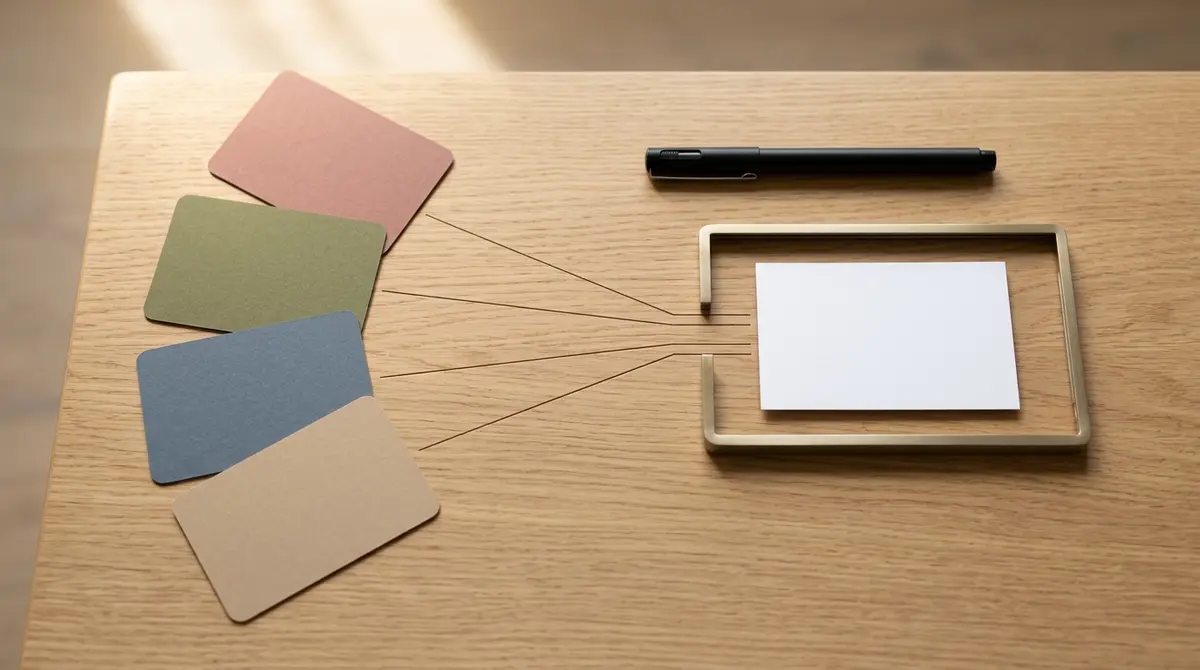
A unique value proposition for an ad names four things: the one target it is for, the problem it solves, the unique mechanism that makes it work, and the proof it delivers, then compresses that into the headline and the first 125 characters of primary text. The test is simple: a competitor selling the same thing could not run your exact ad. Get it sharp and the payoff is measurable, because a specific promise beats interchangeable copy on the click-through rate (WordStream's 2025 all-industry average was 2.59% on Leads campaigns) and on the relevance signals Meta scores in every auction. Vague copy is what a low CTR usually is.
You wrote the ad, it is clear and grammatical, and the feed still scrolls past it. The usual reason is not the hook or the format: it is that the copy could belong to any of a dozen brands selling the same thing. A unique value proposition fixes that by making one specific promise nobody else can honestly make, then squeezing it into the two slots a scroller actually reads. This guide builds a UVP from four parts and shows how to compress it into a Meta ad.
What a unique value proposition actually is, and is not
A unique value proposition is the single specific promise your ad makes that no competitor selling the same thing could honestly make. That last clause is the whole game. Most ad copy that gets ignored is not badly written. It is clear, it is grammatical, and it is completely interchangeable: swap the logo and it would sit just as comfortably over a rival's ad. A value proposition is the opposite of interchangeable. It is the reason this reader picks you over the exact alternative sitting one thumb-scroll away.
It helps to say what a UVP is not, because three neighbours crowd the same space. A slogan is a mood, memorable and emotional, but rarely specific enough to make anyone act. A mission statement points inward and explains why the company exists, which the buyer does not care about mid-scroll. A feature list is a spec sheet that assumes the reader will do the work of turning specs into reasons. A value proposition points outward at one buyer and states, concretely, what they get, why it is different, and why they should believe it. You can run a company on a slogan and a mission, but the ad slot needs the proposition.
The reason to be ruthless about this is that you have almost no time to land it. Nielsen Norman Group's foundational research on dwell time found that users often leave a web page within 10-20 seconds, and that to earn several minutes of attention you must communicate your value proposition inside the first 10 seconds. In the feed the window is far tighter still. Facebook's own research, reported by Adweek, put the average time a person spends with a single piece of mobile content at about 1.7 seconds. Against 2.39 billion people Facebook ads could reach worldwide in early 2026 per DataReportal, that is the attention economy your one sentence has to win. A proposition that needs a paragraph to explain itself has already lost.
The practical test throughout this guide is the swap test. Take your draft, imagine a direct competitor's name and logo pasted over it, and ask whether the ad still makes sense. If it does, you have written a category description, not a value proposition. The work is to make the ad make sense only when your name is on it.
The four parts: target, problem, unique mechanism, proof
A UVP is not a feeling you reach for. It is an assembly of four parts, and skipping any one of them is why most attempts stay vague. Build each part as a plain answer before you touch ad copy.
The target is who exactly the ad is for, specific enough that the wrong reader knows to keep scrolling. "Busy people" is not a target. "Parents packing a school lunch at 7am" is. Specificity here is not a limitation, it is what makes a stranger feel the ad was written for them, which is the first thing that stops a scroll.
The problem is the concrete pain that target feels, in their words, not yours. Not "suboptimal skin health" but "makeup that cakes into the lines around my eyes by lunch." The problem is where recognition happens. If the reader nods before you have sold anything, the rest of the ad is downhill.
The unique mechanism is the part almost every weak ad is missing, and the part that carries the word "unique" in the phrase. It is the specific, credible reason your product delivers the outcome, and the reason a competitor cannot copy it by editing a few words. A mechanism can be a proprietary process, a format nobody else uses, a single hero ingredient, an exclusive data source, or a guarantee that puts money behind the claim. Benefits describe what the reader gets. The mechanism explains why to believe it comes from you and not the cheaper option beside you. "Whiter teeth" is a benefit any brand can print. "A gel that stays active for eight hours, not the twenty minutes a strip gives you" is a mechanism.
The proof is the evidence that the mechanism works, and it is what converts a bold claim from noise into a reason. Proof is a number, a result, a credential, a warranty, a count of customers, or a named test. It does not have to be dramatic; it has to be concrete. "Loved by thousands" is a mood. "Rated 4.8 across 12,000 reviews" is proof. Vague claims and specific claims cost the same to write, and only one is believed.
Answer all four in flat, unglamorous sentences first. The polish comes later. If you cannot fill the mechanism line, you have found the real problem: you are selling a commodity, and no amount of clever copy compresses a mechanism you do not have.
The UVP worksheet: from four answers to one sentence
The worksheet turns four rough answers into one compressed sentence you can pull an ad out of. Fill the middle column for your own product, then read the example column to see the shape.
| Part | Prompt to answer | Worked example (a subscription meal-kit seller) |
|---|---|---|
| Target | Who is this for, specifically? | Couples who both work full time and hate deciding what to cook |
| Problem | What is the pain, in their words? | The 6pm what-is-for-dinner scramble and a fridge of wilted, wasted veg |
| Unique mechanism | What makes your fix different and hard to copy? | Pre-portioned recipes that use every ingredient across two meals, so nothing spoils |
| Proof | What evidence backs it up? | Cuts household food waste by a measured share, and every recipe is on the table in 30 minutes |
With the cells filled, drop them into a template sentence: For target who problem, product is the category that unique mechanism, proven by proof. For the example that reads: "For dual-income couples who dread the 6pm dinner scramble, this meal kit is the one that portions every ingredient across two meals so nothing spoils, and gets dinner on the table in 30 minutes."
That sentence is not the ad. It is the master proposition the ad is compressed from, and it is deliberately too long for any single ad slot. Notice it survives the swap test: a generic meal-kit competitor cannot run it, because the zero-waste cross-recipe portioning is a specific mechanism, not a category benefit. If your master sentence still works with a rival's name in it, go back to the mechanism row. That is almost always where the "unique" leaked out.
Write the master sentence for one clearly defined target at a time. A proposition that tries to speak to three audiences at once ends up specific to none, and the feed punishes generic. If you serve several segments, you have several UVPs and several ads, which is a feature, not extra work: it is exactly the message match that lifts relevance.
Compress the UVP into the ad slots
A Meta ad is not one block of writing. It is a set of slots, each with a different visible length and a different job, and compressing a UVP means deciding which of the four parts goes where. Two slots do almost all the work, because they are the two most people actually read.
The primary text is the paragraph above the image. Its opening is the most valuable real estate in the ad, because Meta recommends keeping Facebook Feed primary text in a 50-150 character band, and only about the first 125 characters show on the mobile Feed before a See More link folds the rest away. Open it with the target and the problem, so the right reader recognises themselves inside that visible window. Everything past the cut is bonus copy for the minority who tap to expand, so never hide the offer or the proof back there.
The headline is the bold line below the image, beside the call-to-action button. Meta recommends keeping it near 27 characters on the Facebook Feed so it renders in full on a phone rather than clipping. This is where the unique mechanism or the proof belongs, compressed to its sharpest fragment, because the headline is the line that answers "so what" after the image has stopped the scroll. The description field is a trap for a value proposition: it renders in only a handful of placements and is hidden on the Feed, in Reels, and in Stories, so never put a load-bearing part of your UVP there.
Here is the meal-kit master sentence compressed into the two slots:
- Primary text (opens inside ~125 characters): "Both of you work late, and the 6pm what-is-for-dinner scramble ends in takeout again. There is a faster way."
- Headline (near 27 characters): "Zero-waste dinners in 30 min"
The target and problem open the primary text; the mechanism (zero-waste) and a proof point (30 minutes) sharpen the headline. Neither slot tries to carry the whole four-part sentence, and neither is generic. Compression is not deletion. It is deciding which fragment each slot can carry in full, given the second and a half of attention it will actually get. Read the compressed version aloud against the swap test one more time before you build it: if a competitor could run it, the mechanism has not made it into a slot yet.
Before and after: three UVPs compressed
The fastest way to feel the difference is to see interchangeable copy rewritten around a mechanism and proof. These use category descriptors, not real brands, so read them as the shape of the move, not as a specific advertiser.
A skincare brand. Before: "Glow up with our amazing new serum. Premium ingredients for radiant, healthy skin. Shop now." Every clause is a category benefit any serum could print, and it fails the swap test on the first read. After, primary text: "Fine lines around your eyes by 3pm? Most serums sit on the surface." After, headline: "A serum that absorbs in 90 seconds." The rewrite names a target and problem, then leads the headline with a mechanism (absorption speed) and a proof point (90 seconds) that a competitor cannot honestly echo.
A project-management tool. Before: "The all-in-one platform to boost your team's productivity and streamline your workflow." That sentence describes half the software category. After, primary text: "Your team lives in five tools and the status update still takes an hour every Monday." After, headline: "One board, no Monday status call." The mechanism is consolidation into a single view, and the proof is the concrete outcome it removes (the weekly status meeting), which is far more specific than "boost productivity."
A subscription coffee seller. Before: "Premium coffee delivered to your door. Freshly roasted. Order today." Interchangeable with every roaster online. After, primary text: "By the time supermarket beans reach you, they have been off the roaster for months." After, headline: "Roasted the day before it ships." The mechanism is roast-to-ship timing, and the implied proof is the freshness gap it closes against the shelf alternative.
Notice the pattern across all three. The "before" versions differ only by product name and adjectives (amazing, premium, all-in-one), which is exactly why they read as commodities. The "after" versions each fail the swap test in the right direction: paste a competitor's logo over them and they stop making sense, because the mechanism is specific to one product. That is the entire job of a value proposition, done in two slots.
How a sharp UVP raises CTR and relevance
A better proposition is not just tidier writing. It moves two numbers you can watch, and they compound.
The first is click-through rate, the share of people who click after seeing the ad, and the metric most directly in your hands because the creative is the lever. A specific promise a reader recognises as for them earns the tap that interchangeable copy does not. WordStream's 2025 study put the all-industry average CTR at 2.59% on Leads campaigns and 1.71% on Traffic campaigns, useful as a reference line: a UVP that consistently reads below those is usually not a targeting problem but a "so what" problem, where the copy never gave the right person a reason only you could give.
The second is relevance, and this is where the payoff turns into money. Meta scores every ad against the other ads competing for the same audience on three ad relevance diagnostics: quality ranking, engagement rate ranking, and conversion rate ranking, each rated above average, average, or below average. Ads judged more relevant tend to win more impressions at a lower cost, because the auction rewards ads people want to engage with. A UVP that stops the right person and earns the click feeds directly into engagement rate ranking, and a proposition that also converts feeds conversion rate ranking. Sharper copy is cheaper delivery, not just prettier delivery.
The arithmetic makes the compounding concrete. Cost per click is roughly CPM divided by clicks per thousand impressions, and clicks per thousand is CTR times ten. Take Gupta Media's blended Meta CPM of about $8.19 across 2025 as the price of reach. At a 1.0% CTR that is roughly $0.82 a click; lift the CTR to 2.0% with a sharper proposition and, holding CPM flat, the same reach costs about $0.41 a click. Doubling the CTR roughly halves the cost per click, before any relevance-driven CPM discount stacks on top. You did not out-bid anyone. You gave the right person a reason, and the auction paid you back for it. That is why the value proposition, not the bid, is the lever worth most of your time.
Test the proposition, not just the wording
Once a UVP is live, the temptation is to A/B test punctuation and emoji. That rarely moves anything, because the scroller is responding to the idea, not the comma. Test the parts of the proposition against each other instead, one variable at a time, so a result actually teaches you something.
Test the mechanism first, because it is the highest-leverage part. Run two ads that keep the same target and problem but lead with genuinely different mechanisms (speed against durability, or a process against an ingredient), and let cost per result call the winner. Test the proof next: the same claim backed by a review count in one ad and a hard result in the other tells you which evidence your buyer actually trusts. Test the target by opening two ads with two different problem statements aimed at two segments, which is really a test of who your proposition is sharpest for.
The diagnosis also runs backward from the numbers. A low CTR across a broad audience usually means the target or problem is too generic, so the wrong people are seeing an ad that speaks to no one in particular. Clicks that come but do not convert often mean the proof is thin, the click was curiosity, and the promise did not hold up on the landing page. And an ad that simply cannot escape a below-average relevance ranking is often one that failed the swap test from the start: the auction is telling you the market sees it as interchangeable. Read the metric, then fix the matching part of the proposition, rather than reaching for a new headline word.
A UVP checklist before you launch
Run a draft ad through these five checks before it goes live, in order, because each one catches a different failure.
First, the swap test: paste a competitor's name over the ad. If it still makes sense, the unique mechanism has not made it into a slot yet, and you have a category description. Second, the specific-number test: is there at least one concrete figure (a time, a count, a percentage, a guarantee) doing the work of proof, or is the ad leaning on adjectives like premium and amazing that any brand can print? Third, the first-line test: read only the visible primary text before the See More cut (about 125 characters) and only the headline (near 27 characters). Does that fragment alone make a complete, specific promise, or does the meaning live in the copy nobody expands? Fourth, the one-target test: is the ad written for one clearly defined reader, or is it hedging across three at once and landing with none? Fifth, the out-loud test: read it aloud. If it sounds like a brochure or a bot, the compression is not done.
A proposition that clears all five is doing the hard part of advertising: giving one specific person one reason only you can give, fast enough to land in the second and a half you get. The rest of the workflow of running a Facebook ad (finding the angles already working in your category, generating the on-brand creative, and launching to Meta, which a platform like AdPlay.ai keeps in one place) is downstream of that sentence. Get the proposition right and every ad you build on it starts ahead. Get it wrong and no amount of formats, budget, or bidding rescues an ad the market reads as interchangeable.
By the numbers
Frequently asked questions
What is a unique value proposition in advertising?
It is the one specific promise your ad makes that a competitor selling the same category could not honestly make. A full UVP has four parts: the target it is for, the problem it solves, the unique mechanism that makes it work, and the proof it delivers. A slogan is a mood and a feature list is a spec sheet; a value proposition is a reason to pick you over the exact alternative in the feed. The working test is the swap test: if a rival could run your ad word for word, you have written a category description, not a value proposition.
How do I write a UVP for a Facebook ad?
Answer four questions in plain language before you write a single line of ad copy. Who exactly is this for. What specific problem do they have. What is the one mechanism that makes your solution different (a process, format, ingredient, data source, or guarantee nobody else offers). What proof backs it up (a number, a result, a credential). Then compress those answers into one sentence, and lift the sharpest part into the headline and the first line of primary text. The four answers are the raw material; the ad is the compression.
What is the difference between a UVP, a slogan, and a mission statement?
A slogan is memorable and emotional but rarely specific (it sells a feeling). A mission statement is inward-facing and describes why the company exists. A unique value proposition is outward-facing and buyer-facing: it states, concretely, what the customer gets, why it is different, and why they should believe it. Only the UVP survives the swap test. You can run a business on all three, but the ad slot needs the UVP, because a scroller is deciding in seconds whether this is for them, not admiring your tagline.
Where does the value proposition go in a Meta ad?
Split it across the two slots people actually read. The sharpest fragment (the unique mechanism or the proof) goes in the headline, which Meta recommends keeping near 27 characters on the Facebook Feed so it renders in full on a phone. The target and problem open the primary text, inside the roughly 125 characters that show before the See More link truncates the rest. Everything after the cut is bonus copy for the few who tap. Do not spread one thought so thin that neither slot carries a complete promise on its own.
Does a stronger value proposition actually improve ad performance?
Yes, through two mechanisms. First, click-through rate: a specific promise a reader recognises as for them beats interchangeable copy, and CTR is the metric most directly in your hands (WordStream's 2025 all-industry average was 2.59% on Leads and 1.71% on Traffic). Second, relevance: Meta scores every ad against competitors for the same audience on three diagnostics (quality ranking, engagement rate ranking, and conversion rate ranking), and more relevant ads tend to win more impressions at a lower cost. A UVP that stops the right person improves both at once.
What is a unique mechanism in a value proposition?
It is the specific, credible reason your product delivers the outcome, and the part competitors cannot copy by changing a few words. It might be a proprietary process, a format nobody else uses, a single hero ingredient, an exclusive data source, or a guarantee that puts your money where your claim is. Benefits tell the reader what they get; the unique mechanism tells them why to believe it comes from you and not the cheaper option next to you in the feed. Without a mechanism, an ad is a claim any competitor can echo.
How do I make my ad copy different from competitors?
Stop describing the category and start naming your mechanism and proof. Most weak ads differ only in brand name because they all list the same generic benefits (fast, affordable, high quality). Run the swap test on your draft: paste a competitor's logo over it and see if it still makes sense. If it does, you have written a category description. Replace the interchangeable benefit with the one thing that is true only of you (the mechanism), then back it with a concrete number, and the ad stops being a commodity.
How long should the value proposition in an ad be?
Short enough to land before the reader is gone. Nielsen Norman Group's research found users often leave a page within 10-20 seconds and decide whether to stay based on the value proposition in the first 10 seconds, and Facebook's own research put average time with a single piece of mobile content at about 1.7 seconds. So the whole proposition has to read at a glance: one crisp headline near 27 characters and an opening line inside roughly 125 characters. If it takes a paragraph to explain why you are different, it is not compressed yet.
Sources
- 1.Nielsen Norman Group, How Long Do Users Stay on Web Pages? (2011)
- 2.WordStream / LocaliQ, Facebook Ads Benchmarks 2025 (CTR and CPC by objective) (2025)
- 3.Meta Business Help Center, About Ad Relevance Diagnostics (2026)
- 4.Meta Ads Guide, Facebook Feed image ad (link clicks) specifications (2026)
- 5.Gupta Media, The True Cost of Social Media Ads (CPM Tracker) (2025)
- 6.Adweek, How Brands Can Still Win Over Customers as Attention Spans Decrease (Facebook IQ mobile attention) (2017)
- 7.DataReportal, Essential Facebook Statistics and Trends (2026)
Keep exploring
Turn ad research into winning ads
Research the ads that work, generate the creative on-brand, and launch to Meta, all in one tool.
7-day free trial · No credit card required