
Deepavali Facebook & Instagram Ad Playbook
Plan your Deepavali 2026 Facebook and Instagram campaign around the 8 November date, ride the 11.11 lead-in, defend rising costs, and stay respectful.
Updated September 2026 · Xanny Lee, CEO
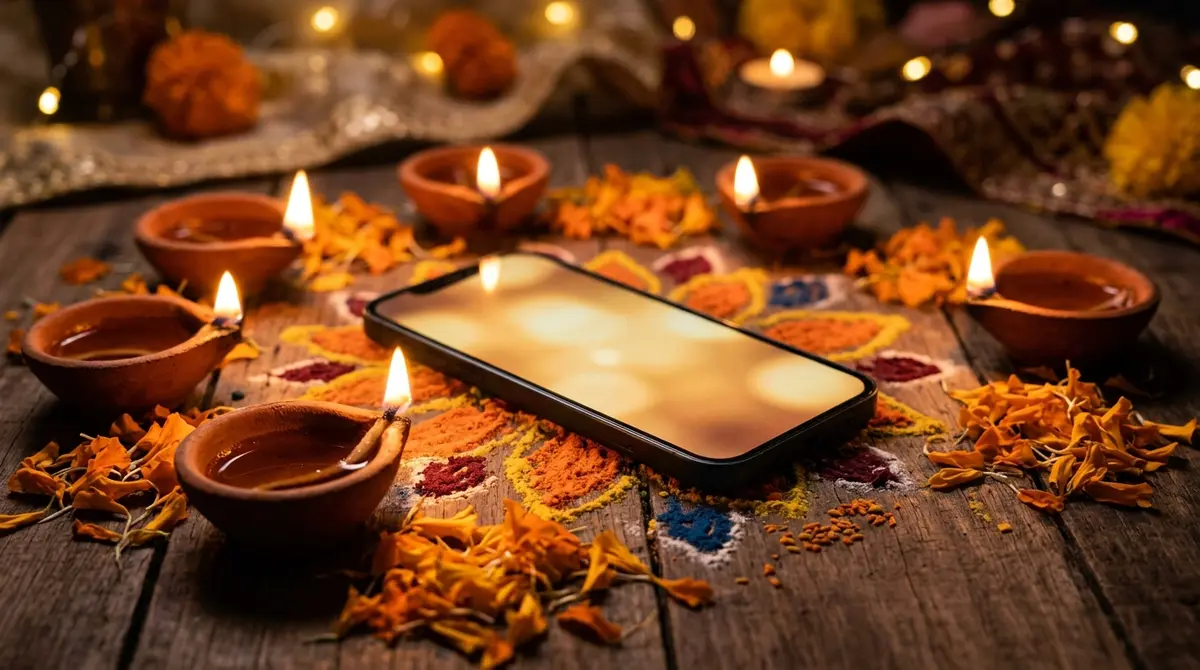
Deepavali 2026 falls on Sunday, 8 November, just three days before Singles' Day on 11 November, so run one continuous 8-11 November arc: warm audiences on the festive emotion first, then retarget the same shoppers with your 11.11 deal. Start testing in Q3, expect Q4 auction costs to run above their off-season baseline, and centre the creative on family, light and gifting rather than pure discounting.
You have a festive window that is unusually tight this year: Deepavali sits on a Sunday and Singles' Day lands the following Wednesday, so your creative, budget and audiences all have to work across a single four-day arc. This playbook maps that window backwards from the confirmed date, mapped to the categories Malaysian shoppers actually buy, with an honest read on what the auction does to your costs.
Start with the one date that anchors everything
Deepavali 2026 falls on Sunday, 8 November 2026. Every decision in this playbook hangs off that single fact, so lock it in before you touch a budget or a creative. According to PublicHolidays.com.my, the festival is a public holiday nationwide except in Sarawak, and because 8 November lands on a Sunday, most states observe a replacement holiday on Monday, 9 November. The exceptions are Kedah, Kelantan, Sarawak and Terengganu, which do not carry the Monday substitute. For you as an advertiser, that means the emotional peak sits on a weekend and rolls into a long weekend for a large slice of the workforce, concentrating both browsing and buying into the Saturday-to-Monday window.
That weekend timing changes how you should pace delivery. A Sunday festival means the heaviest scrolling happens when people are at home rather than at their desks, so your evening and weekend ad schedules carry more weight than a mid-week festival would. It also means the substitute Monday keeps a big share of the country off work for a third straight day, which stretches the shopping mood past the festival itself instead of ending it abruptly. Plan for a tail, not a cliff: keep some budget live on the ninth and tenth so you catch the shoppers who browse on the holiday and buy once the working week would normally resume.
One honest caution before you build your calendar off a generic seasonal planner: published Diwali dates elsewhere, including some marketing calendars, can differ from the Malaysian public holiday. Do not take the date from a global tool, and do not assume a platform's built-in seasonal calendar has the Malaysian date right. Use the Malaysian public-holiday source, which puts Deepavali firmly on 8 November 2026, and build your countdown backwards from there. If you plan your wider festive year in one place, our Malaysian marketing calendar for 2026 sets Deepavali in context alongside the other peaks you will be bidding against.
Deepavali is the lead-in to 11.11, not a rival
Here is the quirk that defines the 2026 window. Deepavali sits on Sunday, 8 November, and Singles' Day, the 11.11 sale, is always held on 11 November, which in 2026 is a Wednesday. That is a gap of just three days, inside the same calendar week. Singles' Day is the largest online shopping festival in the world and has spread firmly across Southeast Asia through Lazada and Shopee, so Malaysian shoppers will be primed for both moments almost simultaneously. Most planning guides treat these as two separate events on the calendar, and in most years they are. In 2026 they are effectively one shopping week.
Do not treat these as two separate campaigns competing for the same wallet. Treat them as one continuous 8-11 November arc. The efficient sequence is to warm cold audiences on the festive, emotional angle first, in the days leading up to 8 November, then retarget those exact engagers with your 11.11 deal push. A shopper who watched your Deepavali film, clicked through to your gift guide or spent time on your product page is already a warm audience by the tenth, and warm audiences convert at a lower cost than cold prospecting into the most expensive days of the auction. That is the whole point of sequencing the two moments rather than firing them as unrelated bursts.
Practically, that means your Deepavali spend then stops being a standalone cost and becomes the top-of-funnel that feeds a warmer, cheaper 11.11 conversion push. Build a custom audience of everyone who engaged with the festive creative, then layer your Singles' Day offer on top of it while it is still fresh. Cold-prospecting audiences can keep running in parallel, but the money that works hardest in this window is the retargeting pool you filled during the festive phase. If Singles' Day is a major event for your brand, plan its offer mechanics with our 11.11 ad ideas for Malaysia guide, then wire the two windows together rather than running them in isolation.
Build the countdown backwards from 8 November
Meta's own 2025 festive guidance, as reported by PPC Land, uses a two-phase framework: Phase 1 is Q3 planning, where you set goals, test creative and lock your campaign architecture, and Phase 2 is Q4 execution, where you apply those pre-season learnings to the peak. The point of testing early is simple: you want to exit the learning phase and validate your winning creative before auction competition ramps up. If you are still guessing which hook or format works when costs are at their highest, you are paying premium prices to run experiments you could have run cheaply in September. Working the schedule backwards from 8 November, a workable cadence looks like this.
| Window | Phase | Job of the ads |
|---|---|---|
| Q3 (Jul-Sep) | Plan and test | Set goals, test hooks and formats, decide campaign structure |
| ~2-3 weeks out (mid-Oct) | Teaser / awareness | Festive emotion, brand discovery, no hard offer |
| 7-10 days out (late Oct) | Consideration | Product focus, gift guides, bundles, saved audiences building |
| Final 72 hours (5-7 Nov) | Conversion / urgency | Offer, deadline, last-order cutoff messaging |
| 8 Nov | Deepavali | Festive greeting creative, retarget engagers |
| 9-11 Nov | 11.11 pivot | Retarget festive engagers with the Singles' Day deal |
Read the table as a funnel, not a set of disconnected flights. The teaser phase exists to fill your retargeting pools cheaply while attention is still affordable, the consideration phase gives shoppers a reason to save or share, and only the final stretch leans on the offer and the deadline. Each phase hands warm audiences to the next, which is why starting the awareness push two to three weeks out matters: it gives the mid-funnel something to retarget and the conversion phase a pool of high-intent shoppers to close. Skip the early phases and you arrive at the peak with nothing but cold traffic to buy at the worst possible prices.
Keep the festive-emotion phase and the deal phase in separate ad sets so you can read their performance independently. That separation matters more than usual here, because the CPA of the final-72-hours conversion ads will run higher than the awareness ads, and you do not want that to muddy the read on your earlier work. If you blend them into one ad set, a rising conversion-phase cost can make a perfectly healthy awareness campaign look like it is failing, and you may cut the very ads that are feeding your funnel. For the mechanics of setting up and structuring these campaigns cleanly, the pillar guide on how to run a Facebook ad covers the fundamentals.
Offer structures mapped to real Malaysian categories
Deepavali shopping in Malaysia clusters around a handful of well-established categories: gold and jewellery, new clothes, sweets and gifting hampers, and lights and home decor. The buying is real and specific. Poh Kong, for instance, markets a dedicated Deepavali gold jewellery collection built around 916 and 22K yellow gold, and it is one of several established Malaysian jewellers, alongside names like Habib Jewels and Tomei, that treat the festival as a core selling season. Rather than defaulting to a single blanket percentage off, match the offer structure to the category, because a discount that lands well on a hamper reads as cheap on an heirloom gold chain.
| Category | Real MY examples | Offer structure that fits |
|---|---|---|
| Gold & jewellery | 916 / 22K collections, saree-matching sets | Craftsmanship-fee (upah) waiver, tiered spend, early-bird |
| New clothes | Saree, kurta, salwar | Self-gifting bundle, buy-2 pricing, gift-with-purchase |
| Sweets & hampers | Festive gifting boxes | Bundle, gift-with-purchase, free-gift threshold |
| Lights & decor | Diyas, rangoli kits, home decor | Starter bundle, spend-threshold free gift |
In jewellery specifically, a craftsmanship-fee or upah waiver is a genuine, familiar Malaysian promo lever, more resonant than a raw discount because it speaks the category's own language rather than signalling a fire sale on something meant to hold value. For new clothes, a self-gifting angle works alongside the gifting one: many shoppers buy a saree or kurta for themselves as much as for family, so buy-two pricing and gift-with-purchase both fit. Sweets and hampers reward bundle and free-gift-threshold structures because the buyer is already assembling a set to give away, and lights and decor suit starter bundles that let a first-time buyer furnish a whole look in one order.
Whatever the category, note the honest limit here: exact 2026 promo terms for individual brands were not verified, so design your own mechanics rather than copying a specific competitor's percentage. Tiered-spend thresholds lift average order value by rewarding the shopper for adding one more item, early-bird pricing pulls demand forward out of the expensive peak days, and gift-with-purchase raises perceived value without discounting the headline price. The general principle holds across every category: keep the discount out of the top-of-funnel festive ad and place the offer in the retargeting ad, so the first impression sells the feeling and the follow-up closes the sale.
What Deepavali does to your ad costs, honestly
This is the section where it is tempting to quote a scary CPM spike. Resist it, because no neutral, dated source publishes a Malaysia-specific Meta CPM or CPC for Deepavali or 11.11. Anyone presenting a precise local ringgit spike figure for this window is guessing, and building a budget on a made-up number is worse than building it on an honest range.
What we can say, with a dated source, is directional. WordStream notes that in the latter part of Q3 and into Q4, costs tend to temporarily increase as the landscape shifts for the holiday ecommerce season, because competition ramps up as brands raise their budgets and gain more impression share, which pushes costs up for every advertiser in the auction. In 2026 that ordinary Q4 pressure is compounded, because Deepavali and 11.11 stack into the same week, so more advertisers are bidding hard at once. The mechanism is simply supply and demand for a finite pool of impressions: when more brands crowd the same auction with bigger budgets, the clearing price rises for everyone, festive brand or not.
For scale, WordStream's 2025 benchmarks put the average Facebook CPC at US$0.70 for traffic-objective campaigns and US$1.92 for leads-objective campaigns, with an average cost per lead of US$27.66. Read those as US, all-industry medians drawn from hundreds of US campaigns between April 2024 and June 2025. They are not Malaysian numbers, and you should not present them, or convert them, as your local spend. Use them only to understand how cost behaves: leads cost more than clicks, and both drift upward under competitive pressure. The lesson to carry into your own planning is the shape of the curve, not the absolute figure. To reason about your own local costs from your own account data, our guide to Facebook advertising costs in Malaysia is the right place to start, because your historical account data beats any borrowed benchmark for setting a realistic festive budget.
Cost-defence tactics for the peak
If the auction is going to be more expensive, the response is not to panic-bid, it is to make your money go further before and during the crunch. Several tactics follow directly from the higher-competition picture above, and none of them require you to outspend larger brands.
First, launch and learn early. If you exit the learning phase in Q3 or early October, you enter the peak with proven creative and stable delivery, rather than paying premium auction prices to figure out what works. An ad set that is still in learning during the most expensive days is the worst of both worlds: high costs and unstable delivery at the same time. Second, lock in your retargeting and lookalike audiences ahead of the peak, so that when costs are highest you are spending on warm, high-intent shoppers rather than cold prospecting. The festive-emotion phase exists partly to build exactly these audiences, and the bigger you make that warm pool early, the more efficient your conversion spend becomes later. Our guide to Facebook retargeting covers how to structure those warm segments.
Third, lean into video and Reels and let Meta's automation, including Advantage+ tooling, do more of the optimisation work during a period when manual micromanagement is hardest. A crowded festive feed rewards motion and sound, and automated placements let the system chase the cheapest available impressions across surfaces rather than boxing you into a single expensive one. Fourth, and this one is a genuine strategic call rather than a growth hack: if you are a non-ecommerce brand, WordStream advises weighing whether to keep a full presence or to scale back during the most expensive holiday days, precisely because auction costs rise. A lead-gen service business with no festive gifting angle may get better value shifting budget to quieter weeks, then returning once the peak passes. An ecommerce gifting brand should hold its ground, because the shoppers are actively buying and the higher cost per impression is offset by higher intent.
Creative angles that convert without disrespect
Meta's 2025 festive guidance reports that 50% of festive shoppers discovered a brand or product on its technologies, based on a YouGov study of 18,727 shoppers across 14 countries conducted in December 2024. Treat that as medium-confidence, attributed to Meta via trade coverage rather than an independently verified figure, but the direction is clear: the festive feed is a discovery engine, so feed-native, scroll-stopping creative earns its place. Half of festive shoppers finding something new means the top of your funnel is doing more work than usual, and a polished, native-feeling ad has a real shot at introducing your brand to someone who has never heard of it.
The angles that convert while staying respectful are consistent: family and togetherness, gifting someone you love, lighting up your home, gold as an heirloom or blessing, and self-gifting new clothes for the celebration. Put the warm festive story in the top-of-funnel ad and reserve the offer and urgency for the retargeting layer. Video tends to carry the emotional angle better than a static image, so front-load a strong hook in the first seconds, then let the product land once you have earned attention. In practice that means opening on a moment of feeling, a family lighting lamps, a gift being unwrapped, before the product ever appears, and saving the price and the deadline for the follow-up ad that reaches people who already responded to the story.
The respectful multicultural checklist
Deepavali is a religious and cultural celebration before it is a sale, and Malaysian audiences can tell the difference between a brand that understands the festival and one that borrowed its aesthetics. Celebrate, do not caricature. The stakes are not only reputational: work that reads as tone-deaf gets scrolled past, which wastes the very discovery moment you paid to reach. Use this checklist before anything goes live.
- Use authentic festive visuals, diyas and oil lamps, rangoli, marigold and traditional dress, rendered properly and used with intent, not dropped in as generic clip-art.
- Avoid stereotypes, exaggerated accents and tokenism in every element, from casting to copy.
- Get names, script and greetings right, using Happy Deepavali or Deepavali Valthukkal accurately rather than approximating.
- Centre the themes the festival is actually about, warmth, family and light over darkness, ahead of hard discounting.
- Ideally, have someone from the Malaysian Indian community review the creative before launch, so language, dress and imagery read as authentic.
This is not only an ethical safeguard, it is a performance one. Respectful, well-observed work signals that your brand belongs in the moment, which is exactly what earns the discovery Meta describes. A single wrong detail, a mistranslated greeting or a costume worn as a prop, can undo an otherwise strong campaign, and the community review step catches most of those before they cost you. The same discipline applies to every festival you advertise around; our Raya ad playbook applies the identical celebrate-do-not-caricature principle to that season, and the same pattern carries straight into Chinese New Year and every other cultural moment on the Malaysian calendar.
Measurement and operations for the four-day arc
The final piece is operational discipline, because a compressed window punishes sloppy fulfilment and messy measurement. Three practical rules close the loop, and all three come back to the same idea: plan the whole arc as one funnel and instrument it so you can read each phase honestly.
Set a realistic last-order and last-delivery cutoff for physical gifts that lands comfortably before 8 November, and run your final urgency ads against that cutoff rather than the festival date itself. Order by this date to receive before Deepavali is a legitimate, high-converting urgency lever, and it is far more honest than a countdown to the festival that your logistics cannot actually meet. Once the cutoff passes, pivot the message to in-store pickup, e-vouchers, digital gift cards or the upcoming 11.11 sale, so the traffic that keeps arriving is not wasted on an offer you can no longer fulfil in time.
Keep separate ad sets for the festive-emotion phase and the 11.11-deal phase so you can read them independently, and resist the urge to reshuffle budgets mid-learning based on a single bad day. Expect the CPA to rise as you push into the peak, and budget for that rather than pausing a campaign that is still exiting its learning phase, because a pause resets the learning you have already paid for. A brand that plans the whole 8-11 November arc as one funnel, warm audiences on emotion, then convert them on the deal, will spend less per sale than one running two disconnected bursts. Keeping research, creative generation and launch in one place, on a platform like AdPlay.ai, makes that continuity easier to hold across a tight festive week, but the discipline matters more than the tooling: one date, one arc, honest costs, respectful creative.
By the numbers
Frequently asked questions
When is Deepavali 2026 in Malaysia?
Deepavali 2026 falls on Sunday, 8 November. It is a public holiday nationwide except in Sarawak. Because 8 November is a Sunday, most states observe a replacement holiday on Monday, 9 November, with the exceptions being Kedah, Kelantan, Sarawak and Terengganu. For advertisers, the practical takeaway is that the emotional peak lands on a weekend and rolls into a long weekend for many workers, which tends to concentrate both browsing and shopping into the Saturday-to-Monday stretch. Anchor your entire campaign calendar off 8 November and build the countdown backwards from it, rather than guessing the date from a generic seasonal calendar, since published Diwali dates elsewhere can differ from the Malaysian public holiday.
Should I run Deepavali ads and 11.11 ads separately?
Treat them as one continuous arc, not two isolated campaigns. Deepavali on 8 November is only three days before Singles' Day on 11 November, so the same shoppers are in-market across the whole week. The efficient move is to warm cold audiences on the festive, emotional angle first (family, light, gifting), then retarget those exact people with your 11.11 deal push once they have engaged. Keep the festive-emotion phase and the deal phase in separate ad sets so you can read each independently, but let audiences flow from one into the other. That way your Deepavali spend is not wasted, it becomes the top-of-funnel that feeds a warmer, cheaper 11.11 conversion push.
How early should I start my Deepavali ad campaign?
Start planning and testing in Q3, well before the peak-cost window. Meta's own 2025 festive guidance uses a two-phase framework: Phase 1 is Q3 planning, where you set goals, test creative and lock in your campaign architecture, and Phase 2 is the Q4 execution window, where you apply those learnings to the peak sales days. The practical benefit is that you exit the learning phase and validate your winning creative before auction competition ramps up. A common cadence is a teaser or awareness push around 2-3 weeks out from 8 November, mid-funnel consideration 7-10 days out, and a last-mile conversion and urgency push in the final 72 hours.
Will my Facebook ad costs go up around Deepavali?
Expect upward pressure, but describe it qualitatively rather than quoting a Malaysian figure. WordStream notes that in the latter part of Q3 and into Q4, costs tend to temporarily increase for the holiday ecommerce season because competition ramps up as brands raise budgets and gain impression share, pushing costs up for everyone in the auction. In 2026 that pressure is compounded because Deepavali and 11.11 stack in the same week. No neutral, dated source publishes a Malaysia-specific CPM or CPC for Deepavali, so treat any RM cost number you see with caution. Plan for higher CPMs and CPAs into the peak, budget for it, and launch early so you are not learning at the most expensive moment.
What should my Deepavali ad offer be?
Match the offer to what Malaysians actually buy for Deepavali: gold and jewellery, new clothes such as sarees, kurta and salwar, sweets and gifting hampers, and lights, diyas and home decor. Rather than a single blanket percentage off, consider offer structures that suit the category. Bundles and gift-with-purchase work well for sweets and decor, tiered spend thresholds lift average order value, and early-bird pricing rewards shoppers who buy before the last-minute rush. In jewellery, craftsmanship-fee or upah waivers are a genuine Malaysian promo lever. Keep the discount out of the top-of-funnel festive ad and place the offer in the retargeting ad, so the first impression sells the feeling and the follow-up closes the sale.
What creative works best for Deepavali ads?
Lead with emotion, not price. The angles that convert while staying respectful are family and togetherness, gifting someone you love, lighting up your home, gold as an heirloom or blessing, and self-gifting new clothes for the celebration. Use authentic festive visuals, oil lamps and diyas, rangoli, marigold and traditional dress, rendered properly rather than as generic clip-art. Video and Reels tend to earn attention in a crowded festive feed, so front-load a strong hook. Structurally, put the warm festive story in your top-of-funnel creative and reserve the offer and urgency for the retargeting layer. Meta reports that 50% of festive shoppers discovered a brand or product on its platforms, so discovery-friendly, feed-native creative is worth the investment.
How do I make Deepavali ads respectful and not stereotypical?
Celebrate, do not caricature. Use festive symbols correctly and with intent rather than as decoration, and avoid stereotypes, exaggerated accents or tokenism. Get the details right: names, script and greetings, using Happy Deepavali or Deepavali Valthukkal accurately. Centre universal themes the festival is actually about, warmth, family and light over darkness, rather than leaning on hard discounting. The single most useful safeguard is to involve someone from the Malaysian Indian community in reviewing the creative before it goes live, so language, dress and imagery read as authentic to the people you are trying to reach. Respectful work is also better-performing work, because audiences can tell the difference between a brand that understands the festival and one that borrowed its aesthetics.
When is the last day to run conversion ads before Deepavali?
Work backwards from your fulfilment reality, not the calendar. For physical gifts, set a realistic last-order and last-delivery cutoff that lands comfortably before 8 November, then run your final urgency ads against that cutoff rather than the festival date itself. Communicate the cutoff clearly in the creative, since order by this date to receive before Deepavali is a legitimate and effective urgency lever. After the cutoff passes, pivot messaging to in-store pickup, e-vouchers, digital gift cards or the upcoming 11.11 sale so the traffic is not wasted. Keep a separate ad set for this final-72-hours conversion phase so its rising CPA does not distort the read on your earlier awareness and consideration ads.
Sources
- 1.PublicHolidays.com.my - Deepavali 2026 (date and state coverage) (2026)
- 2.Wikipedia - Singles' Day (11.11 date and Southeast Asia reach) (2026)
- 3.WordStream - How Much Do Facebook Ads Cost? (Q4 holiday seasonality) (2025)
- 4.WordStream - Facebook Ads Benchmarks 2025 (US CPC and CPL medians) (2025)
- 5.PPC Land - Meta releases 2025 festive season guide (2025)
- 6.Poh Kong - Deepavali gold jewellery collection (2025)
Keep exploring
Turn ad research into winning ads
See what 16,000 Malaysian brands advertise, then generate on-brand creative, all in one tool.
7-day free trial · No credit card required