
Packaged Food & Snack Facebook Ads (Malaysia)
How Malaysian snack, sauce, beverage and grocery brands run Facebook and Instagram ads: halal proof, label-safe claims, bundle economics against courier cost, and repeat purchase.
Updated August 2026 · Likit Sae Lee, CTO
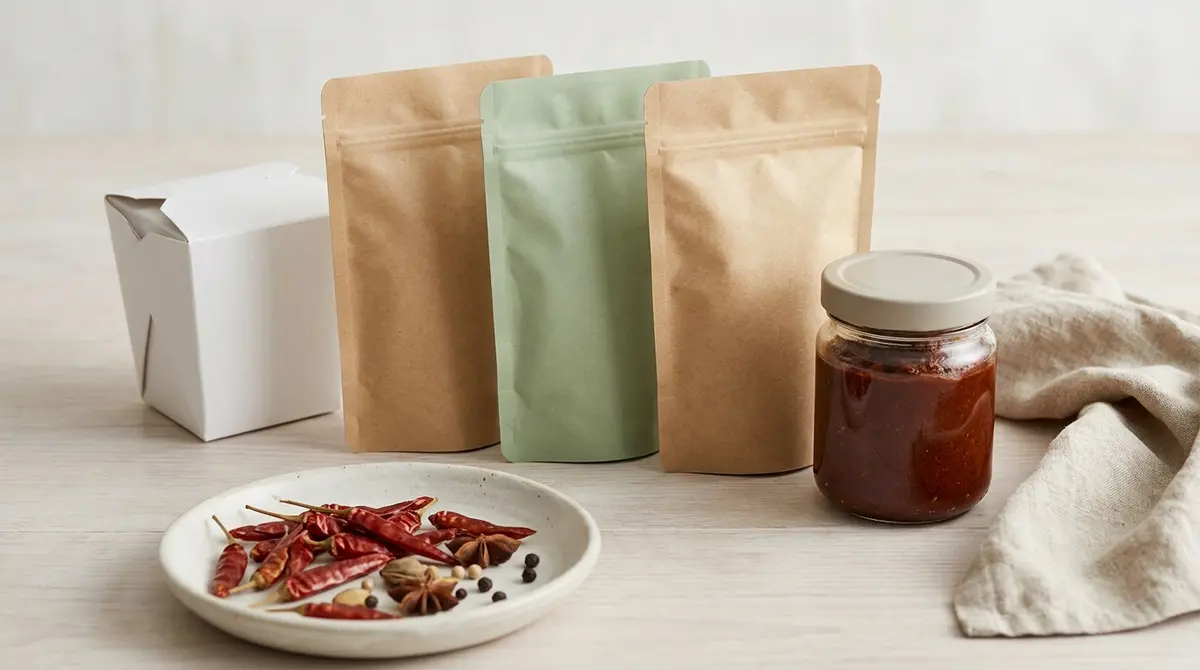
A Malaysian packaged food brand wins on Facebook and Instagram by fixing the economics before the creative. A single jar or packet rarely clears the courier cost on its own, so the ad sells a bundle or a multipack that lands above your free-shipping threshold, and the business is made on the second order rather than the first. Show the pack the way a shopper will recognise it on shelf, keep every claim inside what the Food Regulations 1985 allow a label to say, and show the JAKIM halal mark only on the SKUs that actually carry it. No dated Malaysian cost-per-order benchmark exists for this category, so read cost per first order and 90-day repeat rate from your own account.
Your product is a packet, a jar or a bottle with a best-before date on it. It sits on a shelf in a grocery chain, in a Shopee cart, or in a box you pack yourself on a Tuesday night. That is a different advertising job from selling a table or a slice of cake, because the sale can land in four places you do not equally control, and because a low-priced item has to beat a courier charge before it earns anything. What follows is the part of Facebook and Instagram advertising that changes when the thing you sell is a labelled pack with a barcode on the back.
The short version
A packaged food brand has an advertising problem that a kitchen does not. The item is cheap, the courier is not, the sale can land in four different places, and the label on the pack legally limits what the ad is allowed to say about it. Reach is not the constraint. DataReportal's Digital 2026 report puts Meta's potential ad reach in Malaysia at roughly 23.0 million on Facebook and 16.1 million on Instagram, which is more shoppers than any snack brand needs.
The constraint is unit economics and proof. A single RM15 jar cannot absorb a courier charge and a paid acquisition cost and still leave anything behind, so the ad has to sell a bundle rather than a unit. A shopper who has never tasted your product needs a reason to trust it, and in Malaysia the halal mark on the pack does more of that work than any headline you can write. And the claims that would make your product sound most compelling are frequently the ones the Food Regulations 1985 do not permit a label to carry, which means they do not belong in the ad either.
Those four constraints, and not the creative brief, are what usually decide whether a packaged food account works.
Decide where the sale lands before you write a word
Most confused packaged food campaigns are confused because nobody decided which of four channels the ad was feeding. They are not interchangeable, they carry different margins, and only two of them can be measured properly.
| Where the sale lands | What the ad can do | What you can actually measure |
|---|---|---|
| Your own online store | Full funnel: pixel, catalogue, retargeting, value optimisation | Everything, down to bundle-level margin |
| Shopee, Lazada, TikTok Shop | Send traffic to one listing; no pixel on the page | Marketplace dashboard traffic and units, plus a campaign-only SKU |
| Grocery and convenience shelf | Announce availability, build recognition before the aisle | Distributor sell-through, directionally, over weeks |
| WhatsApp or direct order | Conversation, custom bundles, wholesale and corporate | Chats started, then your own order book |
The trap is running one campaign that gestures at all four. An ad that says the product is now at a grocery chain and also links to a marketplace listing and also mentions free shipping on your own site gives a shopper three jobs and gets none of them done. Pick the channel that carries the best margin for that flight, build the whole creative around that single next step, and run the other channels as their own campaigns with their own budgets.
Marketplace advertising deserves a specific warning. You cannot install the Meta Pixel on a Shopee or Lazada product page, so Meta never learns which click became a purchase and cannot optimise toward one. No attribution setting fixes that, so design around it. Point the ad at one listing rather than a storefront, watch the listing's own view and sold counts across the flight, and where you can, sell a bundle SKU through the ad that exists nowhere else in your catalogue so the units sold are self-attributing.
Your own store is where the machinery pays off. A product catalogue lets you run dynamic ads that re-serve the exact flavour someone viewed, the pixel lets you optimise for purchase value rather than clicks, and you can see contribution margin per bundle instead of guessing. If a meaningful share of your volume is going through a marketplace purely out of habit, the arithmetic on shifting even part of it to your own checkout is usually worth doing before you increase ad spend anywhere.
Halal is a conversion factor, and it is per SKU
For most of the Malaysian market, the halal mark is not a nice-to-have badge. It is the answer to a question the shopper would otherwise have to go and find out for themselves, and an unanswered question at the point of scroll is a lost sale. Certification is administered by JAKIM together with the state Islamic religious councils, with production and handling governed by the Malaysian Standard MS 1500:2019, and misdescribing food as halal is an offence under the Trade Descriptions Act 2011 through the Trade Descriptions (Certification and Marking of Halal) Order 2011.
That you cannot use the word or the logo without holding the certificate is the part everyone already knows, and the halal ad creative guide covers the baseline rules and the honest alternatives available to an uncertified seller. The part that catches packaged brands specifically is narrower: certification attaches to a named product made at a named plant, not to your company or your logo.
That distinction turns into a creative problem the moment your range grows. A sauce brand certifies its original recipe, then launches two new flavours through a co-packer that has not been certified, and now holds three SKUs under two different statuses. A range shot showing all three sitting together under one halal mark is a misdescription, even though every individual sentence in the caption is true, and the visual is doing the misdescribing rather than the copy. The same trap opens when a certificate lapses mid-flight, when a co-packer changes, or when a variety box quietly mixes certified and uncertified units into one photographed bundle.
Three habits keep this clean. Keep a per-SKU register of certificate number, certifying body and expiry, and check it before a flight rather than after a complaint. Split ad sets by certification status so an uncertified flavour can never end up in a layout carrying the mark. And brief creators on exactly which products they may film alongside which claim, because a range of jars arranged on a kitchen counter in someone else's video is the same range shot with your name on it.
Where certification is genuine and current, show it the way the shopper will see it in the aisle: on the pack, in the shot, at a readable size. A halal mark composited into a corner of the layout as a graphic reads as a design element. The same mark printed on the packet reads as the product.
What your label lets you say, the ad inherits
Here is where packaged food parts company with every other food business. A restaurant sells an experience and describes it freely. You sell a labelled product, and Malaysian food labelling law has already drawn the outer edge of what that product is permitted to claim about itself. Your ad inherits that edge whether or not anyone in the marketing meeting has read the schedules.
The Food Regulations 1985, made under the Food Act 1983 and administered by the Food Safety and Quality Division of the Ministry of Health, govern food labelling and claims. Permitted nutrient content claims and nutrient function claims are set out in the schedules to those regulations, each with conditions the product must actually meet. The practical test for an advertiser is simple and conservative: if the claim would not be permitted on your pack, do not put it in ad copy, on-screen text, a caption or a creator's voiceover. Changing the medium does not change the claim.
Past the labelling boundary sits a harder line. Copy asserting that a food prevents, treats, cures or manages a condition has left food marketing entirely and entered the scope of the Medicines (Advertisement and Sale) Act 1956, under which an advertisement of that kind needs the Medicine Advertisements Board's approval before it runs. That is a genuinely different regulatory regime with its own application, and the Malaysian medicine advertisement approval guide explains what it involves. Meta layers its own restrictions on top: its Health and Wellness advertising standard, current in the 2026 Transparency Center, restricts creative that promotes negative self-perception or an idealised body type, which is exactly the territory a functional beverage or a detox tea drifts into when the copywriter gets ambitious.
Here is the pattern that keeps brands safe and still sells.
| Tempting claim | Why it is a problem | What works instead |
|---|---|---|
| "Boosts your immunity" | Health claim beyond the permitted label wording | Name the ingredient and the format plainly |
| "Helps you lose weight" | Body-image and health framing Meta restricts | Sell the taste, the portion and the occasion |
| "Cures your hangover" | Asserts treatment of a condition | Describe when people reach for it, not what it fixes |
| "Doctor recommended" | Endorsement implying medical authority | Customer language about taste and repeat buying |
| "All natural, no chemicals" | Vague and unsubstantiated as written | The actual ingredient list, stated |
None of this weakens the ad, and the Malaysian brands in the category mostly demonstrate that. Fairchild's sells raw apple cider vinegar on being fresher and smoother, which is a sensory comparison rather than a statement about what the vinegar does to your body, and Kluang Coffee Cap Televisyen sells a traditional kopi range on bringing the kopitiam home, which is heritage and occasion rather than nutrition. Both angles are commercially strong, both are specific, and neither asks a regulator a question. The pattern is worth naming: the safest claims in this category are the ones a customer could check for themselves.
The pack is the creative
A dish photographed to trigger a craving is the restaurant's job. Yours is different: the shopper has to recognise your pack later, in an aisle or in a search result, from a two-second glance. That makes packaging the primary creative asset rather than a thing you place in a corner.
Three shot types carry most of this category, and each does a different job.
The pack front, shot clean and large, teaches recognition. Get the real colourway, the real proportions and enough resolution that the flavour name is legible on a phone. This is the frame that makes someone stop at your shelf facing three weeks later, and it is the one most brands under-shoot because it feels boring next to a styled scene.
The product in use closes the imagination gap. A jar on its own is an object. Sambal Kak Faa shooting a petai sambal jar over the dish it actually makes tells the shopper what Tuesday dinner looks like with the jar in it, which is what they are really buying. For a beverage that means the pour and the glass. For a frozen protein, the finished plate next to the pack that produced it.
The feature callout carries a factual reason to choose you, and for packaged goods that reason usually lives in the format rather than the food. Guawa leading with individually packed guava leaf tea bags is selling a sachet, not a health outcome, and the callout works because a shopper can picture throwing one in a handbag. Resealable closures, single-serve sachets, a squeeze bottle instead of a jar, a net weight that beats the shelf standard: these are the details a packaged brand can shout about without a health promise anywhere near the creative.
Formats follow from those. A multi-flavour range wants a carousel with one flavour per card and the ringgit price on each, so a shopper can compare before they commit. A single hero SKU wants a static or a short vertical video. A bundle offer wants the bundle photographed as the bundle, all units in frame, because a shopper who sees three jars understands the price instantly and a shopper who sees one jar with "3 for RM45" written on it has to do arithmetic. When you want to see how Malaysian brands across the category are actually building this, the Malaysian food and beverage ad examples page collects real creatives by brand and angle, which is a faster way to calibrate than starting from a blank canvas.
Two production notes belong to packaged goods specifically. Keep on-screen text light, because a jar or a packet already carries a designed front, and stacking headline type over printed type gives the eye two competing layouts to read. And audit your asset library against current artwork before every launch. Packaging changes more often than ad accounts do, and a brand that redesigns a label in March and is still running the old pack shot in September is teaching shoppers to look for something that no longer exists on the shelf, which is the one job this creative had. Date your pack shots in the filename and retire the old ones properly rather than leaving them in the folder.
Bundle economics against the courier line
Here is the arithmetic that decides whether a packaged food brand can advertise at all. Run it on your own figures before you spend anything, because it will change what the ad sells.
Take a single SKU that retails at RM18. Your cost of goods might be RM6, packaging and packing materials another RM1.50, and a courier charge to a Peninsular address somewhere around RM8, with East Malaysia materially higher. Before a single ringgit of advertising, that order is contributing about RM2.50. No acquisition cost survives that. This is why an ad selling one jar of anything is almost always a losing campaign in this category, regardless of how good the creative is.
Now bundle. Three jars at RM45 carry RM18 of goods, maybe RM2.50 of packaging and one courier charge of roughly RM10 for the heavier parcel, leaving about RM14.50 of contribution. That is a number an acquisition cost can live inside, and it is the same product, the same warehouse and the same ad account. The bundle did not improve your product. It spread a fixed cost.
| Offer shape | Revenue | Goods and packing | One courier charge | Contribution before ads |
|---|---|---|---|---|
| Single jar | RM18 | RM7.50 | RM8 | About RM2.50 |
| Three-jar bundle | RM45 | RM20.50 | RM10 | About RM14.50 |
| Six-jar variety box | RM84 | RM40 | RM12 | About RM32 |
Those figures are illustrative, not benchmarks. Substitute your own and the conclusion usually holds.
Set your free-shipping threshold with intent rather than copying whatever a competitor uses. The useful position is a little above your standard bundle, so a shopper who has three jars in the basket has a concrete reason to add a fourth. Then say the threshold in the ad, in ringgit, because a Malaysian shopper reads "free shipping above RM60" as a fact and reads "great value" as noise. Puck Malaysia running a spend-RM20-and-redeem mechanic is the same idea working at supermarket scale: a specific threshold attached to a specific reward.
Two more levers belong to this category specifically. A variety box solves the objection of a shopper who does not know which flavour they want, which is the single most common reason a first-time food purchase stalls. And a cash-on-delivery option still converts meaningfully for lower-ticket Malaysian purchases where card trust is the barrier, though it brings its own return rate to manage.
The second order is where the business is
A packet of snacks is not a considered purchase. It is a habit, and habits are worth many times a single transaction, which changes what you are allowed to pay for a customer.
Model it plainly. If a first order is worth RM14.50 of contribution and a typical buyer orders four times in a year, that customer is worth around RM58 before you count anything else. An acquisition cost that looks reckless against the first order can be comfortable against the year. The brands that scale in this category are usually not the ones with the cleverest creative. They are the ones who worked out the annual figure and then had the nerve to spend against it while a competitor was still judging each order in isolation.
To do that you need one number most small brands never calculate: the share of first-time buyers who order again within 90 days. Pull it by monthly cohort, not as a lifetime average, because a lifetime average flatters you with your oldest and best customers and hides whether the buyers you acquired last month are coming back. If the cohort rate is climbing, spend harder. If it is falling while cost per first order stays flat, you have a product or fulfilment problem that more budget will only amplify.
Repeat is also something you can engineer rather than wait for. A refill or subscription offer at a modest standing discount converts the habit into predictable revenue for anything consumed on a schedule, which covers coffee, sauces, tea, snacks for a household with children and most beverages. A reorder reminder timed to roughly when the pack runs out is cheap and effective. And a retargeting audience built from past purchasers is the highest-intent audience your account will ever hold, which makes it the natural home for a new flavour launch, a festive bundle or a variety box that existing customers can evaluate without a leap of faith.
One caution on optimisation. Value optimisation only works when your pixel is receiving accurate purchase values, and for a brand with several bundle sizes that means the value passed on each event has to be the real order value, not a fixed placeholder. Get that wrong and Meta optimises toward the wrong basket enthusiastically.
Cold chain and shelf life draw your targeting map
Ambient snacks, sauces and packaged drinks travel almost anywhere in Malaysia. Chilled and frozen products do not, and the gap between those two realities is where a lot of money and reputation gets lost.
If you sell frozen seafood, chilled dairy, fresh noodles or anything with a short refrigerated life, your serviceable area is defined by the courier lanes that hold temperature end to end. Those lanes typically cover selected Peninsular postcodes, with Sabah and Sarawak either outside the service entirely or served on different timings and prices. Your ad set geography has to match that map, not your ambition. Ask the courier for the actual serviceable postcode list rather than working from the coverage claim on their website, then build the ad set from that list and exclude everything else explicitly instead of trusting a checkout rule to catch the overflow. Meta's Marketing API documents a drop-pin radius from roughly 1 to 80 km, which is fine for ringing a cluster of towns but a poor fit for a postcode-shaped service area, so lean on included and excluded locations rather than a circle. The mechanics of both are in the location targeting guide. An impression served to someone you cannot deliver to costs you the media and then costs you again in the refund and the public comment.
Say the constraint in the creative. Delivery days, covered areas and the packaging method belong on the ad, not buried in a shipping page. A frozen brand like HS Food & Fishery advertising individually quick-frozen tiger prawns is selling on saved cost and saved time in the kitchen, and that pitch only survives if the parcel arrives in the state the ad implied.
Shelf life shapes the calendar too. Perishable and short-dated stock cannot be advertised on a rolling evergreen budget the way an ambient snack can, because demand you generate in week six against stock that expires in week four is worthless. Match the flight to the production run. And handle date-based promotions carefully: clearing short-dated stock at a discount is legitimate, but the discount has to be presented honestly against a genuine prior price, which is where Malaysian price representation rules apply and where the discount and price claims guide is worth reading before you write "was RM39, now RM19".
Advertising a shelf you do not own
When a grocery chain stocks you, the advertising job inverts. You are no longer trying to capture a click. You are trying to make a shopper recognise your pack when they are standing in front of it with a trolley, and to make the retailer's own sell-through numbers look good enough that the listing survives the next range review.
Availability creative is the workhorse: the pack, the chains that carry it, and the aisle it lives in. Village Grocer announcing a new store opening in Penang is the retailer's version of the same move, and a supplier brand can ride that logic by ringing a radius around the outlets that actually stock it rather than blanketing the country. Targeting a national audience for a product available in eleven stores is a slow way to burn a budget.
Be honest about measurement here. Meta cannot see a shelf purchase, and no attribution window or conversion API configuration changes that. What you can do is run a defined flight, ask your distributor for sell-through on the specific outlets inside your targeted radius across the same weeks, and read the movement directionally against a comparable period. Treat that as a signal, not a proof. Anyone who tells you they can attribute supermarket sales to a Facebook ad account with precision is selling you something.
Two operational habits make retail advertising worth doing. Tell the distributor before a flight starts so the shelf is stocked when demand arrives, since driving shoppers to an empty facing is worse than not advertising. And keep a direct-to-consumer bundle campaign running alongside the retail push, because that campaign produces a real, measurable cost per order that lets you reason about creative and audience while the retail side stays fuzzy. The direct channel becomes your laboratory and the retail channel takes the volume.
Creators, and the claims you inherit from them
User-generated content works unusually well for packaged food because a stranger saying a sambal is worth buying is more persuasive than any brand sentence. It also carries a specific risk that other categories do not: whatever a creator says on camera about what your food does to a body is, in practice, a claim your brand made.
So brief the fence explicitly. Give a creator a short list of what they may talk about and a shorter list of what they may not. Permitted is sensory and situational: how it tastes, how it smells, what they cooked with it, how fast the family finished it, what it costs, how it survives a lunch bag. Not permitted is anything touching digestion, energy, immunity, weight, blood sugar, skin or sleep, and any direct comparison to a named competitor product.
Ask for the raw file rather than a link to a posted clip. That way you can cut a sentence that drifted, edit for a vertical placement, and keep using the footage after the creator's own post has scrolled away. Record the usage permission and its term in writing alongside the delivery date, and store both where the person running the account next year will find them.
Then use the material properly. A creator clip is a hook, not a whole ad. The strongest structure in this category opens on the creator's reaction, cuts to the product in use, and lands on the pack with the bundle price and the offer, so the ad borrows the credibility and then does the selling itself. A snack brand like Chickilicious framing a box as something you share with someone you love is running on exactly that emotional logic, with the pack carrying the close.
What to measure, and the benchmark that does not exist
Be direct about this: there is no dated, primary Malaysian benchmark for cost per order, cost per acquisition, ROAS, CPM or CTR for packaged food, snack, sauce or beverage brands. If you find a page confidently stating a ringgit figure for this category, it is almost certainly unsourced, and planning against it will mislead you.
The nearest published reference is US data, and it needs handling with care. WordStream's 2024 Facebook advertising benchmarks reported a median cost-per-click of US$0.51 and a median click-through rate of 2.19% for the Restaurants and Food category across US accounts. That is a US aggregate, in US dollars, dominated by restaurants rather than shelf-stable packaged goods. It is useful for exactly one insight, that food tends to buy cheap clicks and earn high engagement relative to other verticals, and useless as a target for your account.
The numbers that actually run your business are all first-party. Cost per first order, read against your bundle contribution margin rather than against revenue. The 90-day repeat rate by monthly cohort. Contribution margin per order after courier, packaging and any marketplace commission. Average order value against your free-shipping threshold, which tells you whether the threshold is doing its job or sitting so high that nobody reaches it. And for retail, sell-through in the targeted outlets, read directionally.
Give a campaign two to three weeks before judging it so it clears the learning phase, and change one variable at a time when you do intervene, because a simultaneous change to offer, creative and audience teaches you nothing. Watch a monthly rolling average rather than a daily one; food demand in Malaysia is lumpy around paydays and the festive calendar, and a bad Wednesday means nothing.
A good share of the work before a flight is look-back, and a searchable archive of Malaysian food and beverage ads such as AdPlay.ai shortens it, as does the free Meta Ad Library for checking what a specific page is running today. The tooling matters less than the sequence, which is the same for anyone selling packets and jars: work out what a bundle earns after the courier, build creative that teaches the pack and stays inside what the label permits, put it in front of an audience you can genuinely deliver to, and let your own repeat rate decide how hard to spend.
By the numbers
Frequently asked questions
How should I run ads if I sell mainly on Shopee and Lazada?
Accept up front that you cannot install the Meta Pixel on a marketplace listing, so the platform will never see the purchase and cannot optimise toward it. Run traffic or link-click campaigns pointed at a single specific listing, not your storefront home page, and treat the marketplace's own traffic dashboard as your source of truth for what arrived and what converted. The cleanest reconciliation trick is to give the campaign its own bundle SKU that exists nowhere else, so every unit of that SKU sold is attributable to the ad without any tracking at all. Set the bundle price above the marketplace's free-shipping voucher threshold so the offer stays coherent, and check the sold count on the listing before and after each flight.
Can I put the halal logo in my Facebook ad?
Only if the specific product in that creative holds valid Malaysian halal certification for the plant that makes it, and then the safest presentation is the mark as it appears on the pack rather than a logo pasted into the layout. Halal in Malaysia is a certification administered by JAKIM and the state Islamic religious councils, with production and handling governed by the Malaysian Standard MS 1500:2019, and misdescribing food as halal is an offence under the Trade Descriptions Act 2011 through the Trade Descriptions (Certification and Marking of Halal) Order 2011. The trap specific to a packaged brand is that coverage sits at SKU level, not company level. If three of your five flavours are certified and two are made at an uncertified co-packer, a range shot showing all five under one mark is a misdescription even though every sentence in the caption is true. Split the creative by certification status, keep the uncertified flavours out of any layout carrying the mark, and check the certificate expiry before a flight rather than after a complaint.
What nutrition or health claims can a Malaysian food ad make?
Work backwards from your label. The Food Regulations 1985, made under the Food Act 1983 and administered by the Food Safety and Quality Division of the Ministry of Health, control what a food may claim, and the permitted nutrient content claims and nutrient function claims are set out in the schedules to those regulations with conditions attached to each. If a claim would not be allowed on the pack, it is not made safe by moving it into ad copy or a creator's voiceover. The harder line is the medicinal one. Copy that says a food prevents, treats or cures a condition has stopped being food marketing and moved into the territory covered by the Medicines (Advertisement and Sale) Act 1956, where the Medicine Advertisements Board's approval is required before the advertisement may run, and Meta's own advertising standards restrict health and body-image framing on top of that. Keep the ad on taste, ingredient, format, occasion and convenience, and you avoid the entire category of problem.
How do I make an RM15 product profitable once shipping is added?
You usually cannot, which is why almost no successful Malaysian packaged food brand advertises a single unit. Work out your true delivered cost first: cost of goods, packaging, the courier rate to Peninsular Malaysia and the higher rate to Sabah and Sarawak, marketplace or payment commission, and packing labour. Then design the smallest bundle whose margin comfortably covers a paid acquisition cost, and make that bundle the thing the ad actually sells. A three-jar or six-pack offer spreads one courier charge across several units and lifts the order above a free-shipping threshold in the same move. Set the threshold slightly above your standard bundle so there is a reason to add one more item, and put the bundle price in ringgit on the creative rather than a percentage.
My product is stocked in supermarkets. Is it worth advertising at all?
Yes, but measure it as a retail activity rather than a direct response campaign, because Meta will never see a shelf sale and no attribution setting can conjure one. Run availability creative that names the chains and shows the pack, target a radius around the stores that actually stock you rather than the whole country, and judge the flight against distributor sell-through for those outlets over the same weeks. Two habits make this honest. Tell your distributor when a flight is running so the shelf is not empty when demand arrives, and keep a small direct-to-consumer bundle campaign alive alongside it, because that one produces a measurable number you can reason about while the retail side stays directional.
Can I advertise a chilled or frozen product across the whole country?
Only where your cold chain genuinely reaches, and that is usually narrower than your ambition. Frozen and chilled food depends on a courier lane that maintains temperature end to end, and those lanes typically cover selected Peninsular postcodes with East Malaysia either excluded or served on different terms and timings. Exclude the areas you cannot serve at the ad set level rather than hoping a checkout rule catches it, because an ad that reaches someone you cannot deliver to costs you money twice, once for the impression and again for the refund and the public complaint. Say the delivery days and the covered areas plainly in the creative. A frozen seafood or chilled dairy brand that promises next-day nationwide and then thaws in transit does more damage to itself in one week of comments than the campaign earned.
What should a first order cost me in this category?
There is no dated, primary Malaysian cost-per-order, cost-per-acquisition or ROAS benchmark published for packaged food, snack, sauce or beverage brands, so any confident ringgit figure you find online should be treated as unsourced. The nearest published reference is US data for restaurants and food, where WordStream's 2024 Facebook benchmarks reported a median cost-per-click of US$0.51 and a median click-through rate of 2.19% across US accounts, and that is a restaurant aggregate in US dollars rather than a description of a Malaysian shelf-stable snack brand. Use it to understand that food tends to be a cheap-click, high-engagement vertical, nothing more. Your real ceiling comes from your own contribution margin per bundle and your repeat rate, and the number that matters is what a first order costs against what a customer is worth across a year, not against one delivery.
How do I brief a creator without inheriting a claim I cannot defend?
Write the brief as a short list of what the creator may say and a shorter list of what they may not, and treat anything they say on camera as a claim your brand made, because in practice that is how a regulator or a complaining customer will read it. Permitted territory for packaged food is sensory and situational: how it tastes, how it smells, what they cooked with it, how quickly it disappeared, the price they paid, how it travels in a lunch bag. Off limits is anything about digestion, energy, immunity, weight, blood sugar, skin or sleep, and anything comparing your product to a named competitor product. Ask for the raw file rather than a reposted clip so you can cut a line that drifted, and keep the signed usage permission on record with the delivery date. A creator who has been told exactly where the fence is will produce more usable footage, not less.
Sources
- 1.DataReportal - Digital 2026: Malaysia (2026)
- 2.Ministry of Health Malaysia, Food Safety and Quality Division (Food Act 1983 and Food Regulations 1985) (2026)
- 3.JAKIM - Halal Malaysia Official Portal (2026)
- 4.Meta for Developers - Basic Targeting (Marketing API) (2025)
- 5.WordStream - Facebook Ads Benchmarks 2024 (2024)
- 6.Meta Transparency Center - Health and Wellness ad standard (2026)
Keep exploring
Turn ad research into winning ads
See what 16,000 Malaysian brands advertise, then generate on-brand creative, all in one tool.
7-day free trial · No credit card required