
Makeup & Cosmetics Facebook Ads (Malaysia)
How Malaysian makeup brands advertise on Facebook and Instagram: shade evidence and undertone, swatch video, longwear claims you can prove, halal rules, and the counter versus checkout split.
Updated August 2026 · Xanny Lee, CEO
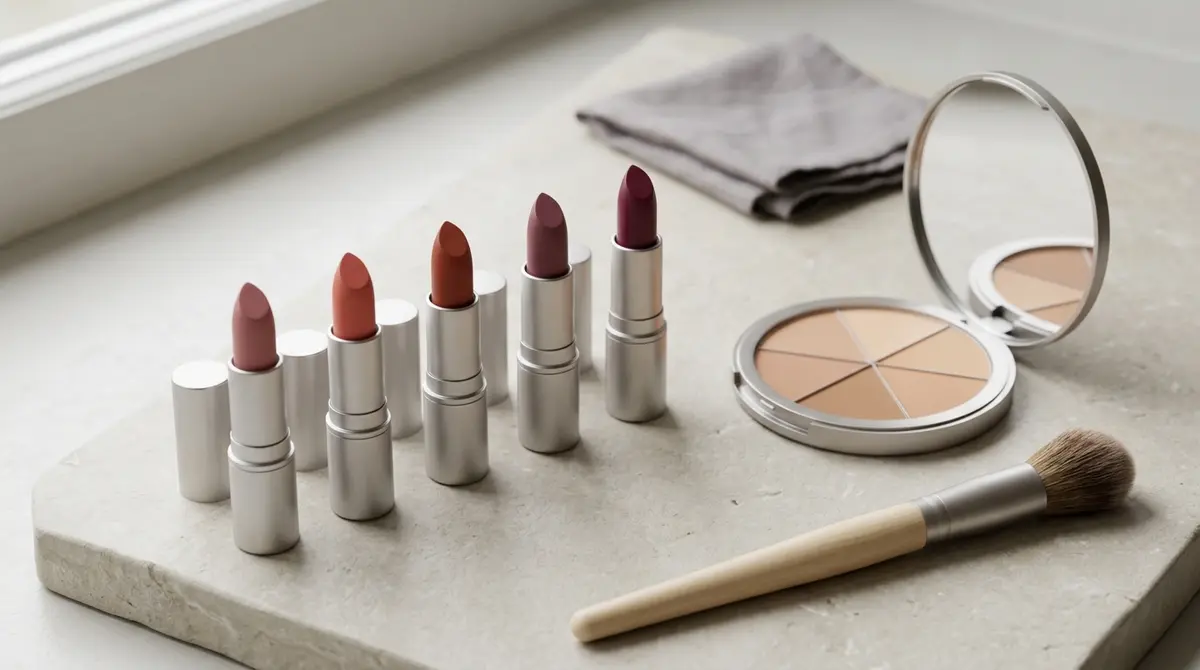
A makeup ad in Malaysia has to answer one question fast: would that shade sit on my face. That makes shade evidence the whole job, which means swatches on more than one skin tone, shot in daylight without smoothing, with the shade name on screen. Wear claims such as transfer-proof or 12-hour are matters of objectively ascertainable fact, so paragraph 4.8 of the Malaysian Communications and Multimedia Content Code 2022 expects you to hold the substantiation before the ad runs, and Part 8 paragraph 6.1 gives you five working days to produce it once the Complaints Bureau asks. Halal is not a positioning word: only a valid JAKIM or state council certificate lets you write it.
You have a foundation, a lip range or a brow product, and a feed full of setting sprays at RM10, collectible palettes and creator swatch clips to compete with. The shopper scrolling past you is not asking whether your product is good. She is asking whether shade 03 is her shade, whether it will still be there after the LRT and the lunch run, and whether she can buy it without a return. Everything below is about answering those three questions inside the creative, and staying on the right side of the claim rules while you do it.
The short version
A makeup ad gets about a second to answer one question, and it is never "is this product good". It is "would that shade sit on my face". Everything else in the creative, the price, the bundle, the collection name, only matters after that question has a plausible answer.
Audience size is not what you are short of. Statista put Malaysia's colour cosmetics market at US$451M in 2024, roughly three quarters of it outside the luxury tier, and DataReportal's Digital 2026 figures for Malaysia give Facebook a potential ad reach near 23.0 million with Instagram near 16.1 million. Plenty of buyers, and price-aware ones. What is scarce is evidence: shade evidence a shopper can read on a phone, wear evidence you can produce on five working days' notice, and a purchase path that does not collapse when she has to guess between shade 02 and shade 03.
Three decisions carry most of the outcome. What you show of the shade range and how honestly you show it. What you claim about how long the product survives a Malaysian afternoon, and whether you hold the test that backs it. And whether the ad's job is to close a checkout or to send someone to a counter, because those are different ads and only one of them is measurable in Ads Manager.
Makeup is not skincare, and the ad has to know it
The two categories sit next to each other on the shelf and behave nothing alike in a feed. A skincare ad asks for patience: buy it, use it for six weeks, judge it later. Its whole persuasive burden is about a future the shopper cannot see yet, which is why that category argues in routines, timelines and evidence of change.
Makeup asks for nothing but a mirror. The result exists the moment the product touches skin, and it is either the right colour or it is not. That collapses the argument into the frame. Your creative is not describing a future outcome, it is standing in for a try-on the shopper cannot have. Which means a makeup ad that hides behind styling, mood lighting and a flat-lay of packaging has skipped its only job.
It also changes the risk profile. Because the result is immediate and visible, exaggeration gets caught within a day, not a season, and it gets caught publicly in reviews. If your ad implies a shade that the product does not deliver, the shopper does not quietly disengage. She posts the swatch. That is the real enforcement mechanism in this category, and it is faster than any regulator.
Both categories sit under the same Malaysian regime, which is notification under the Control of Drugs and Cosmetics Regulations 1984, lodged with the National Pharmaceutical Regulatory Agency by a Cosmetic Notification Holder before the product goes on sale. That word is worth getting right, because notification is routinely confused with registration. Registration, and the MAL number that comes with it, belongs to pharmaceutical, traditional and health-supplement products. A lipstick does not get one, so any ad or listing that describes your foundation as a registered product is borrowing the vocabulary of a regime it does not sit in. If your product genuinely straddles the makeup and skincare line, the claim rules for skincare and beauty ads apply to the skincare half of what you are saying. Everything below stays on the makeup side.
Who is actually buying the feed you are bidding into
Reading a sample of 31 Malaysian makeup and cosmetics ads from the AdPlay.ai archive, the creative comes from 22 separate advertiser pages, and they fall into three groups that want very different things from the same slot.
The affordable mass brands compete on a verifiable claim attached to a ringgit price. DAZZLE ME Malaysia runs its Get a Grip setting spray at RM10 with a hold claim attached. O.TWO.O runs brow gel results, Carslan a halal brow palette, Cocomo beauty a cushion foundation demoed with its own buffing tool, Choice Global a buy-two discount on loose powder shades. These are not brand campaigns. They are claim plus price, repeated.
The design-led and collectible labels sell an object rather than a result. Flower Knows leans on its Bunny Garden collection and best-seller discounts, Ksisters announces an Amuse collaboration with Sanrio, Dear Dahlia runs a liquid blush in a named shade. Here the ad is closer to a product drop than a benefit argument, and the urgency comes from the collection, not the claim.
The third group is the one new advertisers forget. Retailers and tool specialists are bidding for the same attention: SEPHORA running Make Up For Ever brushes with free shipping, Brush & Co running a labelled full-face brush set and a lavender brush wash, EyeMuse running daily lenses. Seven of the 31 ads in the sample sell a brush, a brush wash or a lens rather than colour on the face at all. You are not only competing with other foundations.
The shade-match ad the category talks about and rarely runs
Break that same 31-ad sample down by the angle each ad leads with and something awkward appears. Six lead with a discount or an offer. Six are straight product showcases. Four are feature callouts, four are founder or creator clips, two are before-and-after, two are problem-solution, two are direct comparisons. Exactly one leads with a tutorial or how-to demo. The last four are a collection announcement, a customer testimonial, a social-proof count and a curiosity hook. Two ads in the whole sample name a specific shade: Azarine Cosmetic Malaysia's Tinted Lippie Cake in 01 Cream Puff, and Dear Dahlia's liquid blush in Flesh.
Not one of the 31 leads on shade range or a match promise.
That deserves its caveats. It is 31 ads, it is creative metadata with no performance data attached, and the archive holds no spend, so nothing here says which of those angles worked. Ad run duration in a scraped archive is right-censored and is not evidence of anything either. What the sample does tell you honestly is what the slot looks like: the category is loud about price and product, and the shade question is being answered somewhere else, in the comments, in the reviews, in a DM to a reseller.
That is the opening, and it is a cheap one to take. If your ad does the shade work that the feed around you is skipping, you are not competing on discount depth with brands that can go lower than you. You can see the spread of angles and formats in the Malaysian makeup and cosmetics ad examples if you want to read across the category before you commit a budget.
Undertone is the part the creative keeps skipping
Malaysian shoppers span a wide range of both depth and undertone, and undertone is where most shade advice quietly fails. Two people at the same depth can need completely different bases, one warm and golden, one neutral or cool, and a foundation that flatters one will look grey or orange on the other. Depth you can sometimes guess from a photo. Undertone you cannot.
Which means the standard swatch shot is close to useless. A stripe on one forearm, under warm indoor light, with a smoothing filter on the camera, tells a shopper nothing she can act on. She cannot separate your product's colour from your lighting's colour, and she knows it, so she does not trust the frame.
A swatch that earns trust has four properties. It is shot in daylight or one consistent light source, with no grading afterwards. It shows more than one skin tone in the same frame under the same light, because the comparison is what makes the colour readable. It names the shade on screen rather than only in the caption. And it shows the blend line at the jaw or the wrist, not just the stripe, because the blend line is where a mismatch actually announces itself.
Then say what the shade does not suit. Naming the tones a shade flatters and the tones it does not is the single most persuasive thing a makeup ad can do, because every shopper in this category has been burned by a range that claimed to suit everyone. Avoid "universal shade" entirely. It is unbelievable to the audience and, as a claim about a quality capable of assessment, it is the kind of superlative you would be asked to justify.
Shade range decides whether an imported brand converts here at all
If you are bringing an international line into Malaysia, the shade range is not a merchandising detail, it is the whole commercial question. A range whose deep end stops early, or whose middle is built for a different undertone profile, will generate clicks and then returns. The ad can be beautiful and the unit economics will still be bad, because the mismatch cost lands after the purchase.
The honest response is not a wider claim, it is a narrower ad. Run one creative per shade cluster rather than one creative for the range. Cast the swatch on the tones that cluster actually serves. Target that ad at the audience it fits and let the rest of the range wait until you can stock it properly. A tight range that owns one cluster convincingly beats a wide range advertised so generically that no individual shopper can place herself in it.
This cuts the same way for a small local brand with six shades. Six is not a weakness if the ad is specific about who those six are for. It becomes a weakness the moment the copy implies they cover everyone, because now the ad is writing a cheque the product cannot cash and the review section will say so.
Swatch and application video, filmed so it proves something
Only 9 of the 31 ads in the sample were video and only 4 were carousel, which is worth sitting with: this category has a reputation for creator video, and the slot is fuller of static offers than that reputation suggests. Cocomo beauty is one of the few running true demo video, showing cushion foundation applied with its buffing tool, and Dherbs runs a founder-style powder demo. Somethinc Malaysia makes its transferproof and kissproof lip argument in a static instead, which is the trade this category keeps making without noticing: the claim most worth demonstrating gets asserted in a frame.
The rules for making that footage persuasive are almost all about restraint. One unbroken take from bare skin to blended, because the cut between "before" and "after" is exactly where a viewer assumes something was hidden. No smoothing, no beauty mode, no colour grade. Hands in frame, so the texture reads. The product visible before it goes on, so the shopper knows which SKU she is watching.
Build for sound off. A lot of Malaysian scrolling is silent, so the shade name, the finish and the price belong on screen as text, not only in a voiceover. Shoot vertical and full-bleed for Reels and Stories, and keep the shade name out of the bottom safe zone where the interface eats it.
The counterintuitive part is that polish hurts here. A clip that looks produced looks retouched, and retouching removes the only thing a swatch video exists to supply. The phone footage is not a compromise, it is the evidence.
Longwear claims are the ones you will be asked to prove
Transfer-proof. Kissproof. Twelve hours. Sweatproof. In a country where the walk from the car park is enough to test a base, these are the claims that sell, and they are also the claims most likely to be challenged.
Wear time, transfer and sweat resistance are matters of objectively ascertainable fact, which is the trigger in paragraph 4.8 of the Malaysian Communications and Multimedia Content Code 2022: a claim of that kind has to be capable of substantiation, and the substantiation has to already be in your hands when someone asks. The Content Code is a registered industry code rather than a statute, but the timetable is short. Part 8 paragraph 6.1 allows five working days from a Complaints Bureau request to submit documentary evidence, and paragraph 6.3 lets the Bureau find a breach if that passes. Statute sits behind it as well: section 18 of the Trade Descriptions Act 2011 makes a false or misleading advertisement an offence and puts the burden on the person charged to show the statement was true. Nobody has to prove you wrong.
How to build and keep a claim file generally is covered in the guide to ad claim substantiation in Malaysia. What is specific to makeup is the test conditions.
A twelve-hour claim tested in an air-conditioned room is not a test of the thing you promised, because the promise a Malaysian shopper hears is twelve hours of a Malaysian day. Build the test to match: the same face photographed at hour zero, hour six and hour twelve, an outdoor stretch inside that window, the temperature and humidity noted, the products underneath recorded because a primer changes the result. File it with the ad, not with the product, so whoever is asked in five working days can find it.
The wording you choose sets the evidence bar, so choose deliberately.
| What the copy says | What you need on file | Safer wording if you do not have it |
|---|---|---|
| "Transfer-proof" | A transfer test showing effectively no transfer, not less transfer | "Transfer-resistant" or "resists smudging" |
| "12-hour wear" | A timed wear test to 12 hours in comparable conditions | "Long-wearing" with the tested duration named |
| "Sweatproof, humidity-proof" | Testing under heat and humidity you can describe | "Holds up through a humid day" plus the test conditions |
| "Waterproof" | Water immersion or splash testing | "Water-resistant", if that is what you tested |
| "Full coverage" | Nothing external, but the swatch must actually show it | Show it rather than assert it |
A claim you can demonstrate on camera is worth more than a claim you can defend on paper, and it is much cheaper to produce. If the setting spray holds through a commute, film the commute.
The hybrid claim that quietly moves you into a different rulebook
Makeup and skincare hybrids are everywhere in this category, and they are where advertisers walk across a line without noticing. Cocomo beauty runs a hybrid concealer, BB cream ads promise coverage over uneven texture, powders promise oil control. All of that is fine while the claim stays about appearance.
The moment the copy says the product treats, clears, cures or heals anything, it has stopped being a coverage claim, and NPRA's cosmetic claims guideline puts medicinal claims outside what a notified cosmetic may say. The usable test is the verb, not the ingredient. "Covers the look of blemishes" is a makeup claim. "Clears blemishes" is not. "Blurs the appearance of pores" is fine, "shrinks pores" is not. Rewriting in that direction costs you nothing that converts, because a shopper buying a concealer already knows it is not medicine.
Two more specifics catch makeup advertisers. An SPF number on a base is a measurable claim and needs the test behind it, the same as a wear-time claim. And instant comparison creative, the without-and-with frames that this category runs constantly, is honest precisely because the change is product sitting on skin rather than skin changing. Do not caption it as though the skin improved. NPRA's cosmetic advertisement guideline expects elapsed time in a before-and-after to be cited with prominence, and for makeup the elapsed time is about ninety seconds, so say so. That honesty is also better creative, because "this is one minute of work" is a stronger promise than a vague transformation.
Halal, wudhu-friendly and cruelty-free, in ascending order of confusion
These three get bundled together in briefs and they carry completely different obligations.
Halal is a certification, not a description you choose. The word, the mark and any Islamic imagery that implies certification are open to you only where you hold current certification from JAKIM, a State Islamic Religious Council or a body on JAKIM's recognised foreign list, and the enforcement runs through the Trade Descriptions Act 2011 and its two 2011 halal orders. The halal ad creative rules cover the marks, the orders and the penalty tiers. What matters in a makeup brief is that Carslan's halal brow palette angle works because the claim is backed, and that the same angle without the certificate is not a softer version of the same ad. It is a different legal category, and the creative director who waves it through is not the person the penalty lands on.
Wudhu-friendly is a physical claim wearing religious clothing. It asserts that water reaches the skin through the film, which is testable, and it is not the same as halal certification. If you make it, hold permeability evidence, describe what you tested, and keep the two claims in separate sentences so the creative does not imply certification through adjacency.
Cruelty-free is the loosest of the three, and that is the risk. No Malaysian government body issues a cruelty-free mark the way JAKIM issues halal certification, so the claim rests entirely on your own documentation under the general substantiation rule. Name the standard or the auditor you are relying on, or make the narrower factual statement you can actually evidence. A vague badge with no issuer behind it is a claim you would struggle to support in five working days.
Counter or checkout: two different ads
Makeup in Malaysia sells across two channels that need different creative, and running one ad for both is how budget quietly disappears.
Online, the shade decision and the purchase can happen in the same session, which is the easier ad to build and the easier one to read. Whether you sell through your own store, Shopee, Lazada or TikTok Shop, the requirement is that every shade exists as its own item, with its own image, its own shade name and its own stock status, so the ad can send a shopper to the exact SKU she just watched being swatched. Sending shade-specific creative to a generic product page is the most common leak in this category. If you sell on marketplaces, the mechanics of feeding those listings into Meta are covered in the guide to marketplace catalog ads.
The counter is a different job. If you are stocked on a Watsons shelf or at a SEPHORA counter, the ad cannot close the sale, so stop asking it to. Its job is to make the shade decision before she walks up, and to name where she can find you. That means the shade name and the store name in the creative, and a landing experience that lists stockists rather than a checkout she will abandon.
Be honest about measurement in that second case. A Meta ad cannot read a till, and no amount of optimisation will recover a signal you never instrumented. If counter sales matter, build the instrumentation deliberately: a code she shows at the counter, a stockist page click you can count, a sampling sign-up. Then read the ad against that, not against a purchase event that will never fire.
Creator swatches, and the brief that makes them usable
Creator footage is the natural format for this category, and most of it is unusable as an ad because the brief was written for reach instead of for evidence. GlamAura Store's pressed powder testimonial, the founder-style clip for Dherbs, the application clip running for TRUU: what makes any of them work is that a specific person on specific skin does a specific thing on camera.
A brief that produces usable footage asks for five things. The creator's own skin tone stated plainly, so a viewer can calibrate. No filter and no beauty mode, stated as a hard requirement rather than a preference. The shade name spoken and shown. One continuous application rather than a cut. And no claim beyond the ones you have evidence for, because a line ad-libbed on camera carries exactly the same weight as a line you typed into the headline.
Handle the rights before the shoot, not after. Paid usage, duration and whitelisting go in writing before the first ringgit of spend, or you will end up with a clip you cannot legally run at scale.
Match the language to the audience rather than defaulting to English. Malay and English lead in this category, frequently code-switched inside a single creator video, and Chinese carries a real share of the collectible and hybrid labels. Re-shoot for a different language audience rather than dubbing, because the tone of a swatch clip is most of its credibility.
What this should cost, honestly
Nobody publishes a dated Malaysian benchmark for makeup and cosmetics advertising that this guide would stand behind. Not a CPM, not a click cost, not a cost per purchase, not a return on ad spend. When a ringgit-per-beauty-purchase figure turns up in a deck with no date and no method beside it, it was invented somewhere upstream, and planning against an invented number is worse than planning against none, because it gives you false confidence about when to stop.
The nearest usable outside reference arrives with two labels on it. WordStream's Facebook Ads benchmarks cover 2,946 United States campaigns run between February 2023 and April 2024, and for Beauty and Personal Care they report a United States cost per lead of US$42.10 alongside a 2.26% click-through rate and a US$2.44 cost per click. American market, American dollars, and lead ads at that. Makeup is almost never a lead-generation category, so those numbers are doubly wrong as a price. The only thing that survives the translation is shape: acquisition in a mature beauty market is expensive, and click-through in the low single digits is ordinary rather than a sign your creative failed.
So read your own account, on three numbers that acquisition cost hides. Cost per purchase is the obvious one. Return rate by shade is the one almost nobody instruments and the one that actually decides whether this category works for you, because a returned shade costs you the click, the unit, the postage both ways and usually a public review as well. Repeat rate matters more here than in most categories, because colour is consumable in a way a handbag is not: a foundation customer who found her shade is worth several purchases a year, and one who did not is worth less than nothing.
Instrument the return reason while you are at it. "Wrong shade" and "did not like the formula" are different problems with different fixes, and only the first one is your ad's fault. If the shade returns cluster on one creative, that creative is lying about a colour and no amount of budget will fix it.
One more discipline this category needs: shade-level ad sets are small by construction, and small ad sets look worse than they are. Killing a shade after a few dozen impressions measures variance, not the shade. Give it two to three weeks before you read it.
The calendar makeup actually runs on
Four windows shape spend here. Ramadan and Hari Raya are the largest, and the category adapts rather than just discounting: O.TWO.O's Malaysian page runs Ramadan free-gift creative on contour and highlight sticks, and the whole feed leans festive weeks before the date. The mega-sale dates, 9.9, 11.11 and 12.12, pull the price-led creative forward. Monthly payday windows create a smaller but reliable rhythm. And the wedding season carries a separate business entirely, which is why makeup artists like Chris Fong advertise bridal looks in carousels rather than products.
Be honest about the strength of that claim. No primary, quantified source measures the size of the seasonal uplift specifically for Malaysian cosmetics, so treat the calendar as a planning heuristic rather than a statistic. Prepare the offer and swatch creative a few weeks before each ramp, because research starts before the sale date, then let your own cost per purchase confirm demand is genuinely rising before you scale.
A pre-launch pass for a Malaysian makeup ad
| Check | What clearing it looks like |
|---|---|
| Product notified | A current NPRA cosmetic notification held before any spend |
| Shade evidence | Swatch on more than one tone, one light source, no smoothing, shade name on screen |
| Range honesty | The ad names who the shade suits, and does not imply it suits everyone |
| Wear claim | A documented wear test in real conditions, filed and retrievable within five working days |
| Claim scope | Coverage and appearance verbs only; no treat, clear, cure or heal |
| Halal | A valid JAKIM or state certificate, or the word and the imagery stay out |
| Wudhu-friendly | Permeability evidence on file, stated separately from any halal claim |
| Cruelty-free | A named standard or auditor, not an unattributed badge |
| Destination | Shade-specific creative lands on the exact shade SKU, in stock |
| Counter traffic | A code, stockist page or locator click you can actually count |
| Creator footage | Rights in writing, no filter, no unsupported ad-libbed claim |
| Measurement | Cost per purchase, return rate by shade and repeat rate, from your own account |
Bringing it together
The category rewards specificity in a way that few others do. Almost every advantage available to a makeup advertiser in Malaysia comes from being more precise than the feed around you: a named shade instead of a range, one light source instead of a mood, a wear test instead of an adjective, a stated tone match instead of a promise to suit everyone. The feed is crowded with price and packaging, which means precision is not the expensive option, it is the open one.
The workflow that follows from that is unglamorous. Read what the category is already running before you write anything, film the swatch honestly on more than one person, hold the evidence for every claim you make about how long the product lasts, send each shade to its own listing, and read cost per purchase against returns rather than against the click. The brand that answers the shade question inside the ad wins the shopper who was going to ask it in the comments anyway.
By the numbers
Frequently asked questions
Do I need NPRA notification before I can advertise my makeup product?
Yes. Lipstick, foundation, powder, brow products and setting sprays are cosmetics in Malaysia, and a cosmetic has to be notified with the National Pharmaceutical Regulatory Agency under the Control of Drugs and Cosmetics Regulations 1984 before it is placed on the market. Advertising an unnotified product means promoting something that is not lawfully on sale, which is a far larger exposure than a rejected ad. Two things notification is not. It is not registration: registration and the MAL number that goes with it belong to pharmaceutical, traditional and health-supplement products, and describing a cosmetic as registered borrows the wrong regime. And it is not ad clearance: NPRA's own FAQ on cosmetic advertisements confirms there is no prior board approval step for a cosmetic ad, so nobody signs off your creative in advance and the responsibility for every claim sits with you from the first draft.
How many shades do I need before a foundation ad is worth running in Malaysia?
There is no legal minimum, and no dated Malaysian study that sets a commercial one either, so treat any number you see quoted as opinion. The practical test is different: can a shopper who looks like your target audience find herself in your range, and can she tell that from the ad. A tight range that owns one depth and undertone cluster honestly will convert better than a wide range advertised so vaguely that nobody can place herself in it. If your deep shades stop early, say which tones the range suits rather than implying it suits everyone, and target the ad accordingly. An unhappy match is a return, a refund and a review, all of which cost more than the click did.
Can I claim my foundation is transfer-proof or lasts 12 hours?
You can, if you can prove it. Wear time, transfer resistance and sweat resistance are matters of objectively ascertainable fact, and paragraph 4.8 of the Malaysian Communications and Multimedia Content Code 2022 provides that such claims should be capable of substantiation and that advertisers hold that substantiation ready for scrutiny without delay when asked. Part 8 paragraph 6.1 gives you five working days from a Complaints Bureau request to submit documentary evidence, and paragraph 6.3 allows the Bureau to rule a breach if you miss it. Separately, section 18 of the Trade Descriptions Act 2011 makes a false or misleading statement in an advertisement an offence, with the onus of proving the statement true resting on the person charged. Run a documented wear test in real Malaysian conditions and keep the file.
Can I call my makeup halal or wudhu-friendly in a Facebook ad?
Halal, yes, but only if you hold a valid Malaysia Halal Certification from JAKIM or a State Islamic Religious Council, or your product is certified by a body on JAKIM's recognised foreign list. Without that certificate you may not use the word, the official logo, or Islamic imagery that implies certification. False halal descriptions sit under the Trade Descriptions Act 2011 and its two 2011 halal orders, and the penalties run into millions of ringgit. Wudhu-friendly is a separate and often confused claim: it asserts that water reaches the skin through the film, which is a testable physical property, not a religious certification. If you make it, hold the permeability evidence, and do not let the two claims blur into each other in the copy.
How do I film a swatch video that actually helps someone choose a shade?
Shoot in daylight or one consistent light source, on more than one skin tone, in a single unbroken take from bare skin to blended, with no smoothing filter and no colour grading afterwards. Burn the shade name on screen from the first frame, because most Malaysian scrolling happens with the sound off. Show the jaw or wrist blend line rather than only the stripe, since the blend line is where a mismatch actually reveals itself. Keep the framing vertical for Reels and Stories. The persuasive part of a swatch clip is the absence of editing, so anything that looks retouched removes the only thing the format was there to provide.
Should Malaysian makeup ads be video or static?
Both run heavily. In a 31-ad sample of Malaysian makeup and cosmetics creative from the AdPlay.ai archive, 9 were video, 4 were carousel and the remaining 18 were static or dynamic formats, so the category is not as video-dominated as its reputation suggests. That is creative metadata only, with no performance data attached, so read it as a picture of the slot you are competing in rather than proof of what wins. The useful split is by job: video and carousel carry application, swatch and shade range, while static and dynamic carry the price, the bundle and the single sharp claim. Most brands need both, and the mistake is running only the second kind.
What should a makeup ad cost me in Malaysia?
No dated primary Malaysian benchmark for cosmetics advertising exists that this guide can stand behind: no CPM, no click cost, no click-through rate, no cost per purchase, no return on ad spend. Treat any confidently quoted ringgit-per-beauty-purchase figure as invented until you can see its date and its method. The closest defensible outside reference is American and is labelled as such: WordStream's Facebook Ads benchmarks, drawn from 2,946 United States campaigns run between February 2023 and April 2024, report a United States cost per lead of US$42.10, a 2.26% click-through rate, a 5.93% conversion rate and a US$2.44 cost per click for Beauty and Personal Care. Those are lead-ad figures from a different market, useful for shape and useless as a price, since makeup is rarely a lead-generation category at all. Judge yourself instead on cost per purchase set against return rate by shade and repeat rate, read from your own account after two to three weeks.
Should my ads send people to Shopee and Lazada, my own store, or the counter?
Send them where the shade decision can be completed. If a shopper has already picked a shade from your creative, a marketplace listing with that exact shade in stock closes fastest, and your catalog should carry every shade as its own item with its own image and stock status. Your own store is worth the extra friction only if it offers something the marketplace cannot, such as a shade quiz, a bundle or a sample. Counter traffic is the hardest to justify because a Meta ad cannot read a till: if you push to a Watsons shelf or a SEPHORA counter, instrument it deliberately with a code, a stockist page or a store locator click, and accept that the attribution will be partial.
Sources
- 1.Communications and Multimedia Content Forum of Malaysia, The Malaysian Communications and Multimedia Content Code 2022 (Third Edition) (2022)
- 2.Trade Descriptions Act 2011 [Act 730], updated reprint hosted by KPDN (2011)
- 3.NPRA, Annex I Part 8: Guideline for Cosmetic Claims (2022)
- 4.NPRA, Annex I Part 10: Guideline for Cosmetic Advertisement (2022)
- 5.NPRA, FAQ: Control of Cosmetics Advertisement in Malaysia (2025)
- 6.KPDN, Trade Description (halal orders, certifying bodies and penalties) (2025)
- 7.Statista, Cosmetics Market, Malaysia (2024)
- 8.WordStream, Facebook Ads Benchmarks (US Beauty & Personal Care lead ads, 2,946 US campaigns, Feb 2023 to Apr 2024) (2025)
- 9.DataReportal, Digital 2026: Malaysia (2026)
Keep exploring
Turn ad research into winning ads
See what 16,000 Malaysian brands advertise, then generate on-brand creative, all in one tool.
7-day free trial · No credit card required