
Using the Jalur Gemilang in Your Ads
What Malaysian law actually says about putting the national flag in a commercial ad, why the Act most people cite is the wrong one, and the base colours and motif pattern the Department of Information itself sets out.
Updated August 2026 · Xanny Lee, CEO
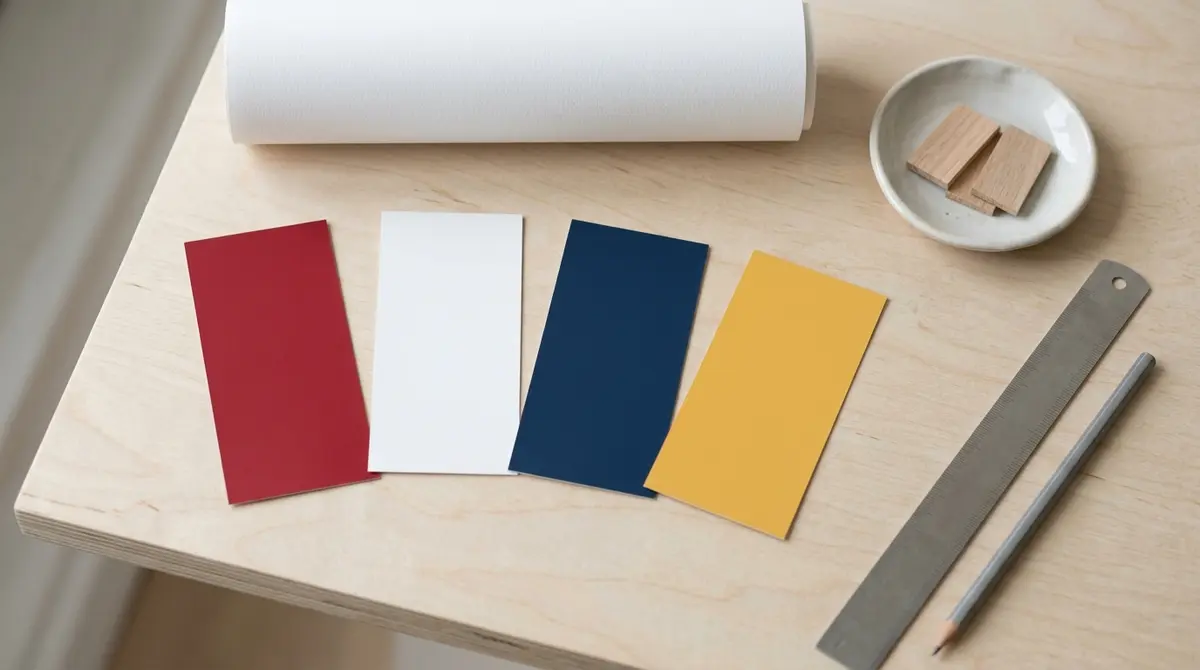
The Jalur Gemilang is not governed by the National Emblems (Control of Display) Act 1949, which Malaysian coverage routinely cites; that Act deals with the flags of countries other than Malaysia. The flag and its name were added to the Schedule to the Emblems and Names (Prevention of Improper Use) Act 1963 (Act 414) by a notification under section 7 of that Act, the text of which the Department of Information reproduces in its 2020 guideline on the national symbols, and section 3(1)(a) of Act 414 bars using a specified emblem, or any colourable imitation of it, for the purpose of any trade or business without the written permission of the Minister. Since the 2017 amendment came into force on 25 October 2017, contravening section 3 of Act 414 carries a fine of up to RM20,000 or imprisonment of up to three years or both. The Department of Information's own guideline sets out the safe commercial pattern in plain terms: use the base colours and motif, red, white, blue and yellow, rather than the flag.
It is the second week of August, the Merdeka creative is sitting in review, and somebody on the team has just asked whether the flag in the hero image is going to be a problem. Half the answers you find say the flag is fine as long as you are respectful. The other half quote a fine of five hundred ringgit from an Act that has nothing to do with the Jalur Gemilang. Both are wrong, in opposite directions, and the instruments that do apply are short enough to read in an afternoon. Here is what they say and what a Malaysian brand can safely put in front of a paying audience.
The short version
The flag in your Merdeka creative is governed by the Emblems and Names (Prevention of Improper Use) Act 1963, which is Act 414 in the revised laws. Section 3(1)(a) of that Act says that no person shall, except with the written permission of the Minister, use any specified name or specified emblem, or any colourable imitation thereof, for the purpose of any trade, business, calling or profession. The Jalur Gemilang, and the name Jalur Gemilang, are both in the Act's Schedule. A paid ad is trade.
The penalty is not the figure printed in the copy of the Act you will find on the Attorney General's Chambers site. That reprint stops at amendments made to 1 January 2006 and still shows one thousand ringgit. Section 5 was replaced in full by Act A1525 in 2017, and since 25 October 2017 the ceiling has been twenty thousand ringgit, three years imprisonment, or both.
And the Act that Malaysian articles keep citing on this subject, the National Emblems (Control of Display) Act 1949, is about the flags of other countries. It does not reach the Jalur Gemilang at all.
The practical answer sits in a government publication rather than in a statute. The Department of Information's 2020 guideline on the national symbols states that using the base colours and motif of the flag, red, white, blue and yellow, is permitted. That is the pattern to design against.
Everything below traces to the instruments themselves, read for someone approving creative rather than for a lawyer.
Two Acts, and the press keeps naming the wrong one
Start by separating them, because almost every confusing thing written about flags in Malaysian advertising comes from blending the two.
The National Emblems (Control of Display) Act 1949, Act 193, looks like the obvious candidate. It has emblems in the title and it has a display prohibition. Read its definitions and it falls apart as an answer. Section 2 of Act 193 defines a national emblem as the flag of any State, and then defines State as any State or country other than Malaysia. Its section 3(1) restricts display in a public place or in a school. Its section 8(1) fixes the penalty at imprisonment of up to six months or a fine of up to five hundred ringgit or both for a person other than a body corporate, and a fine of up to one thousand ringgit for a body corporate.
That is where the five hundred ringgit figure in circulation comes from. It is a real number attached to a statute about foreign flags. Quoting it in a discussion of the Jalur Gemilang is a category error, and once you know that, you can grade a lot of the advice online quickly: any article that reaches for Act 193 on this subject has not checked the definitions.
The Emblems and Names (Prevention of Improper Use) Act 1963, Act 414, is the one that applies. Its long title is an Act to prevent the improper use of certain emblems and names for professional and commercial purposes, which is a fairly precise description of the situation an advertiser is in. It came into force on 1 September 1963, first enacted as Act No. 19 of 1963, and was revised in 1989 as Act 414 with effect from 28 December 1989.
Note what the long title says and does not say. Act 414 is not a general respect-the-flag law. It is a commercial-use law. Which is exactly why it is the one that lands on your desk and not on a private citizen's.
How the flag got into the Schedule
Act 414 works through a list. Section 3(1) refers to a specified emblem and a specified name, and those point at the Act's Schedule, which section 7 allows the Yang di-Pertuan Agong to add to or alter by notification in the Gazette.
Open the Attorney General's Chambers reprint and the flag is not there. Part I of the Schedule as printed runs to seven items: the standards, coats of arms and official seals of the Yang di-Pertuan Agong and the Raja Permaisuri Agong; the Public Seal of the Federation; the Federation Coat of Arms; the United Nations emblem and official seal; orders, insignias, medals, badges and decorations instituted by statutes of the Yang di-Pertuan Agong; the Interpol emblem; and the Bank Negara Malaysia emblem. Part II, the names, lists four: the Yang di-Pertuan Agong, the Raja Permaisuri Agong, Interpol and Bank Negara Malaysia. That printed Schedule is current only to a 1995 notification.
The flag was added later, by a notification under section 7 of Act 414. The content of that addition is reproduced verbatim in the Department of Information's 2020 guideline on the national symbols, under a heading naming it as a notification under section 7 of Act 414. It adds to Part I an item 8 for the flag of Malaysia, the Jalur Gemilang, and an item 9 for the emblems of federal ministries, departments and agencies. To Part II it adds an item 5 for the name of the flag of Malaysia, the Jalur Gemilang. The Attorney General's Chambers index page for Act 414 separately carries an amendment dated 1 November 2012.
Two consequences follow that most advertisers have never considered.
The first is that the name is listed as well as the image. Section 3(1)(a) of Act 414 covers a specified name and a specified emblem in the same sentence. A campaign titled with the flag's name is caught by the same paragraph as a picture of it, which changes how you should read a promotional calendar full of patriotic naming.
The second is item 9. Every federal ministry, department and agency emblem sits in the same box as the flag. So does the badge that a supplement brand sometimes drops into a creative to imply an official endorsement, or a ministry crest used to dress a training provider's ad in government authority. Same subsection, same penalty.
The words that catch an ad creative
Here is section 3(1) of Act 414 broken into its limbs, with the advertising situation each one reaches.
| Paragraph of section 3(1), Act 414 | What it prohibits | Where it lands in advertising |
|---|---|---|
| (a) | Using a specified name or specified emblem, or any colourable imitation thereof, for the purpose of any trade, business, calling or profession | The flag or its name in any commercial creative, including a near copy |
| (b) | Using for the purposes of, or displaying as an advertisement for, a business, or selling, any photograph, drawing or other pictorial representation of the Yang di-Pertuan Agong or the Raja Permaisuri Agong | Royal portraits in Merdeka or Agong birthday posts |
| (c) | Using in the title of any patent, or in any trade mark or design | Brand marks and registered designs |
| (d) | Making for the purposes of sale, selling, or having in possession for sale, any specified emblem | Merchandise and packaging |
The whole of section 3(1) opens with the words except with the written permission of the Minister, so each limb is a prohibition with one door out of it.
Paragraph (a) is the one that decides a hero image, and two phrases inside it do all the work.
For the purpose of any trade, business, calling or profession. A paid social ad, an organic post from a business page that promotes the business, a sale banner, a packaging print run: all trade. There is no threshold for spend, reach or intent. The question is whether the use serves a business, and for anything you would put money behind, it does.
Or any colourable imitation thereof. This is the phrase that decides the modern version of the problem, and it points the opposite way to most people's instincts. A team that cannot use the flag safely will often reach for something flag-adjacent instead: stripes at a slightly wrong count, a crescent leaning the wrong way, a star with the points softened, the whole thing tilted and blurred behind a product shot. The reasoning is that if it is not the flag, the rule does not apply. But the ordinary sense of a colourable imitation is a thing that resembles the original closely enough to be taken for it. On that reading the near miss is what the words were drafted to catch, not a route around them.
Why AI-generated creative made this sharper
Generative image tools produce colourable imitations of the Jalur Gemilang almost by default. Ask for a Malaysian Merdeka scene and the stripe count drifts, the crescent and star come back approximately right, and the colours land near the flag's without landing on it. Every one of those outputs is a recognisable rendering of the flag that is not the flag.
Read that against paragraph (a) of section 3(1) of Act 414 and the exposure is worse than it would have been with an accurate flag, not better. You have produced something that reads as the national flag, used it for the purpose of trade, and it is an imitation rather than the article. Both halves of the phrase are satisfied at once.
The practical instruction for anyone briefing an image model is therefore to keep the flag out of the prompt entirely rather than to ask for a loose or artistic interpretation of it. If your team is building prompts for ad images, the Merdeka brief should name the colours and the motif and stop there. The same applies to stock libraries and to the flag-shaped clip art that circulates internally every August. Someone else's licence to a graphic has no bearing on whether your commercial use of it sits inside section 3(1)(a) of Act 414.
The Department of Information's guideline reaches the same conclusion from the other direction. It states that the use of the flag in varied styles, in images and in forms whose physical shape has been altered, as an advertisement to promote the national month celebration, is not permitted. Altering the flag is treated as a category of misuse, not as a way of avoiding one.
What the Department of Information's guideline actually permits
The guideline is Menghormati Lambang-Lambang Kebesaran Negara: Jata Negara, Jalur Gemilang dan Alat-Alat Kebesaran DiRaja, published by Bahagian Penerbitan Dasar Negara at Jabatan Penerangan Malaysia under the Ministry of Communications and Multimedia, first printing 2020, 64 pages, ISBN 978-983-54-0610-2. It is a government publication rather than subsidiary legislation, so read it as the responsible department stating its own position, which is what you want when the statute itself says nothing about hero images.
The lines that matter for a commercial designer are these, with a working English rendering alongside the original.
| Original wording | Working English rendering |
|---|---|
| Penggunaan bendera pelbagai gaya, gambar serta bentuk yang diubah fizikal bendera itu untuk dijadikan iklan bagi tujuan mempromosikan Sambutan Bulan Kebangsaan TIDAK DIBENARKAN. | Using the flag in varied styles, images and physically altered forms as an advertisement promoting the national month celebration is not permitted. |
| Penggunaan bendera dalam penghasilan logo TIDAK DIBENARKAN sama sekali. | Using the flag in the creation of a logo is not permitted at all. |
| Penggunaan warna asas dan motif bendera (merah, putih, biru dan kuning) sahaja DIBENARKAN. | Using only the base colours and motif of the flag, red, white, blue and yellow, is permitted. |
| Penggunaan bendera dalam infografik TIDAK DIBENARKAN bertindih di antara teks dan bendera. | In an infographic, overlapping text and flag is not permitted. |
| Penggunaan bendera pelbagai gaya pada alas meja, kusyen, langsir, payung, tuala mandi, pelitup muka, kain tudung, topi, songkok, tanjak, sampin, pakaian dan sebagainya adalah TIDAK DIBENARKAN. | Flags in varied styles on tablecloths, cushions, curtains, umbrellas, bath towels, face masks, headscarves, hats, songkok, tanjak, sampin, clothing and similar items are not permitted. |
| Objek seperti botol, pasu, tiang, tin, tudung saji dan sebagainya yang dibalut dengan bendera atau dilukis menyerupai bendera adalah TIDAK DIBENARKAN. | Objects such as bottles, vases, poles, tins and food covers wrapped in the flag or painted to resemble it are not permitted. |
The guideline also fixes orientation for legitimate display: the flag is hoisted horizontally, never inverted, never hung vertically, and triangular bunting flags must not be strung.
Notice how much of that list is a description of a normal Merdeka campaign. The face mask line covers a whole product category from a few years ago. The clothing line covers the T-shirt run that a Merdeka merchandise programme usually starts with. The logo line, which is the flattest of them because of the phrase not permitted at all, covers the seasonal logo lockup made by tucking a small flag under a wordmark.
The safe pattern, in the department's own words
Out of that list comes one clean permission, and it is the department's own position rather than a statutory safe harbour: base colours and motif only. Red, white, blue and yellow, and the motif, without the flag. Following it does not license a use that section 3(1)(a) of Act 414 would otherwise catch, but a design built on colour and motif alone is not a specified emblem or a colourable imitation of one in the first place, which is why the two lines meet.
That is a genuinely workable design constraint, and it is worth more to a designer than being told to be respectful. You can build a strong Merdeka creative out of a four-colour palette, a crescent-and-star-adjacent geometric motif that is not a rendering of the flag, and horizontal stripe rhythm used as a layout device rather than as a depiction. What you cannot do is put a flag in the frame and hope the composition reads as tasteful enough.
A few operational notes on applying it.
Colour without shape is the safe part. A red, white, blue and yellow palette across a set of product cards is the permitted pattern. The moment those colours resolve into stripes in the flag's proportion with a crescent and star in the canton, you are depicting the flag with extra steps.
Motif is not a licence to reconstruct. The permission is for the motif, not for an assembly of every flag element short of the whole. If a stranger looking at the creative for one second would call it a flag, treat it as a flag.
Photography of real flags is still depiction. A shop front photographed with flags flying, used as an ad, is the flag used for the purpose of trade. Editorial use is a different question that section 3(2) of Act 414 handles only for paragraph (b), and paragraph (b) is not the flag paragraph.
If you are planning the wider seasonal calendar rather than a single asset, the sequencing, the timing and the offer structure sit in the Merdeka and Malaysia Day playbook. Take the creative constraints from this page and the campaign shape from that one.
The penalty, assembled
There is no provision anywhere that says using the flag in an advertisement costs a stated sum. You reach the number by construction, and it is worth walking the steps because that is also how you would explain it to a client or a founder who wants a citation.
Section 5 of Act 414 penalises any person who contravenes section 3. Section 3(1)(a) prohibits commercial use of a specified emblem or specified name. The flag and its name are specified by virtue of the notification made under section 7 of Act 414 and reproduced in the Department of Information's 2020 guideline. Chain those together and a commercial flag use is a section 3 contravention, which section 5 penalises.
Then you need the current section 5, and this is where most secondary writing goes wrong. The Emblems and Names (Prevention of Improper Use) (Amendment) Act 2017, Act A1525, received Royal Assent on 20 January 2017 and was gazetted on 26 January 2017. Its clause 2 substitutes section 5 in full with a penalty of a fine not exceeding twenty thousand ringgit, or imprisonment for a term not exceeding three years, or both. Commencement came separately through P.U. (B) 508, dated 23 October 2017 and gazetted on 24 October 2017, appointing 25 October 2017 as the date the amendment came into operation.
Act A1525 changed nothing else. It did not touch section 3 and it did not touch the Schedule.
The trap. Both the English reprint of Act 414 on the Attorney General's Chambers portal and the Bahasa Malaysia reprint hosted by the Istiadat division incorporate amendments only up to 1 January 2006. Both therefore print section 5 as a fine not exceeding one thousand ringgit. That is a twenty-fold understatement of the current ceiling and it is the version anyone reading the official PDF will come away with. There is no consolidated post-2017 text on the Attorney General's Chambers portal, so the amendment has to be applied by hand. Use the reprint for sections 3, 4, 6 and 7, and use Act A1525 for section 5.
One more provision changes the practical shape of the risk. Section 6 of Act 414 provides that no prosecution may be brought without the previous written sanction of the Public Prosecutor. That is a real filter. Nobody who dislikes your creative can put the twenty thousand ringgit ceiling in front of a court on their own. It is not a reason to ignore the Act. It is a reason to plan for the consequence that needs no prosecutor at all, which is a demand to take the creative down, a client relationship problem, or a complaint that lands publicly during the one month of the year when the country is paying attention to exactly this.
Government branding, the trap sitting next to this one
Item 9 of Part I of the Schedule to Act 414, added by the same section 7 notification and covering the emblems of federal ministries, departments and agencies, deserves its own paragraph because it catches a different kind of ad entirely.
Alongside it sits Surat Pekeliling Am Bilangan 1 Tahun 2005, Pemakaian Lambang Kerajaan Persekutuan, issued by the Prime Minister's Department in April 2005 under reference PM(S)10426 Jld.10(35) and signed by the then Chief Secretary to the Government, Tan Sri Samsudin bin Osman. It records that the section 3(1) power under Act 414 was delegated by the Prime Minister to the Timbalan Ketua Setiausaha Kanan of the Prime Minister's Department. It restricts use of the Federal Government emblem to federal ministries, departments and officers acting in an official capacity. It states that local authorities, federal statutory bodies and national organisations may not use it. And it cancels the earlier general circular from 1990.
Read that against the ads that appear every year and the overlap is obvious. A training provider implying a federal accreditation with a crest. A supplement brand placing a ministry logo beside a claim. A contractor using the federal emblem to suggest official appointment. All of it lands in the same subsection as the flag, and the circular makes clear that even bodies far closer to government than a private advertiser are outside the permitted set. If your creative leans on the authority of a government body, that is a claim to substantiate and a mark you probably cannot use, and both problems are worth reading alongside the wider restricted category rules.
A pass over a Merdeka campaign before it ships
Work the whole set of assets, not just the hero. The flag tends to appear in the places nobody reviews.
Take an inventory first. Hero image, carousel frames, video end card, story frames, profile picture and cover photo for the month, email header, WhatsApp broadcast image, in-store poster, packaging insert, the seasonal logo lockup, and the campaign name itself. That last one is on the list because of Part II of the Schedule.
Then apply four questions to each.
Is there a flag, or something a stranger would call a flag? If yes, it is out under section 3(1)(a) of Act 414 unless you hold the Minister's written permission. A partial flag, a waving flag behind a product, a flag emoji rendered at poster scale, and a flag reflected in sunglasses all count.
Is the flag in a logo? The Department of Information's guideline is flattest here, and the seasonal lockup with a small flag under the wordmark is the case it addresses in terms. Not permitted at all is the phrase it uses.
Does the campaign name use the flag's name? Part II of the Schedule to Act 414 lists it. Rename it.
Is there a government emblem anywhere? Item 9 of Part I of the Schedule to Act 414 covers federal ministry, department and agency emblems, and the 2005 circular restricts the federal emblem to government users.
Anything that survives all four gets rebuilt on colour and motif. In practice that means handing the designer a four-colour palette and a motif system rather than a reference image, because a reference image of the flag is how the flag gets back in.
If the campaign is already live when you read this, the order of work is the same but shorter. Pause the paid delivery on the assets that carry a flag, because those are the ones with money behind them and the clearest commercial purpose. Swap them for colour-and-motif versions rather than pulling the campaign, since the offer and the copy are untouched by any of this. Take the flag out of the profile and cover images, which tend to outlast the campaign by months. Rename the campaign if the name uses the flag's name. Keep the original files, because if anyone does ask, being able to show the date you changed them is worth more than an explanation.
Worth saying plainly: platform approval is a separate system with no bearing on any of this. An ad that runs is not an ad that complies with Act 414, and the reverse holds too.
What this does not settle
Four honest gaps, because a page that pretends to close them would be worse than useless.
State flags. Nothing in the Schedule to Act 414 reaches them, and no federal or state instrument covering them was opened for this guide. If your creative uses a state flag, that is a separate question this page does not answer.
The gazette text behind the Schedule addition. The content of the section 7 notification is quoted verbatim in the Department of Information's 2020 guideline, which is why it is stated here with that attribution. The gazette instrument itself was not retrieved, so this page does not put a number on it.
The permission route. Section 3(1) of Act 414 provides for the Minister's written permission and section 3(3) allows conditions on it. Whether a commercial advertiser can realistically obtain one, and through what channel, is not addressed by anything published. The 2005 circular covers the federal emblem and government users only.
Other statutes the guideline mentions. The legal chapter of the Department of Information's guideline names the Sedition Act 1948 as applicable to insulting or gravely provoking conduct towards the flag. That text was not examined for this guide and nothing about its scope or penalties is asserted here.
The version to remember in August
Act 414, not Act 193. Colourable imitation catches the stylised version, so a wrong flag is worse than a right one. The ceiling is twenty thousand ringgit and three years since 25 October 2017, not the one thousand ringgit still printed in the official reprint. Prosecution under Act 414 needs the Public Prosecutor's written sanction, so the consequence to plan around is a takedown and a bad week, not a courtroom.
And the design answer is one line from the department that publishes the guidance: base colours and motif, red, white, blue and yellow. Build the creative from that and the question stops coming up every August.
None of this is legal advice, and if a campaign is large enough that a takedown would hurt, have a Malaysian adviser look at the actual assets before they ship.
By the numbers
Frequently asked questions
Can I put the Jalur Gemilang in a Merdeka ad at all?
Not without running into section 3(1)(a) of the Emblems and Names (Prevention of Improper Use) Act 1963 (Act 414). That paragraph prohibits using a specified emblem, or any colourable imitation of it, for the purpose of any trade, business, calling or profession, except with the written permission of the Minister. The flag was added to the Act's Schedule by a notification under section 7, whose text is reproduced in the Department of Information's 2020 guideline on the national symbols. A paid ad is trade by any reading, so the exemption you would need is ministerial permission, not good intentions. Separately, the same 2020 guideline states that using the flag in altered styles, images or physical forms as an advertisement to promote the national month celebration is not permitted. The pattern it does permit is the base colours and motif on their own.
What is the actual penalty if we get this wrong?
You have to assemble it, because no instrument prints a line saying that a flag in an ad costs a specific amount. Section 5 of Act 414 penalises any person who contravenes section 3, and section 5 was substituted in full by the Emblems and Names (Prevention of Improper Use) (Amendment) Act 2017 (Act A1525), which received Royal Assent on 20 January 2017 and was gazetted on 26 January 2017. As substituted, the ceiling is a fine not exceeding twenty thousand ringgit, or imprisonment for a term not exceeding three years, or both. That version came into operation on 25 October 2017 under P.U. (B) 508. So the exposure attaches to a commercial flag use by construction, section 3 read with the Schedule, then section 5 as substituted, rather than by any provision that names advertising.
Why do so many articles quote a five hundred ringgit fine?
Because they are citing the National Emblems (Control of Display) Act 1949 (Act 193), which does not govern the Jalur Gemilang. Section 2 of Act 193 defines a national emblem as the flag of any State, and then defines State as any State or country other than Malaysia. It is a foreign-flag statute. Its section 3(1) restricts display in public places and in schools, and its section 8(1) sets the penalty at up to six months imprisonment or a fine of up to five hundred ringgit or both for a person other than a body corporate, and a fine of up to one thousand ringgit for a body corporate. Those numbers are real, they are simply attached to a different subject. If a piece of coverage mixes Act 193 into a discussion of the Malaysian flag, treat everything else in it with care.
Is a stylised or AI-generated flag safer than an accurate one?
It is the opposite of safer, and this is the point most teams get backwards. Section 3(1)(a) of Act 414 reaches a specified emblem or any colourable imitation thereof. An image that reads as the Jalur Gemilang without matching it, which is exactly what a generative model produces when it renders the crescent, the star points or the stripe count loosely, is the textbook description of a colourable imitation used for the purpose of trade. Getting it wrong does not take you outside the paragraph, it puts you inside the words the drafter added to catch near copies. The Department of Information's guideline separately treats altered forms of the flag as a category of misuse in their own right.
Can we use the words Jalur Gemilang in a campaign name?
Look at the Schedule before you assume the restriction is only about images. The notification under section 7 of Act 414 that added the flag, as reproduced in the Department of Information's 2020 guideline, adds two things: an entry in Part I of the Schedule for the flag of Malaysia, the Jalur Gemilang, and an entry in Part II for the name of that flag. Part II is the list of specified names, and section 3(1)(a) covers a specified name and a specified emblem in the same breath. A sale titled with the flag's name is therefore inside the same paragraph as a picture of it, which is a result most advertisers do not expect.
Can I put the flag on merchandise, packaging or a T-shirt?
Two separate provisions bite. Section 3(1)(d) of Act 414 prohibits making for the purposes of sale, selling, or having in possession for sale any specified emblem. And the Department of Information's 2020 guideline lists clothing directly: flags in varied styles on tablecloths, cushions, curtains, umbrellas, bath towels, face masks, headscarves, hats, songkok, tanjak, sampin and clothing are stated as not permitted. The same guideline treats objects such as bottles, vases, poles, tins and food covers that are wrapped in the flag or painted to resemble it as not permitted either. If you are producing Merdeka merchandise, the base colours and motif route is the one the department itself describes as allowed.
Can we apply for the Minister's permission?
Section 3(1) of Act 414 is expressed as a prohibition except with the written permission of the Minister, and section 3(3) allows the Minister to attach conditions to any permission granted, so the mechanism exists on the face of the Act. What is not established is the route a commercial advertiser would use or how realistic a grant would be. The one delegation document located is Surat Pekeliling Am Bilangan 1 Tahun 2005 from the Prime Minister's Department, which records that the section 3(1) power was delegated to the Timbalan Ketua Setiausaha Kanan of that department, but it deals only with the federal government emblem and only with government users. Nothing published sets out an advertiser-facing application process, so treat permission as a question for counsel rather than a box you can tick before a campaign ships.
Does a news exemption cover our branded content or sponsored article?
Read which limb the exemption attaches to. Section 3(2) of Act 414 disapplies paragraph (b) of section 3(1) for the publication of news, in a newspaper or any other medium, and for a newspaper article. Paragraph (b) is the provision about photographs, drawings and other pictorial representations of the Yang di-Pertuan Agong and the Raja Permaisuri Agong used for or displayed as an advertisement. The exemption is written against that paragraph, not against paragraph (a), which is the one covering specified emblems and specified names used for the purpose of trade. So the news carve-out does not do the work advertisers hope it does when the subject is the flag.
Sources
- 1.Emblems and Names (Prevention of Improper Use) Act 1963 [Act 414], English reprint (Attorney General's Chambers) (1963)
- 2.Emblems and Names (Prevention of Improper Use) (Amendment) Act 2017 [Act A1525] (2017)
- 3.P.U. (B) 508, appointment of date of coming into operation of Act A1525 (2017)
- 4.Menghormati Lambang-Lambang Kebesaran Negara: Jata Negara, Jalur Gemilang dan Alat-Alat Kebesaran DiRaja, Jabatan Penerangan Malaysia (2020)
- 5.National Emblems (Control of Display) Act 1949 [Act 193], English reprint (Attorney General's Chambers) (1949)
- 6.Surat Pekeliling Am Bilangan 1 Tahun 2005, Pemakaian Lambang Kerajaan Persekutuan, Jabatan Perdana Menteri (2005)
- 7.Attorney General's Chambers index entry for Act 414 (1963)
Keep exploring
Turn ad research into winning ads
See what 16,000 Malaysian brands advertise, then generate on-brand creative, all in one tool.
7-day free trial · No credit card required