
Furniture & Home Living Facebook Ads (Malaysia)
How Malaysian furniture and home goods sellers run Facebook and Instagram ads that survive a long consideration cycle: room-set creative, fit and delivery objections, instalment claims and a retargeting window built for a four-figure sofa.
Updated August 2026 · Likit Sae Lee, CTO
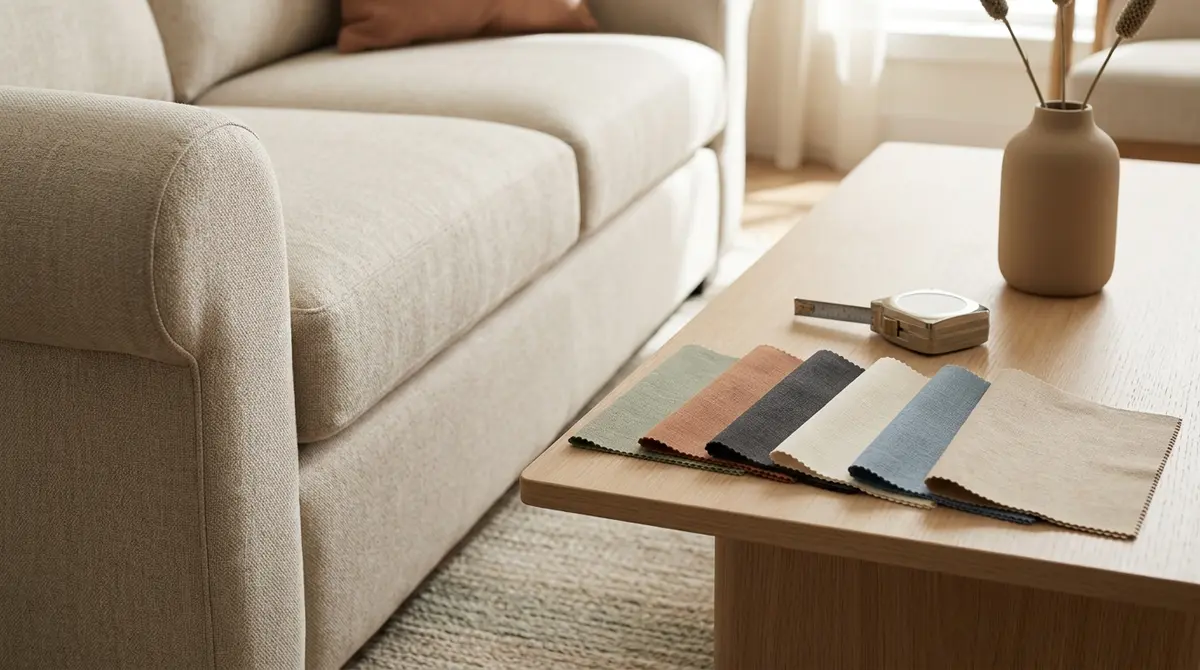
Furniture is a considered, high-ticket purchase, so a Malaysian furniture ad has to do two jobs a fashion ad never has to do: prove the piece will fit, and prove it will actually arrive and get assembled. Put dimensions, delivery terms and the instalment structure inside the creative rather than burying them on the landing page, and shoot the room set as well as the product cut-out so the buyer can picture it in their own hall. Then build a retargeting layer that runs to the 180-day maximum Meta allows on a website Custom Audience, because a sofa decision routinely outlives the 7-day click attribution window Ads Manager reports on. Judge the account on cost per delivered order from your own numbers, since no dated Malaysian cost-per-purchase benchmark for furniture exists.
You sell sofas, bedframes, dining sets or a whole showroom's worth of home goods, and you have watched the same pattern for months: the ad gets saved, the comments fill with people asking the price and the size, and the order lands three weeks later, if it lands at all. Furniture does not convert like a RM59 top. The money is bigger, the buyer measures twice, and the objection that kills the sale is almost never the price. This guide is about building Facebook and Instagram campaigns that survive that gap between interest and purchase.
The short version
Reach is not your problem. DataReportal's Digital 2026 report puts Meta's potential ad reach in Malaysia at roughly 23.0 million on Facebook and 16.1 million on Instagram, and Malaysians spent US$670 million on furniture online in 2023, up 13.6% year on year, per Meltwater's Digital 2024 report. The demand and the audience both exist.
Your problem is the shape of the decision. A sofa costs more than most people's monthly car payment, it has to physically fit through a door and into a room, it arrives on a lorry with two men who need parking, and the buyer usually wants to sit on something before committing. None of that is true of the categories most Facebook ads advice is written about. Advice tuned to a RM89 skincare set will quietly wreck a furniture account, because it optimises for a purchase that happens in one session and measures on a window that closes before your buyer has finished arguing about the colour with their spouse.
So the whole game shifts. Creative has to carry dimensions and delivery terms, not just a price. The offer has to include the financing and the assembly, because those are the objections. The audience structure has to hold someone for months, not days. And the reporting has to be read with the knowledge that Ads Manager's longest click attribution window is 7 days, while a household deciding on a dining set can easily take six weeks. Everything below is about building for that reality instead of fighting it.
Who is actually advertising furniture here, and what they are selling
Look across the Malaysian furniture feed and three shapes of advertiser show up, each with a different job to do in the ad. Every brand named below is a real Malaysian advertiser and every angle described is one their archived creative actually used, but treat each as a representative angle rather than a claim about what is live in the feed this morning. Prices in particular move.
The full-range houses sell a whole home. Fella Design, UNIQ Furniture, Furniture Avenue and GHome Furniture Mall run showroom tours, seasonal offers and warranty callouts, because when you carry everything the reassurance is the differentiator rather than any single product. The specialists win on one category done properly: MUMU Living on space-saving sofabeds, Ckhome2u on solid wood bedframes and dining sets, M Furniture Concept on the construction of a corner sofa, Gaya Home on a single dining chair. And the value and factory-direct sellers ride the price hard, from Furni Express at RM1,280 for a grey L-shape to Pemborong Perabot Domnics at RM299 for a three-seater with a stool, with the second-hand end represented by stores like EcoMax in Cheras.
The price spread inside that one category is the thing worth sitting with. Natural Signature MY has advertised a full-house solid wood package from RM8,600. Jù Home Concept has advertised a complete queen bedroom set at RM698. Those are not competitors, they are different businesses with different buyers, and copying the other one's ad structure is how sellers end up with the wrong traffic. Before you write anything, be clear which of the three you are, because the entire creative brief follows from it. If you want to see the range of angles running across the category, the Malaysian home and living ad archive is the fastest way to look across all three at once.
One more shape sits inside this pool and is worth naming because it changes the ad completely: restoration and reupholstery. Sofa Repair Sifu has run before-and-after creative on a worn leather couch brought back, and Fella Design has run reupholstery as a way to extend a piece's life. That buyer is not shopping for a sofa. They already own one and they are deciding whether to keep it. Same category, opposite intent, and mixing the two audiences in one campaign muddies both.
Showroom or cart: decide before you write a word
The first structural decision is where the sale actually closes, and a lot of Malaysian furniture sellers never make it explicitly. They run one campaign that vaguely wants people to buy online, message on WhatsApp, or visit the store, and it does none of the three well.
If the sale closes online, you are running a conversion campaign and your tracking has to be honest. That means the pixel and the Conversions API both firing, purchase and add-to-cart events matching, and a checkout that does not surprise anyone with a delivery charge on the last screen. High-ticket conversion campaigns are unforgiving of a broken event: with a handful of purchases a week, a misfiring purchase event does not just distort a report, it starves the delivery system of the signal it optimises on.
If the sale closes in the showroom, the ad's job is different. It is selling a trip. Chin Chun Homemart's announcement of a home and kitchen store opening in Shah Alam is a good model for the shape: the creative is about the place, the scale of it, and why it is worth the drive. Address, opening hours, whether there is parking, how big the floor is, what is on display. A showroom ad that never states its own location is asking a stranger to do research on your behalf, and they will not.
There is a third path, and in this category it is often the busiest one: the sale closes in a chat. That is not laziness on the buyer's part. A sofa is a configured product, and the three things a Malaysian furniture buyer usually cannot resolve on a product page are which fabric or colour is actually in stock, whether the L-shape can be built the other way round for their layout, and what the delivery charge and date are to their postcode. Those are four short messages and a decision, which is why so much of this category optimises for conversations rather than checkouts. If that is your path, build the chat for it: an opener that asks for the postcode and the room measurement immediately, saved replies with the fabric swatches and the dimension sheet, and a rule that nobody is quoted a delivery date the lorry cannot hold.
Most sellers need more than one of the three, split by geography rather than blended. Showroom-led creative inside a radius people will realistically drive, delivery-led creative beyond it. UNIQ Furniture in Muar and Perabot Keluarga Sungai Buloh are both physical destinations for their local catchments and delivery businesses outside them, and those are two different ads. Do not make one creative try to be both.
Room set or product only
This argument gets treated as a matter of taste. It is not. The two shots answer two different questions and a furniture buyer asks both.
The room set answers "what would my home look like". It is the emotional half, and it is why so much of this category shoots a bedframe styled with bedding, a lamp and a rug rather than floating on white. Ckhome2u's styled-bedroom framing for its solid wood bedframe does this. Furniture Avenue's set of pieces styled for an Airbnb rental does it with an added twist, because it gives the buyer a use case (a rental that has to look good in photos) rather than just an aesthetic. Perabot Ladaza's angle of a home that suddenly feels new is the same idea stated plainly.
The product-only shot answers "what exactly am I buying". Fabric texture, frame construction, the mechanism, the finish on the wood. M Furniture Concept's callout of pocket springs inside a multi-function corner sofa is this half: a specification that a buyer comparing two similar-priced sofas can actually use to choose. Gaya Home's dining chair shot with comfort, elegance and durability as the pitch works the same way.
The practical resolution is sequence, not choice. Lead the carousel or the video on the room set, because that is what earns the stop. Move to the product detail and the dimensions by the second or third frame, because that is what earns the click. And keep both shots in the same lighting and colour so the sofa in the room and the sofa on white are recognisably the same object, which sounds obvious and is violated constantly.
For a category with this many similar-looking pieces, the carousel earns its place more than in most verticals, since it lets one ad do the room, the detail, the dimensions and the offer in sequence without asking the viewer to click through to find any of it.
The fit problem is the real objection
Ask any Malaysian furniture seller what fills their comments and the answer is some version of "berapa saiz" and "muat tak". Space anxiety is the category's defining friction, and it is worse here than in markets with bigger homes, because a large share of the buyers are furnishing apartments, condos and terrace houses where a 2.8 metre L-shape genuinely might not fit.
Treat that as a creative brief, not a customer service problem. Width, depth and height in centimetres, on the creative, legibly. Seat count stated plainly. Whether the chaise on an L-shape can be swapped left to right, which is a real purchase blocker and a real differentiator when you can say yes. Door width and lift clearance the delivery crew needs, because a sofa that fits the room but not the corridor is a returned sofa and a lost margin.
Video does something a dimension line cannot: it gives scale instantly. A person sitting down, a hand opening a mechanism, a sofabed backrest folding flat in one motion. MUMU Living's fold-flat demo is a small-home problem being solved on screen rather than described, and that is why the format suits the category. The same logic applies to storage beds, extendable dining tables and anything modular.
You will still get the questions. That is fine, and to a degree it is useful, because a comment thread where three other buyers say the delivery was smooth is social proof you did not have to write. The goal is to move the question up a level, from "will this fit" to "can you deliver before Raya", which is a buyer who has already decided.
Delivery and assembly belong in the ad
For a high-ticket physical good, delivery is not logistics. It is a conversion objection, and it belongs in the creative next to the price.
State the delivery terms in the ad. Free within a stated area, charged beyond it, and say which. Malaysian sellers frequently advertise free delivery without a boundary, and a Sabah or Sarawak shopper who discovers the East Malaysia surcharge on the checkout page does not email you about it, they close the tab. If your free-delivery zone is the Klang Valley, saying so on the creative costs you nothing and saves you a pile of abandoned carts and angry messages.
Do the same with assembly. If a two-man crew assembles the bedframe in the room, show it, because for a lot of buyers that is the difference between an order and a "let me think about it". If assembly is not included, say that too, and price it, because the surprise is what does the damage rather than the charge.
Warranty is the third leg. Fella Design runs a one-year furniture warranty as its own creative rather than a line in the footer, and that is the right instinct for a purchase this size. So is a factory-direct claim where it is genuinely true, as with the Sungai Buloh and Sederhana Online style of positioning, because it tells the buyer where the price comes from. Just keep it true: "factory direct" from a reseller who buys in like everyone else is a false trade description under the Trade Descriptions Act 2011, not a marketing flourish.
Instalments, and saying who is actually lending
Financing does real persuasive work in this category. Jù Home Concept's RM698 bedroom set with 0% instalment and Ckhome2u's RM2,190 L-shape with instalments both use it as the thing that turns a big number into a manageable one. That is legitimate and effective. It also needs more care than most sellers give it.
Be specific about three things. Who is providing the credit: your own in-house arrangement, a bank card instalment plan, or a third-party buy-now-pay-later provider. What the tenure is: 6, 12, 24 months. And what the qualifying condition is, if there is a minimum spend or a card requirement. "0% instalment" with none of that attached is a claim the buyer will test at checkout, and the gap between what the ad implied and what the payment page offers is where refund disputes and one-star reviews come from.
If the arrangement is structured as a hire-purchase rather than a card instalment plan, that is a different legal animal, and Malaysia's Hire-Purchase Act 1967 governs hire-purchase agreements. Confirm with your credit provider which structure you are actually operating under before you write the copy, rather than assuming. Meta also publishes an advertising standard covering financial products and services, so if the financing is the headline of the ad rather than a supporting line under the sofa, read that standard first.
One thing worth doing regardless of the legal structure: show the monthly figure alongside the total, not instead of it. A buyer who sees only "RM99 a month" and works out the total themselves feels handled. A buyer who sees "RM2,376, or RM99 a month over 24 months" feels informed, and the second one is the one who does not cancel.
The price on the sofa is a claim
Furniture advertising in Malaysia runs on struck-through prices. Sederhana Online's L-shape sofabed at RM1,499 from RM2,998 is the standard shape of it, and it works. It also puts you squarely inside Malaysia's price-claim rules, which apply to a discount on a sofa exactly as they apply to a discount on a phone.
The instruments are the Trade Descriptions Act 2011 and the Trade Descriptions (Cheap Sale Price) Regulations 1997, substantially amended by P.U. (A) 327/2019 and in operation from 2 January 2020. Two features of that amended regime land squarely on furniture. First, the reference price is the latest price charged before the sale started, so the "was" figure has to be a price the sofa was genuinely on sale at recently, and you need to be able to show it. Second, the regulations cap how long one sale price may be held at thirty one days, which is the specific trap in a category where the same struck-through banner sits on the same product page for a year because nobody ever took it down. A permanent "from RM2,998" that has never been charged is a misleading price indication, not a promotion.
The same goes for "lowest price ever", "cheapest in Malaysia" and any other superlative you cannot substantiate on the day you run it. Struck-through pricing and open-ended sale banners are common across this category, which is precisely why copying whatever the shop down the road does is a poor compliance strategy. The Malaysian rules on discount and price claims go through the notice duties, the reference price and the penalties in full.
Two furniture-specific traps. First, "from RM1,280" pricing on a set: if RM1,280 buys the two-seater and the photo shows the full L-shape with the ottoman, the ad is misleading even if the landing page clarifies. Show what the advertised price actually buys. Second, urgency framing like "before prices rise", which appears in this category, needs to be true. If prices do not rise, do not say they will.
The retargeting window a four-figure sofa actually needs
This is where most furniture accounts leave money on the table, and it comes from a measurement misunderstanding.
Meta Ads Manager's longest click attribution window is 7 days. Most accounts are reported on 7-day click plus 1-day view. That is a measurement setting: it describes which conversions Ads Manager will credit back to an ad, and nothing else. It is not a claim about how long your buyer takes to decide. A household choosing a dining set often takes weeks, involves two people, waits for payday, and measures the room twice in between. A meaningful share of your genuine sales will land outside that 7-day window and simply will not appear against the ad that started the process.
The consequence is that furniture sellers who read only the platform-attributed return look at their prospecting campaigns, see thin numbers, and switch off the top of the funnel that is actually feeding the sales they attribute elsewhere. Watch total revenue against total spend across the month alongside the in-platform figures, and treat a divergence as information rather than an error.
Structurally, use the retention Meta gives you. A website Custom Audience holds up to 180 days, and on this category you should be using far more of that than the 30 days most accounts default to. A workable tiering:
| Audience window | Who is in it | What the ad should say |
|---|---|---|
| 0-7 days | Viewed a specific product page | The exact piece, dimensions, delivery timeline, instalment breakdown |
| 8-30 days | Browsed the category, no purchase | Alternatives in the same range, the warranty, the assembly service |
| 31-90 days | Older visitors, still no purchase | Room-set creative, new arrivals, a reason to come back to the showroom |
| 91-180 days | Long-tail consideration | Brand-level creative, seasonal refresh, a genuinely new offer |
Exclude purchasers from all of it, then build a separate audience for them, because the next sale to a furniture buyer is real. Someone who bought a sofa in March is a legitimate audience for a coffee table in June, and a bedframe buyer is a mattress and bedding prospect immediately. The general mechanics of building these layers are covered in the retargeting guide; what is category-specific is the length of the window and the willingness to keep spending on someone who has been quiet for two months.
Frequency needs watching on the long tiers. A 180-day audience seeing the same sofa creative for the twentieth time is not being persuaded, it is being annoyed. Rotate the creative across those tiers on a schedule rather than letting one winning ad run itself into the ground.
Catalogue ads, and when your SKU count earns them
Dynamic ads driven by a product catalogue are genuinely well suited to a slow, comparison-heavy purchase, because they can show a returning visitor the exact bedframe they were looking at three weeks ago. But they are not a starting point for most sellers in this category.
If you carry fifteen hero pieces, hand-built creative wins. The craft of the room set, the demo, the dimension frame, all of that matters more than automation at that scale, and building a feed for fifteen products is effort spent in the wrong place. Once you are carrying hundreds of SKUs across sofas, beds, dining, storage and accessories, the maths flips and a catalogue starts earning its keep.
The prerequisite is feed hygiene, and furniture feeds are unusually easy to get wrong. Dimensions have to be right and in a consistent unit. Variants (fabric, colour, configuration) have to map to the correct image, or you will advertise a grey sofa and land the shopper on a beige product page. Stock status has to be live, because nothing burns goodwill like paying to advertise a dining set that is out of stock for six weeks. Price has to match the site to the sen. The dynamic product ads guide covers the setup; the discipline is in the feed, not the campaign.
What a furniture sale should cost, honestly
Here is the part where a lot of guides invent a number. There is no dated, primary Malaysian benchmark for cost per purchase, cost per lead, ROAS, CPM or CTR specific to furniture and home goods that this page can point you to. Any "furniture ads in Malaysia cost RM X per sale" figure you find circulating is almost certainly unsourced, and planning against it is worse than planning against nothing, because it gives you false confidence.
What you can anchor on is your own economics, and on a high-ticket item those are unusually knowable. Take one order. Subtract the cost of goods, the freight, the delivery crew's time, the packaging and your expected return or damage rate. What is left is what you are allowed to spend acquiring the order and still make money. That number, not a borrowed benchmark, is your ceiling.
Two adjustments make it more useful. First, factor the second purchase: furniture buyers come back, and a customer who buys a sofa and later a dining set justifies a higher acquisition cost than a one-off view implies. Second, give the campaign time. On a category where a single order can be four figures and weekly order counts are in the tens, three or four weeks is close to the minimum before an average means anything. Judging a furniture campaign after five days is reading noise.
Read cost per delivered order rather than cost per checkout where you can, since a furniture order that fails on delivery access or gets cancelled after a measurement panic is not revenue. That distinction is invisible in Ads Manager and obvious in your own system.
The calendar beyond the sale
Demand in this category is not flat. New-key handovers move furniture, and so does the festive refresh, when households restyle before guests arrive: GHome Furniture Mall's Ramadan-timed creative aimed at refreshing a home before Raya is the standard shape of that. Chinese New Year drives the same behaviour with different styling.
Two practical notes rather than a seasonal playbook. First, lead time is your constraint, not the calendar. If your delivery window is three weeks, a Raya campaign that launches two weeks out is selling something that will arrive late, and the promise you make in the ad has to match what the lorry can do. Publish the delivery cut-off date in the creative during festive periods, plainly.
Second, your retargeting layer is doing quiet work between the peaks. Someone who browsed in a quiet month and did nothing is exactly who should see the festive creative when it lands, which is another argument for holding audiences out to 90 or 180 days rather than clearing them every month.
A pre-launch pass for a furniture ad
Before the ad goes live, walk it once from the buyer's side:
- Are the dimensions on the creative, in centimetres, legible on a phone?
- Does the ad say who delivers, where free delivery applies, and where it does not?
- Is assembly included, and does the ad say so either way?
- If instalments are advertised, is the provider, the tenure and the total price stated?
- If a price is struck through, can you show that the original price was genuinely charged?
- Does the advertised price match what the photograph actually shows?
- If it is a showroom ad, does it contain the address and the opening hours?
- Is there a retargeting audience running behind it that will still be running in three months?
- Are purchasers excluded from prospecting, and is there a separate audience for their next room?
Most furniture ads that underperform in Malaysia are not badly designed. They are ads that answered the wrong question, showing a beautiful sofa to someone whose actual blocker was whether it fits the lift, whether the price includes delivery to Ipoh, and whether they can pay for it over a year. Answer those three things inside the creative and the rest of the account gets easier. Keeping the research, the creative and the measurement in one loop is the point of a tool like AdPlay.ai, but the discipline is what does the work: build for a long decision, say the awkward things early, and let cost per delivered order tell you when to spend more.
By the numbers
Frequently asked questions
Should my furniture ads send people to my website or into the showroom?
Run both, and stop pretending they are the same campaign. An online checkout campaign optimises for a purchase event and needs your pixel and Conversions API firing correctly on add-to-cart and purchase. A showroom campaign optimises for a message, a call or a store visit, and its creative job is to make the trip feel worth an hour of someone's Saturday: the address, the parking, the opening hours, the size of the floor. Malaysian furniture sellers frequently run showroom-led creative because a four-figure sofa is still a sit-on-it decision for a lot of buyers, and stores like Perabot Keluarga Sungai Buloh and Al Aqsa Bedding & Furniture build whole ads around a walk-through of the floor. If you have one showroom and a nationwide delivery service, split the budget geographically: showroom creative inside a drivable radius, delivery-led creative everywhere else.
Do room-set photos or plain product shots work better for furniture ads?
You need both, and they do different work. The room set answers 'what will my house look like', which is the emotional half of the decision, and it is why so many Malaysian listings show a bedframe styled with bedding and a lamp rather than floating on white. The product-only shot answers 'what exactly am I buying', which is the practical half, and it is what a shopper wants once they are comparing two sofas at similar prices. A carousel that opens on the room set and then moves to the product with dimensions on frame two or three covers both without making the viewer choose. Ckhome2u's styled-bedroom framing for a solid wood bedframe and Furniture Avenue's Airbnb-styled sets show the room-set half; the fabric and frame close-ups do the rest.
How long should I retarget someone who looked at a sofa?
Longer than you think, and longer than your reporting window. Meta caps a website Custom Audience at 180 days of retention, and for a four-figure purchase you should use a good chunk of that rather than the 30-day default most accounts stop at. Build tiered audiences: 7 days for the hot viewers who saw the product page, 30 days for a broader consideration message, and a 90 to 180 day layer that reintroduces the brand when a household's circumstances change (new keys, a new baby, a couch that finally gives out). The 7-day click attribution window in Ads Manager is a measurement setting, not a statement about how long people take to decide, and confusing the two is how furniture sellers talk themselves out of retargeting budget that is actually working.
What should a furniture sale cost me per purchase on Facebook in Malaysia?
There is no dated, primary Malaysian cost-per-purchase, cost-per-lead or ROAS benchmark for furniture and home goods that this guide can honestly point you to, and any confident 'RM X per furniture order in Malaysia' figure circulating on a blog is almost certainly unsourced. What you can anchor on is your own gross margin per order and your delivery cost. Work out what a delivered, assembled sofa actually leaves you after freight and the two-man crew, decide what share of that you are willing to pay for the acquisition, and read cost per delivered order out of your own account after three to four weeks. On a high-ticket item with a slow decision, three weeks is close to the minimum before the numbers mean anything.
Can I advertise 0% instalments for furniture on Facebook?
Yes, and plenty of Malaysian furniture sellers do, but the terms in the ad have to be the terms the buyer actually gets. Be specific about who is providing the credit (your own arrangement, a bank card instalment plan, or a third-party buy-now-pay-later provider), the tenure, and any minimum spend, because 'RM698, 0% instalment' with no tenure is the kind of half-claim that generates refund arguments later. If the arrangement is a hire-purchase rather than a card plan, check whether it falls under the Hire-Purchase Act 1967 with your credit provider before you write the copy. Meta also maintains an advertising standard covering financial products and services, so if the financing is the headline rather than the sofa, read that standard before you launch.
How do I stop people asking 'will it fit?' in the comments?
Put the answer on the creative. Width, depth and height in centimetres on a frame of the carousel, a note on whether the L-shape can be reversed, the door and lift clearance the delivery crew needs, and the seat count. A short video that shows a person sitting on the piece gives an instant sense of scale that a dimension line never quite does. MUMU Living's fold-flat sofabed demo works for exactly this reason: it is not a spec sheet, it is a small home problem being solved on screen. You will not eliminate the questions, and you should not want to, because comment threads are where hesitant buyers read other people's reassurance. But you can move the question from 'will it fit' to 'can you deliver by the 15th', which is a much warmer conversation.
Should free delivery and assembly go in the ad or on the landing page?
In the ad. Delivery, assembly and warranty are not fine print for a four-figure purchase, they are part of the offer, and hiding them until checkout is where a lot of furniture carts die. If delivery is free within the Klang Valley but chargeable to Penang or East Malaysia, say so on the creative rather than letting a Sabah shopper discover it at the payment step. If assembly is included, show the crew doing it. Fella Design's one-year warranty callout is the same instinct applied to durability: put the reassurance where the hesitation is, not three clicks past it.
Do I need a product catalogue to run furniture ads?
Only once your SKU count and your traffic justify it. A seller with fifteen hero pieces is usually better served by hand-built carousels and video, because the creative craft matters more than the automation at that scale. Once you are carrying hundreds of SKUs across sofas, bedframes, dining and storage, a catalogue lets you run dynamic ads that show a returning visitor the specific piece they were looking at, which is genuinely useful on a long consideration cycle. The prerequisite is clean feed data: correct dimensions, accurate stock, real prices and images that match the variant. A catalogue built on a messy feed advertises the wrong colour sofa at the wrong price, which is worse than not running it at all.
Sources
- 1.DataReportal - Digital 2026: Malaysia (2026)
- 2.Meltwater - Digital 2024: Malaysia (social and e-commerce statistics) (2024)
- 3.Statista - Furniture Market, Malaysia (2024)
- 4.Meta Business Help Centre - About attribution settings (2026)
- 5.Meta Business Help Centre - About Custom Audiences (2026)
- 6.Meta Transparency Center - Advertising Standards (2026)
- 7.Trade Descriptions Act 2011 [Act 730], Laws of Malaysia (Attorney General's Chambers) (2011)
- 8.Hire-Purchase Act 1967 [Act 212], Laws of Malaysia (Attorney General's Chambers) (1967)
Keep exploring
Turn ad research into winning ads
See what 16,000 Malaysian brands advertise, then generate on-brand creative, all in one tool.
7-day free trial · No credit card required