
Back to School Ads in Malaysia
When to run Malaysian back to school ads for the 4 January 2027 session: the KPM dates, the basket, the lead times, and why the school aid arrives after the spending.
Updated October 2026 · Xanny Lee, CEO
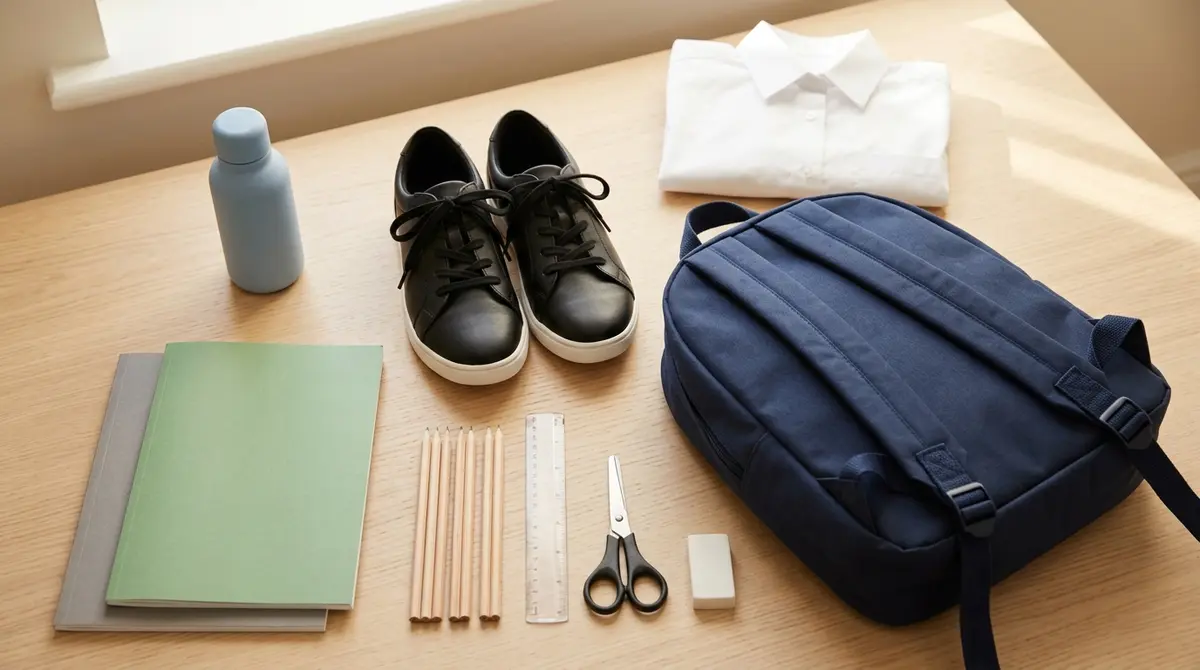
The 2027 Malaysian school session opens on Monday 4 January 2027 for every state, including Kedah, Kelantan and Terengganu, which the Ministry of Education standardised in Surat Siaran Bil. 3/2025. That is one week earlier than the 2026 opening for Kumpulan A and eight days earlier for Kumpulan B, so a flight rebuilt from last year's dates starts late. The buying happens inside the year-end break, which runs from 4 December (Kumpulan A) or 5 December (Kumpulan B) to 31 December 2026, and it is compulsory spending rather than gift spending. Bantuan Awal Persekolahan does not fund it: under Budget 2026 the RM150 was paid out in the second week of January 2026, weeks after the uniform and the shoes were bought.
It is late October, last December's Ads Manager flight is open in one tab and a supplier stock sheet in the other, and the only thing you are really holding is last year's dates. Those dates have moved twice in two sessions, and they have moved in the direction that costs you the window rather than a few percent of ROAS. This guide sets out what the Ministry of Education has actually published for the January 2027 opening, what it has not published yet, how a compulsory school basket behaves differently from December gift demand, and where the deadlines sit that no courier promise can rescue.
The one date every 2027 school flight is scheduled against
Malaysian schools open the 2027 session on Monday 4 January 2027, and unlike every recent session, they do it on the same day in every state.
The instrument is Surat Siaran Kementerian Pendidikan Bilangan 3 Tahun 2025, the circular that carries the 2026 academic calendar, issued on 28 October 2025 under reference KPM.100-1/3/2 Jld.11(85) and signed by the Ketua Pengarah Pendidikan Malaysia. Its paragraph 4 sets the 2027 opening for Kumpulan A and Kumpulan B on that one date, and states the reason: penyeragaman, standardising the opening nationwide so that school administration and the teaching schedule line up.
Kumpulan A is Kedah, Kelantan and Terengganu, the three states whose weekend falls on Friday and Saturday. Kumpulan B is the other ten states and the three federal territories, which the circular lists as Johor, Melaka, Negeri Sembilan, Pahang, Perak, Perlis, Pulau Pinang, Sabah, Sarawak, Selangor, Kuala Lumpur, Labuan and Putrajaya. Every recent session opened on two different days for those two groups. This one does not.
That matters for a practical reason before it matters for a strategic one. At least one widely shared Malaysian school holiday calendar, CutiSekolah.com.my, still shows 3 January 2027 for Kumpulan A and 4 January for Kumpulan B. The mechanical error is easy to see once you check the day of the week: 4 January 2027 is a Monday, and 3 January is a Sunday, so those calendars have back-shifted the three Friday to Saturday weekend states by one day out of habit. That habit is exactly what the standardisation removed. If your flight ends a day early for Kedah, Kelantan and Terengganu, it ends a day early in three states where school shoes and uniforms sell in the same volumes as anywhere else.
One caveat belongs here rather than buried later. The 2027 academic calendar circular itself has not been published. The Ministry's current calendar page lists Sesi 2026, Sesi 2025/2026 (Pindaan) and two earlier sessions, and no 2027 document at all. So the 4 January opening is on the record, and every 2027 term break, mid-year break and school-day count is not. Nothing on this page invents one.
| Date | Kumpulan A | Kumpulan B | What it changes for the flight |
|---|---|---|---|
| Last school day of 2026 | Thursday 3 December | Friday 4 December | The uniform and shoe list stops being theoretical, because the child comes home with the actual damage |
| Year-end break begins | 4 December 2026 | 5 December 2026 | Parents are available in daytime hours and children can be brought to a shop to be fitted |
| Christmas Day | 25 December 2026 | 25 December 2026 | Falls inside the break, so gift demand and school demand share a household budget in the same week |
| Year-end break ends | 31 December 2026 | 31 December 2026 | The last day anything can arrive without being late |
| Length of the break | 28 days | 27 days | Four weeks of buying, no more, with no January overflow this time |
| 2027 session opens | Monday 4 January | Monday 4 January | One deadline for the whole country, and it is a morning, not a season |
Why a flight rebuilt from last year's dates lands late
Compare three sessions and the shape of the problem appears immediately.
The 2025/2026 session opened on 16 February 2025 for Kumpulan A and 17 February for Kumpulan B. The 2026 session opened on 11 January 2026 for Kumpulan A and 12 January for Kumpulan B. The 2027 session opens on 4 January 2027 for both. Across two sessions the opening has moved forward by 43 days for Kumpulan A and 44 for Kumpulan B, close to six weeks either way.
Against last year alone the gap is one week for Kumpulan A and eight days for Kumpulan B. That sounds small until you map it onto where the money is spent. A week at the end of a four-week buying window is not a week of general demand, it is the week that carries the panic buying, the size exchanges and the highest willingness to pay for fast delivery. Losing it does not shave a percentage off performance. It moves your peak creative to a date on which the purchase has already been made.
The back end shrank as well, and almost nobody has noticed. The 2025/2026 year-end break ran to 10 January 2026 for Kumpulan A and 11 January for Kumpulan B, so a parent had the whole first week of January to finish the list. This time the break ends on 31 December 2026 and school opens on 4 January 2027. The first three days of January 2027 are a Friday, a Saturday and a Sunday, and they are all that is left. If your plan assumed a quiet first week of January to mop up late orders, that week no longer exists.
Two corrections follow for any calendar you inherited. Move every school-basket flight forward by at least a week against your 2026 dates, and stop treating early January as recoverable inventory. It is a weekend, not a week.
What the December break is for a parent, and what it is not
The 2026 year-end break runs from 4 December for Kumpulan A and 5 December for Kumpulan B through 31 December, which the circular records as 28 days and 27 days respectively. Christmas Day, 25 December 2026, sits inside it. So does the entire 12.12 sale period and the whole New Year run-in.
Those are the same calendar weeks that carry gift buying, family travel and year-end promotions, which is why the two get confused in a media plan. They are not the same purchase. A parent choosing a gift decides whether to buy, what to spend and whether to wait for a better price. A parent buying a school uniform decides only where to buy and how late they can leave it. Compulsory demand can be delayed, split across paydays or traded down to a cheaper brand, but no auction price and no cautious quarter makes a household send a child to school in shoes two sizes too small. It does not disappear, and it cannot be deferred past a fixed morning.
That distinction should decide what you say, not just when you say it. Discretionary December advertising works on desire, gift-giving language and inclusive year-end framing, and the gifting and travel side of these weeks is worked through in our guide to year-end and Christmas advertising in Malaysia. School advertising works on completion and relief. The reader is not browsing. They are working a list somebody else wrote for them.
One published number treats a long school break as a retail event rather than a lull. Retail Group Malaysia recorded 5.6% growth in Malaysian retail sales in the first quarter of 2025 and named festival shopping sprees and the month-long national school holidays among what boosted it. The school holiday sat in that quarter because the 2025/2026 session did not open until 16 February 2025, so roughly a month of it fell across January and early February. Chinese New Year and the run-up to Hari Raya Aidilfitri were in the same three months, so nothing in that figure can be split out and attributed to uniforms and shoes. Read it as evidence that Malaysian households spend through a long break, not as a school-basket number. The basket needs no such evidence anyway. It gets bought in a weak quarter and a strong one alike, because the deadline is a morning rather than a mood.
The basket item by item, and who signs off on each one
The school basket is not one purchase with one decision maker. It is six to nine separate purchases with different constraints, and the constraint is usually not price.
Uniform specification is set by the school, not the parent, and often down to the shade of the fabric and whether the crest is embroidered or printed. Shoe colour is a rule, not a preference, which is why one of the sharpest school-shoe ads in the Malaysian archive is built entirely around compliance: Abaro Shoes runs a video for a lighted school shoe whose selling line is that the LED switches off for school and on for the street, one shoe covering two situations without breaking the rule. That ad started running in April 2026. The bag is the one item where the child has a real veto, and the category knows it. Teemi Prime School Bag, the deepest school-basket advertiser found in the Malaysian set with 147 live ads, runs both sides of that: ergonomic and spine-load claims aimed at the parent, including a secondary-school bag positioned for pupils over 150cm, and a colour-led angle aimed straight at the child. That second angle is the one to write carefully. A parent-facing ad about a design a child will like is ordinary category copy, but the same film re-cut so the child is the one being addressed runs into the Content Code rule against a direct exhortation to a child, either to buy or to work on a parent, which is set out sub-rule by sub-rule in our guide to the Malaysian rules on advertising to children.
| Item | Who actually decides | What sets the deadline | Angle that fits |
|---|---|---|---|
| Uniform | The school, down to fabric and crest | Alteration and embroidery turnaround, not shipping | Fit certainty and same-week alteration |
| Shoes and socks | School rules on colour, child on comfort | The child has to be present or measured to size correctly | Sizing help, exchange promise, compliance with the rule |
| School bag | Parent on ergonomics, child on design | Stock depth on the colour the child will accept | Weight, back support, and a design the child will accept, written to the parent |
| Stationery and workbooks | The class list, issued late | Restock lead time from the supplier | Completeness of the list in one basket |
| Textbooks and reference titles | Syllabus and year group | Print runs and distributor stock | Availability by year group, stated plainly |
| Prescription glasses | Optometrist, then parent | Lens grinding and fitting appointment | Book the appointment inside the break |
| Water bottle and lunch kit | Parent, on habit and school policy | None, this is a same-week impulse | Add-on to a basket already being filled |
| Tuition place | Parent, in November and December once the year-end results are home | Class sizes fill before the January intake opens | Enrolment while the parent is still planning the year |
Two cautions about that table, both learned from reading the archive rather than from theory. The eyewear row looks larger in keyword terms than it is in this window, because the Malay phrase for glasses appears across adult and children's eyewear alike and the phrase on its own will not separate the two for you. And uniform advertising splits into two entirely different businesses. A large share of Malaysian ads containing baju sekolah or uniform sekolah come from custom apparel printers selling to schools and teachers, not to parents. That is a business-to-school intent sharing your keywords, and it is why the phrase itself is an unreliable audience signal.
The basket also has an adjacency ring that most media plans miss. Sabun Badang HQ runs uniform stain removal creative aimed at ink, marker and sports-field dirt on school clothing. MARIGOLD's UHT milk advertising asks parents to put a carton in the child's bag. Muiz Hot Chicken tied an RM10 voucher to Year 1 registration at a named school in August 2026. None of those brands sells a school item, and all three are advertising into the same household decision. That ring is why the new school year appears as its own row among the festivals in our guide for Malaysian small businesses: a shop with nothing on the class list can still work the week the list is being filled.
The school aid lands after the shopping, not before
Bantuan Awal Persekolahan is the most misunderstood input in this category, and the misunderstanding runs in the direction that costs money.
| What is on the record | Detail | Where it is stated |
|---|---|---|
| Amount | RM150, one off, per pupil | MOF Portal Manfaat, Belanjawan 2026 |
| Payment date | 11 January 2026 | MOF Portal Manfaat, Belanjawan 2026 |
| Application | None required, the payment is automatic | MOF Portal Manfaat, Belanjawan 2026 |
| Scope on the Budget 2026 page | Pupils from Year 1 to Form 6, Malaysian citizens | MOF Portal Manfaat, Belanjawan 2026 |
| Scope on the standing programme page | Pupils from Year 1 to Form 5 or equivalent | KPM Bantuan Awal Persekolahan |
| Who takes delivery on the Budget 2026 page | Handed over as cash to the parent at the school | MOF Portal Manfaat, Belanjawan 2026 |
| Who takes delivery on the standing programme page | Channelled to the school, then distributed to the pupil as cash or an account credit | KPM Bantuan Awal Persekolahan |
| Governing instrument | Surat Pekeliling Kewangan Bil. 2 Tahun 2023 (Pindaan) | KPM Bantuan Awal Persekolahan |
Read the payment date against the calendar and the whole planning assumption inverts. Under Budget 2026 the payment date on the record is 11 January 2026. That was the first day of school for Kumpulan A and the day before it for Kumpulan B. The uniform, the shoes, the bag and the books had been bought in December, four to six weeks earlier, and the money did not reach the household before term. The two government pages differ on who takes delivery: the Ministry of Finance benefits portal records a cash handover to the parent at school, while the Ministry of Education programme page describes the allocation going to the school and being distributed to the pupil as cash or an account credit. Neither has it arriving before the uniform was bought.
So the aid is not a subsidy your December offer can lean on, and a January campaign inviting families to spend their aid is arriving after the retail decision has already been made. The honest December framing is the plain one: buy now, because the deadline is fixed, and the household support arrives on its own schedule regardless.
Scope is the second place the two official pages diverge, and it is worth noticing as well. The Budget 2026 page states Year 1 to Form 6, while the standing programme page, which still runs on a 2023 financial circular, states Year 1 to Form 5. That difference is the clearest available evidence that the scope was widened for the 2026 session, and it is also a warning about citing either number as permanent.
There are two things we will not print. Budget 2027 had not been tabled when this page was researched, so the 2027 amount is unknown and RM150 is a 2026 figure only. And we could not confirm a single national payout day for a future session, so no creative should carry one. Interestingly, no advertiser appears to be trying: across the Malaysian ads in our archive, not one names Bantuan Awal Persekolahan in its copy.
A new curriculum arrives with the same session, for three cohorts
Kurikulum Persekolahan 2027 is the other thing landing in January, and the useful fact about it is how narrow its first year is.
The implementation timeline printed in the Ministry's own document runs in three steps: dissemination of the curriculum in 2025, implementation for preschool in 2026, and in 2027, implementation for preschool, Year 1 and Form 1. That is it for 2027. Year 4 and Form 4 carry on as before.
Commercially those three cohorts punch far above their share of enrolment, because they are the entry cohorts. A Year 1 family buys a first uniform, a first pair of school shoes, a first bag and a complete book list. A Form 1 family buys a secondary-school set from scratch, usually in a different size class and often a heavier bag. The cohort most exposed to curriculum change is the same cohort making the largest single-year basket purchase and carrying the most parental anxiety about getting it wrong. If you segment nothing else this season, segment those three.
The consultation behind the curriculum is worth knowing for the tone it justifies. The Ministry's implementation review drew 61,084 respondents, 45.0% parents and guardians and 46.8% educators, split 65% urban and 35% rural. The document names three directions: Pembentukan Karakter with its own slot in the timetable from preschool through upper secondary, a stronger emphasis on literacy and numeracy with early intervention, and Kelas Pembelajaran Bersepadu, a timetabled cross-disciplinary class starting in primary.
What the document does not contain is a subject list, and that is a limit of the document rather than a contradiction of the news coverage. The file the Ministry links carries no date on any of its pages and sits in a December 2023 folder on the Ministry's own server, so a subject list announced in late 2025 would not appear in it either way. Its silence proves nothing about what has since been named. If a workbook or reference-title offer depends on that list, confirm it against a current Ministry source before it reaches a creative brief, not against this framework document.
What Malaysian school ads in the archive actually look like
The counts below come from the AdPlay.ai archive of Malaysian Meta ads, read on 9 September 2026, and they describe creative only. There is no spend, no cost per click and no cost per thousand impressions anywhere in that data, so nothing in this section is a benchmark for what anything costs.
| Phrase in the ad copy | Live Malaysian ads |
|---|---|
| back to school | 1,011 |
| school uniform | 374 |
| cermin mata | 322 |
| school bag | 313 |
| pusat tuisyen | 220 |
| kelas tuisyen | 170 |
| baju sekolah | 125 |
| school shoes | 115 |
| buku latihan | 104 |
| uniform sekolah | 67 |
| beg sekolah | 34 |
| buku teks | 33 |
| kembali ke sekolah | 17 |
| kasut sekolah | 7 |
Three things stand out. The English phrase runs about sixty times ahead of its direct Malay translation, so a keyword list built only in Malay will miss most of the category, and one built only in English will miss the book and workbook end where buku latihan and buku teks do the work. The 1,011 ads using the English phrase come from 227 distinct brands, which is a wide field rather than a handful of chains. And the format mix in that set is video-led, at 434 video against 260 static images, 212 dynamic creative ads, 48 carousels and 43 multi-image ads, which fits a category that has to demonstrate fit, weight and durability rather than simply show a price.
Now the limitation, stated plainly because it is the question every planner asks next. This archive cannot tell you when the Malaysian school season starts. We ran the full launch-month histogram across the school-basket phrases and the pattern it produces tracks when ads were collected, not when the market moves. Normalising against the whole Malaysian corpus does not rescue it either, because each month in the mix is dominated by a different year. So there is no month-share table on this page and no claim that the window opens in a particular week, because the honest answer is that the calendar, not the archive, sets the dates. For what advertising actually costs in this market, our Malaysian Facebook ads cost guide uses dated external sources rather than archive data.
Angles that hold up when the purchase is compulsory
The category rewards a different kind of creative than a gift category does, and the archive shows brands arriving at that independently.
Sell fit certainty, not desire. A child cannot be measured in October for a January purchase, which is why sizing, exchange and alteration promises do more work than discounts, and why the copy that works opens on the shoe rather than on the offer. Bata runs the school angle twice a year in the Malaysian set, and both runs open that way. The mid-year run, on ads that started 26 and 27 May 2026, leads with the break itself, telling parents the mid-year school break is the time to refresh those school shoes. The late-August run, on ads that started between 24 and 28 August 2026, opens on the worn pair instead and asks whether the school shoes have had a good run. The same bundle sits underneath both, two pairs of school shoes for RM99 and two pairs for RM149. The price is the closing argument in each, never the hook.
Make the school rule the feature. Compliance is a genuine anxiety. A shoe that is defensibly plain, a bag that meets a weight guideline, socks in the exact shade the school requires: these are not boring product attributes in this category, they are the buying criteria.
Write to a list, not to a mood. The reader is completing a task. An ad that names the item, the size range and the availability outperforms an ad that evokes a feeling about the new school year, because the reader is scanning for whether you have the thing they still need.
Use the classmate. Teemi's strongest social-proof creative asks mothers whether they first noticed the bag on another child at school, which is exactly how this category actually spreads. Parent-to-parent evidence beats brand claims when the parent has one chance to get it right.
Play the catchment if you have a shop. ASONE Stationery Kapit advertises as the stationery shop that has everything on the list, aimed squarely at parents in its own town. In a category where a parent may need to bring the child in to be fitted, a physical catchment is an advantage, not a limitation.
Advertise the ring, not just the item. Uniform stain removers, lunch kits, drinks and food offers all sell into a household already spending on school. If your product touches the routine rather than the list, tie it to the routine.
One boundary applies to every one of those angles. Malaysian rules on advertising to children, and Meta's own restrictions on implying personal attributes, both sit directly across this category, and neither is restated here because both are covered properly elsewhere. The Content Code standard itself, sub-rule by sub-rule, is in the children's advertising guide linked in the basket section above. What those rules do to a specific retail category, from a first pram to a school bag, is worked through in our guide to baby and kids advertising in Malaysia, and the platform side, with examples of rejected and approvable phrasing, sits in the tuition centre advertising guide. Read them before you write a hook about a child.
The lead times a school deadline creates that a gift deadline does not
A gift has one clock, which is delivery. A school basket has four, and three of them run before a courier is ever involved.
Alteration and embroidery. A uniform bought off the shelf frequently needs hemming, and a name tag needs stitching or heat pressing. That is a workshop queue, and the queue is longest in exactly the last ten days of December when everyone arrives at once. A shop that publishes an alteration cut-off separate from its sales cut-off is telling parents something useful and protecting its own week.
Sizing and the exchange loop. Shoes are the item most likely to come back. If your promise includes an exchange, the real deadline is not the delivery date, it is the delivery date minus one full return cycle. Selling a shoe on 2 January with an exchange promise is selling something you cannot honour.
Supplier restock. Class lists for workbooks and stationery often land late, which produces a demand spike on specific items your supplier cannot refill inside the window. Once a line is gone it is gone until the session has started, and by then nobody wants it.
Courier transit. The last clock, and the only one a generic delivery estimate covers. Use your own carrier's published transit by destination state rather than a national average, because carriers quote the peninsula and East Malaysia separately for a reason and averaging the two is how a promise gets broken in Sabah and Sarawak.
Work each of those backwards from Monday 4 January 2027 and you will usually find the honest last-order date sits several days before the one on last year's banner. The general craft of writing urgency that does not overstate, including how to handle countdowns and final-days messaging without manufacturing scarcity, is covered in the year-end guide linked earlier, so the only school-specific rule to add is this: publish a separate cut-off per fulfilment path, and take the path offline when its clock runs out rather than letting orders keep arriving.
Phasing a flight around a fixed opening
Below is the shape of a school flight keyed to the KPM dates rather than to a retail promotion calendar. It deliberately carries no budget percentages, because the right split depends on your fulfilment path and your stock depth, not on a rule of thumb.
| Week | What is happening | What the ads should be doing | What to stop |
|---|---|---|---|
| 16 to 30 November 2026 | School still in session, the 11.11 spend has just cleared | Build the audience and the product feed, run sizing guides and stock notices | Deep discounting that trains the market to wait |
| 1 to 4 December | Last school days, uniform damage becomes visible | Switch the school message on, lead with the deadline and the alteration cut-off | Treating the school angle as a subsidiary line in a gift ad |
| 5 to 13 December | Break opens, the 12.12 sale crowds the feed | Run school and gift creative side by side, separated by audience | Bidding your school creative against your own gift creative |
| 14 to 24 December | Fitting weekends, courier lead times begin to bite | Push the exchange promise and in-store fitting, publish path-specific cut-offs | Promising delivery your carrier has not committed to |
| 25 to 31 December | Christmas inside the break, the break ends on 31 December | Move budget onto the deadline itself and onto in-stock sizes | Broad prospecting on items already out of stock in common sizes |
| 1 to 3 January 2027 | The final weekend before the opening | Store hours, click and collect, last-chance stock on the items still available | Any creative promising shipped delivery before Monday |
| From 4 January 2027 | Session opens, replacement demand starts | Shift to replacement pairs, breakages, forgotten items and tuition classes that did not fill | Running the countdown creative one day past the deadline |
Two things about that last row. The tuition intake is not in it, because the intake is decided earlier: parents plan a January place in November and December, which is where the tuition centre guide linked above puts the enrolment ramp, and the first week of term only mops up the classes that did not fill. And the creative that comes off the countdown rarely goes back to evergreen, because the next fixed date in the Malaysian retail year is already forming while the school deadline is still running. That handover, and the very different buying behaviour on the other side of it, is what the Chinese New Year playbook is for.
The table leaves out two neighbouring mechanics on purpose as well. Auction pricing across these weeks is a subject in its own right, worked through in the Q4 CPM guide, and the way November's mega sale conditions the fortnight that follows it sits in the 11.11 playbook.
Reading a window that closes on one morning
Measurement in a fixed-deadline category asks different questions than an always-on account does, and two of them are not about advertising at all.
Read stock at variant level, not at product level. A compulsory basket fails on one line item. If black school shoes in size 5 are gone on 20 December, every impression served to a parent who needs size 5 is wasted, and your account-level metrics will not show you that until the returns and the unfulfilled orders arrive. In this category, the inventory report and the campaign report have to be read together.
Know the date after which each fulfilment path stops being honest. That is a spending decision, not just a customer service one. Once shipped delivery can no longer land before 4 January, keep spending only on paths that can still deliver: store collection, catchment traffic, or a size that is genuinely in stock nearby. Everything else is buying orders you will refund.
Expect the efficiency curve to fall away, and do not misread it. As the window closes, the remaining audience is the part of the market that has already bought. A rising cost per purchase in the last days is usually audience exhaustion rather than creative fatigue, and the correct response is to narrow to the buyers who genuinely have not finished, not to rewrite the ad.
Judge the season against the deadline, not against a monthly average. The honest post-mortem question is what share of the window you covered, and whether you were live before the household wrote its list. A campaign that performed beautifully from 27 December caught the tail of the window rather than winning it. For the measurement setup this section assumes, including which conversion events to trust, our guide to running a Facebook ad covers the basics.
What is not on the record yet, and when to check it
This page is deliberately shorter on 2027 detail than a search result might promise, because the documents do not exist yet. Four gaps, and what closes each one.
The 2027 academic calendar. Only the 4 January opening is published. Every term break, the mid-year break and the school-day count for 2027 are unknown. The 2026 calendar circular was issued on 28 October 2025, so the equivalent 2027 circular is likely to appear in a similar late-October slot. Check the Ministry's academic calendar page before you build a mid-year school campaign, and re-confirm the January date against the 2027 circular once it appears.
The 2027 school aid. Budget 2027 had not been tabled when this was researched. RM150 and the 11 January 2026 payment date are Budget 2026 facts. When the new budget is tabled, the benefits portal is the place the figure appears first, and until then no creative should carry an amount.
The new subject list. The framework document the Ministry links carries an implementation timeline and three broad directions, and no subject list, but it is undated and predates the coverage, so it settles nothing either way. Treat any specific list as unconfirmed until a current Ministry document names it.
When the Malaysian season actually opens, measured. Nobody has published this, ourselves included, and the honest reason is given above: the data available measures collection rather than demand. Plan from the calendar. The calendar, unlike the archive, is exact.
Working this window for the first time, the practical version fits on one line: move your dates a week earlier than last year, publish a cut-off per fulfilment path, and be live before the last school day rather than after it. If you are planning at year level rather than window level, the Malaysian marketing calendar sets these four weeks against every other dated retail moment in the year, and the education category page shows what the enrolment side of the same season looks like in live creative.
By the numbers
Frequently asked questions
When does school start in Malaysia in 2027?
Monday 4 January 2027, for both Kumpulan A and Kumpulan B. The date is set in paragraph 4 of Surat Siaran Kementerian Pendidikan Bilangan 3 Tahun 2025, the circular that carries the 2026 academic calendar, and the circular states the reason plainly: standardising the opening across the country so that school administration and teaching schedules line up. At least one widely shared calendar site still shows 3 January for Kedah, Kelantan and Terengganu, which quietly back-shifts the date onto a Sunday by applying the Friday to Saturday weekend rule that this standardisation overrides. If your flight is built on 3 January for three states, it is built on the one thing the circular changed.
Do Kedah, Kelantan and Terengganu still need their own flight dates?
For the January opening, no, and that is the change. Both state groups open on 4 January 2027. For the December break, yes, because the split survives at that end: Kumpulan A finishes on Thursday 3 December 2026 and starts its break on 4 December, while Kumpulan B finishes on Friday 4 December and starts on 5 December. The practical effect is small but real. Households in those three states get one extra shopping day at the front of the break, and their weekend still falls on Friday and Saturday, so weekend creative and store-hours copy should not be scheduled from a Kuala Lumpur calendar.
How much earlier is the 2027 session than the last two?
One week earlier than 2026 for Kumpulan A, which opened on 11 January 2026, and eight days earlier for Kumpulan B, which opened on 12 January 2026. Against the session before that the gap is much wider. The 2025/2026 session opened on 16 February 2025 for Kumpulan A and 17 February for Kumpulan B, so the start has moved forward by 43 days for Kumpulan A and 44 for Kumpulan B, close to six weeks either way, across two sessions. A brand reusing its 2026 flight is a week late. A brand still working from a 2025 plan is roughly six weeks late, which in a compulsory category means the purchase is finished before the ads start.
When should I switch off Christmas and 12.12 creative onto the school basket?
Anchor it to the school dates rather than to the retail calendar. The last school day is 3 December for Kumpulan A and 4 December for Kumpulan B, and the year-end break runs to 31 December 2026, so the school basket has a defined start and a hard finish on the morning of 4 January 2027. In practice the school angle can start carrying weight from the first week of December, hold through the 12.12 week alongside gift creative rather than instead of it, and take the whole budget in the last ten days of December when gifting demand has passed and the deadline has not. The gifting, travel and year-end side of the same weeks is a different purchase and it is covered separately in our year-end guide.
Does Bantuan Awal Persekolahan change when parents buy?
No, and that is the useful part. Under Budget 2026 the aid was RM150, one off, with no application required, and the payment date recorded on the Ministry of Finance benefits portal was 11 January 2026. The two government pages describe the handover differently. The finance ministry's benefits page records the aid being handed over as cash to the parent at the school, while the Ministry of Education programme page describes the allocation going to the school and being distributed to the pupil, either as cash or as a credit to the pupil's account. Neither version has the money reaching the household before term. The uniform, the shoes, the bag and the books were bought four to six weeks before it arrived. Treat the aid as something that happens after your window, not as a subsidy your offer can lean on, and keep it out of any countdown.
Can a child appear in a back to school ad?
Yes, within rules this page deliberately does not restate. The Malaysian children's advertising standard in the Content Code is set out clause by clause, with the under-18 line and the rule against a direct exhortation to a child, in our guide to the Malaysian rules on advertising to children, and the category-side reading of the same rules sits in our baby and kids advertising guide. The Meta side, which is where a school product ad usually gets rejected for implying something about the child rather than the product, is covered in the tuition centre guide. The clause that catches the most school creative is the one about addressing the child instead of the parent, so read those before writing a hook that names a weakness, an exam result or a body measurement. The safe default in this category is to write about the item and the parent's problem, not about the child.
What is the last honest delivery promise date for a school order?
Work backwards from Monday 4 January 2027 using your own courier's stated transit time for the states you actually ship to, not a generic national figure, and then subtract every lead time that sits before dispatch. A uniform that needs alteration, a name tag that needs embroidery or heat pressing, and a shoe that needs an exchange because the size was wrong are three separate clocks, and only the last one has a courier in it. Publish the cut-off you can keep for each of those paths rather than one storewide date, and stop taking orders on a path once its clock has run out. In a compulsory category a missed delivery is not a refund, it is a child without shoes on the first morning.
Does the 2027 curriculum change what parents need to buy?
It reaches fewer pupils than the coverage suggests. The Ministry of Education's own implementation timeline for Kurikulum Persekolahan 2027 shows dissemination in 2025, preschool implementation in 2026, and 2027 covering preschool, Year 1 and Form 1 only. Those three cohorts matter commercially out of proportion to their size, because they are the same families buying a first uniform, a first bag and a complete book list rather than replacing one worn item. For every other year group, 2027 is a normal replacement cycle. Anyone claiming a new full subject list for all pupils in 2027 is going beyond what the published document says.
Sources
- 1.KPM, Surat Siaran Bil. 3 Tahun 2025, Kalendar Akademik Tahun 2026 (2025)
- 2.KPM, Kalendar Akademik Sesi 2025/2026 (Pindaan) (2025)
- 3.KPM, Kalendar Akademik Semasa (current academic calendars) (2026)
- 4.MOF Portal Manfaat, Bantuan Awal Persekolahan, Belanjawan 2026 (2026)
- 5.KPM, Bantuan Awal Persekolahan programme page (2026)
- 6.KPM, Kurikulum Persekolahan 2027 page and its undated framework document (2026)
- 7.CutiSekolah.com.my, Cuti Sekolah 2027 (calendar showing a 3 January start for Kumpulan A) (2026)
- 8.The Edge Malaysia, Retail Group Malaysia revises retail growth in 2025 (2025)
Keep exploring
Turn ad research into winning ads
See what 16,000 Malaysian brands advertise, then generate on-brand creative, all in one tool.
7-day free trial · No credit card required