
Sports & Outdoor Facebook Ads Malaysia (2027)
Where Malaysian law draws the line for a sports shop on Facebook and Instagram: the Act 737 device test, the MDA prior-approval duty, and what the ad must carry.
Updated February 2027 · Xanny Lee, CEO
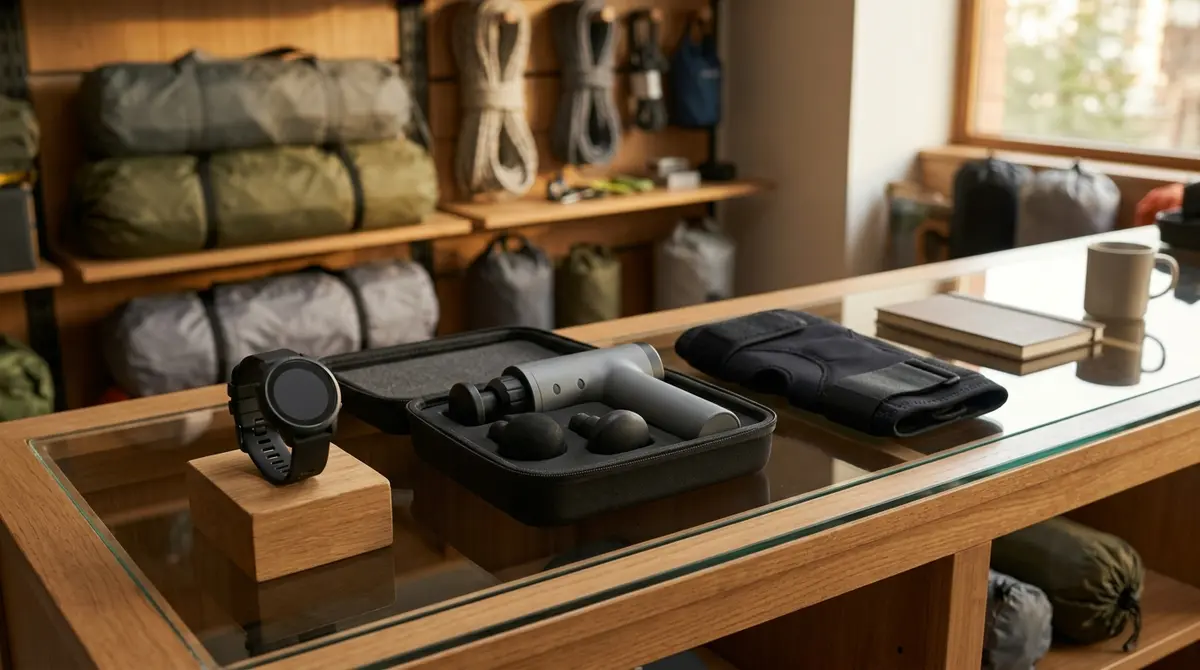
Almost everything a Malaysian sports and outdoor shop sells sits outside the medical-device regime. The line is drawn by section 2 of the Medical Device Act 2012 (Act 737), which turns on the purpose the manufacturer intends, or on a Ministerial declaration by gazette order. Once a product is on the device side of it, three gates apply in sequence: section 44(1) bars advertising a device that has not been registered and complied with the Act, at up to RM300,000 or three years; regulation 2(1) of the Medical Device (Advertising) Regulations 2019 [P.U.(A) 317] then bars advertising even a registered device, in a Facebook or Instagram placement as much as anywhere else, without the Authority's prior approval, at up to RM200,000 or two years. The application itself carries a separate RM1,000 processing fee under regulation 2(3)(b). Regulation 3 then requires the registration certificate and number on the advertisement, neither advertising offence is on the compoundable list in P.U.(A) 24/2024, and an exemption from registration is not a licence to advertise.
You sell tents, rackets, trail shoes, dry bags and a glass counter of watches, and the compliance question that lands on your desk is almost never about the tents. It is about the watch that reads heart rate, the recovery gun on the endcap, and the knee brace the physio down the road recommends. Malaysia treats those three differently from everything else in the shop, and the rule that decides it was not written for retailers.
Three items on the shelf sit under a different statute from the rest
A Malaysian sports and outdoor retailer running Facebook and Instagram ads has a long product list and a very short list of legal problems. Tents, rackets, bike lights, dry bags, jerseys, trail shoes: nothing in that column raises a question anyone needs a statute to answer. The questions come from a narrow strip of the shop, and they are always the same three products. The watch that reads heart rate and sleep. The percussive recovery gun beside the till. The brace or compression sleeve that the customer bought because a physiotherapist mentioned it.
Those three sit near a line that changes the regime completely. On one side you are a retailer with ordinary advertising duties. On the other you are advertising a medical device under the Medical Device Act 2012 (Act 737), and a different body, a different application, a different fee and a different penalty scale apply. Most Malaysian gear advertisers stay well clear of the line without ever knowing where it is, because measurement language is the natural way to sell a watch anyway. That works right up until a supplier hands you a deck of claims translated from another market, or a staff member writes a caption that sounds more useful than the last one.
This is a reading of published law written for someone who has to approve creative on a Monday. It is not legal advice, and the finely balanced parts are flagged as such.
The category is also bigger than the compliance conversation around it suggests. The Department of Statistics Malaysia put the gross value added of the sport industry at RM24.1 billion in 2024, growth of 7.8 per cent on the 7.7 per cent recorded the year before, and 1.3 per cent of GDP. Wholesale and retail sport, which is the shop, took 32.0 per cent of that, behind sport services excluding wholesale and retail at 41.7 per cent, with manufacturing of sport products at 24.2 per cent and construction of sport facilities at 2.1 per cent. Imports of sport products reached RM7.2 billion, 0.6 per cent of Malaysia's total imports, and the industry employed 198,400 people, 1.2 per cent of national employment. On the demand side, the Household Expenditure Survey Report 2024 puts mean monthly household spending on Recreation, Sport and Culture at RM179, which is 3.2 per cent of a national mean of RM5,566 a month, itself up from RM5,150 in 2022.
| Component | Share of sport GVA, 2024 |
|---|---|
| Sport services (excluding wholesale and retail) | 41.7% |
| Wholesale and retail sport | 32.0% |
| Manufacturing of sport products | 24.2% |
| Construction of sport facilities | 2.1% |
Two older figures still circulate widely and should be retired: RM24.1 billion is often quoted as RM19.6 billion, and 1.3 per cent of GDP as 1.1 per cent. Both of the smaller numbers belong to the preliminary Sport Satellite Account for 2022, and neither is wrong about 2022. They are simply superseded, and the gap is not cosmetic, because the industry has grown close to a quarter in ringgit terms since. A 2022 number dropped into a 2027 deck understates the category by that much.
The definition has two limbs, and almost everyone quotes only one
Section 2 of Act 737 is where the whole question is settled, and it does not read the way the summaries read.
The first limb is the one people know. A medical device means any instrument, apparatus, implement, machine, appliance, implant, in-vitro reagent or calibrator, software, material or other similar or related article
intended by the manufacturer to be used, alone or in combination, for human beings for the purpose of ... diagnosis, prevention, monitoring, treatment or alleviation of disease
and the limb carries a closing qualifier that matters for anything sold near a supplement shelf. The article must not achieve its primary intended action in or on the human body by pharmacological, immunological or metabolic means, "but that may be assisted in its intended function by such means". Those last words are the half that summaries drop, and dropping them inverts the test. The qualifier draws the border with the medicine regime; it does not say that a product touched by pharmacology at any point falls outside Act 737. A device whose primary action is mechanical or physical stays a device even where a drug assists the function.
Three words in that first limb do the heavy lifting, and they are not the ones marketers focus on. Intended by the manufacturer. The test attaches to the purpose the maker of the product assigns to it, which lives in the labelling, the instructions for use and the technical file, not in the adjective your copywriter reached for. A watch whose manufacturer positions it as a general fitness and wellness product does not become a medical device because your caption got enthusiastic.
The second limb is the one almost every published summary drops. Section 2 also lets the Minister declare an article to be a medical device by order published in the Gazette, where it is to be used on the human body and after considering public safety, public health or public risk. No reference to any manufacturer's intention at all. That limb is not theoretical and it is not dormant: the Medical Device (Declaration) Order 2017 P.U.(A) 339/2017, made 14 September 2017 and in force 1 January 2018, declares non-corrective contact lenses to be a medical device by that route. Cosmetic lenses, which nobody's manufacturer intended for a disease purpose, are medical devices in Malaysia because the Minister said so.
One drafting point for anyone reading the gazette with this page open. Section 2 prints the two limbs joined by "and", not "or", so on a first pass the definition can look like a single test with two cumulative parts. The 2017 Declaration Order settles that it is not. A non-corrective contact lens carries no disease purpose under limb (a), so if both limbs had to be satisfied together the Minister's order would have declared nothing at all. The limbs are printed conjunctively and operate as alternatives.
So the correct check is two questions, not one. Does the manufacturer intend this article for one of the section 2(a) purposes? And separately, has the Minister declared this class of article a medical device by gazette order? A page that stops after the first question is giving you half a test, and the half it drops is the half that catches products nobody expects.
Your caption is evidence, not a reclassification
There is a heuristic in circulation that goes roughly: the moment your ad says the product detects a condition, you have advertised a medical device. It is a useful habit. It is not what section 2 says, and stating it as the legal test gets the mechanism backwards.
The accurate version is less comfortable. Your copy does not reclassify the product. What it does is create the record an enforcement officer reads first. If your creative asserts a disease purpose that the manufacturer never assigned, you have not turned a wellness tracker into a registrable device by force of caption. You have made a claim about a product that cannot support it, and that is its own offence on a different provision.
That provision is section 44(2) of Act 737, and it is almost certainly the limb a gear retailer trips before any other:
No person shall make any misleading or fraudulent claims in respect of a medical device in any advertisement.
Section 44(3) prices a contravention of subsection (1) or subsection (2) identically, at a fine not exceeding three hundred thousand ringgit or imprisonment for a term not exceeding three years or both. There is no reduced first-offence band anywhere in the section, and no general penalty elsewhere in the Act displaces it, because section 44(3) expressly provides its own.
Note the asymmetry this produces. If the product is not a medical device, section 44(2) does not reach it, and an overclaiming caption is a trade-descriptions and consumer-protection problem instead. If the product is a medical device, the same caption is a section 44(2) exposure at the RM300,000 band. The classification question therefore has to be settled before the claims question, not alongside it, and the person who can settle it is the manufacturer or the authorised representative who holds the technical file.
The practical move for a reseller is unglamorous and effective: get the manufacturer's stated intended purpose in writing, keep it with the creative brief, and do not let the ad outrun it. MDA/GL/04 makes the same point from the regulator's side at paragraph 3.2(c), which says a person who advertises a medical device shall have authorisation from the manufacturer or authorised representative. The paperwork you need is upstream of you.
Three gates in sequence, not four instruments at once
The regime is often described as several rules landing on one ad simultaneously. That is not how it works, and the distinction is operationally important because each gate triggers on a different fact, and two of the facts are mutually exclusive.
Gate one applies when the device is not registered. Section 44(1) reads: "No person shall advertise a medical device unless the medical device has been registered and complied with the requirements of this Act." Read the whole conjunction. The bar is not merely on advertising an unregistered device; it is on advertising unless the device both has been registered and has complied with the Act's requirements. Penalty at section 44(3), RM300,000 or three years or both.
Gate two applies once the device is registered. Regulation 2(1) of the Medical Device (Advertising) Regulations 2019 P.U.(A) 317 says: "No person shall advertise any registered medical device without the approval from the Authority." Registration gets you past gate one and delivers you straight to gate two. Regulation 2(2) is printed in the gazette as follows, grammatical slip included, and it is quoted here as gazetted rather than tidied:
Any person who contravenes subregulation (1) commit an offence and shall, on conviction, be liable to a fine not exceeding two hundred thousand ringgit or to imprisonment for a term not exceeding two years or to both.
Gate three attaches to the creative once you are through gate two. Regulation 3 governs "an advertisement to advertise a registered medical device", so it presupposes the registration that gate one demanded and sets out what must appear in the asset itself. Read the penalty question carefully here, because it is the cell most compliance summaries fill in wrongly. P.U.(A) 317 attaches no offence and no penalty to regulation 3. Regulation 2(2) reaches a person "who contravenes subregulation (1)", meaning subregulation 2(1) and nothing else, and section 79(3) of Act 737 confirms the general position: regulations "may provide for any act or omission in contravention of the regulations to be an offence", so an offence exists only where the instrument creates one. A Facebook asset that drops the disclosures is not separately fined under these Regulations. What it does is put the regulation 2(1) approval itself at risk, because the approved advertisement and the published advertisement are then not the same advertisement.
Sitting beside all three, and not an instrument at all, is MDA's Code of Advertisement, MDA/GD/0032. It is a guidance document and its own preface says what happens when it collides with law: "In the incident of any contradiction between the contents of this document and any written law, the latter should take precedence." Never write that MDA requires something where the Code is the only source. Write that the Code asks for it.
| Gate | Triggering fact | Provision | Maximum exposure |
|---|---|---|---|
| 1. May it be advertised at all | Device has not been registered and complied with the Act | Act 737, s.44(1) | RM300,000 or 3 years or both, s.44(3) |
| 2. May this advertisement run | Device is registered, advertisement not yet approved | P.U.(A) 317/2019, reg 2(1) | RM200,000 or 2 years or both, reg 2(2) |
| 3. Does the asset carry the disclosures | An advertisement for a registered device is being published | P.U.(A) 317/2019, reg 3(a) and (b) | No penalty attached in P.U.(A) 317; reg 2(2) reaches contravention of reg 2(1) only. A non-compliant asset instead puts the reg 2(1) approval at risk |
| Running alongside | Any medical device advertisement | MDA/GD/0032 Code of Advertisement | Guidance, subordinate to written law by its own preface |
The Advertising Regulations carry a dating quirk worth knowing before someone quotes a date at you. The gazette cover reads 15 November 2019 and the number P.U.(A) 317. The signature block reads "Made 3 September 2019" over the name of the Minister of Health, Dzulkefly bin Ahmad. Regulation 1(2) says the Regulations "come into operation on 1 July 2020". Made in September, published in November, in force the following July. Three dates, and a summary quoting any one of them at you can sound authoritative while being eight months out. The commencement date is the one that decides whether an advertisement was lawful when it ran, and the gazette is the document that settles it.
The prior-approval duty is the one nobody has heard of
If one paragraph on this page earns its place, it is this one. Malaysian marketers who know anything about the medical device regime know about registration. Registration is a product duty and it belongs to the establishment that places the device on the market. Advertising approval is a separate duty, it attaches to the advertisement, and it is prior.
Regulation 2(1) is unambiguous on its face and the guideline removes any remaining room. MDA/GL/04, Second Edition, January 2022, says at paragraph 4.1 that an application for approval to the Authority shall be made for all advertisement of medical devices relating to home use medical devices, and advertisement aimed for the general public. A paid Facebook or Instagram ad for a home-use wearable satisfies both descriptions at once. Nothing in the text carves out a small budget, a boosted Facebook post or a fourteen-second Instagram Reel, and nothing in it treats a paid social placement more gently than a newspaper page.
Do not let Meta's own review stand in for this. A creative that clears Meta's ad review has cleared a platform policy, and a platform policy is a contract term between you and Meta. Regulation 2(1) is subsidiary legislation made under an Act of Parliament, the Authority it names is MDA and not Meta, and an approved campaign that never went near MDA is a contravention that happens to be running.
The guideline also defines who is on the hook, and the definition is startlingly wide. Paragraph 2.2 defines an advertiser as any person who uses any form or medium, whether printed or electronic, to advertise a medical device, and then names journalists, publishers, public relations agencies, celebrities, web designers and web hosts. An agency running the account and a creator paid to post are both inside that description on its own terms.
On cost and mechanics, the gazette and the guideline agree on the number. Regulation 2(3) requires an application in writing accompanied by, among other things, "a processing fee of one thousand ringgit" and, where the applicant is not the establishment on whose application the device is registered, "a letter of appointment from an establishment on whose application the medical device is registered to". MDA/GL/04 paragraph 4.2.6 restates the RM1,000 figure.
The submission channel is the detail here most likely to have aged badly, so treat what follows as dated. MDA/GL/04 paragraph 4.2.1 prescribes submission by the advertiser using the Application Form for Medical Device Advertisement at Annex A, in hardcopy, by hand or via post or courier, with the fee paid by bank draft. That is the January 2022 edition speaking. Before you send anyone to the post office with a bank draft, confirm the current channel with MDA directly. We are not able to verify from a primary source that the hardcopy route is still the live one, and a submission procedure written in January 2022 is exactly the kind of thing a regulator quietly replaces with an online portal.
The calendar cost is the one that hurts. RM1,000 per application is cheap against a RM200,000 maximum, but an approval cycle sits in front of a launch date, and a retailer who plans a watch campaign around a dated sale has to work backwards from the approval instead of from the sale.
The disclosure belongs inside the frame, not in the caption field
Regulation 3 of P.U.(A) 317/2019 is the binding source for the on-asset disclosure, and it is short enough to quote in full:
An advertisement to advertise a registered medical device shall contain the following information: (a) a certificate that the medical device is registered under the Act; and (b) the registration number assigned to the registered medical device by the Authority.
MDA/GL/04 paragraph 3.3 then renders the same duty in the form the Authority expects to see it: all advertisements to be posted, displayed or broadcast shall include the statement "Registered under Act 737", the medical device registration number, and, in the case of advertisements that require approval under paragraph 4.1, the advertisement approval number as well.
The order of citation matters more than it looks. A great deal of Malaysian summary writing attributes this duty to the guideline alone, which quietly recasts a gazetted regulation as regulator preference. It is not preference. Regulation 3 is subsidiary legislation made under paragraph 79(2)(h) of Act 737, gazetted, in force since 1 July 2020, and the Attorney General's Chambers subsidiary register records it as a principal instrument with nothing amending or revoking it. Quote the regulation, then use the guideline to explain what the words look like on a 1080 by 1350 Facebook or Instagram feed frame.
| Element | Binding source | Operational wording |
|---|---|---|
| Certificate that the device is registered under the Act | P.U.(A) 317/2019, reg 3(a) | "Registered under Act 737", MDA/GL/04 para 3.3(a) |
| Registration number assigned by the Authority | P.U.(A) 317/2019, reg 3(b) | Device registration number, MDA/GL/04 para 3.3(b) |
| Advertisement approval number | Not in reg 3 | Required by MDA/GL/04 para 3.3(c) where approval is needed under para 4.1 |
| Authorisation from the manufacturer or authorised representative | Not an on-creative element | MDA/GL/04 para 3.2(c), held by the advertiser |
The practical consequence for a Facebook or Instagram feed placement is that the disclosure competes for the same pixels as the price and the product name. Burn it into the creative, not only into the primary text. Facebook truncates the primary text behind a "See more" on mobile and Instagram truncates it harder, and in any case regulation 3 speaks about the advertisement and not about the caption field of a particular platform. Compliance that depends on the reader tapping "See more" is not compliance you control.
An exemption from registration is not a licence to advertise
This is the trap that catches careful people, because it looks like good news arriving from a supplier.
The Medical Device (Exemption) Order 2024 P.U.(A) 78/2024, made 20 February 2024 under section 77 of Act 737, is a real and useful instrument. Its paragraph 3(1) exempts medical devices from registration under section 5 in a listed set of situations: personal use, demonstration for marketing, clinical research, performance evaluation, education, export only, import for re-export, custom-made, special access, orphaned, obsolete and discontinued devices. Paragraph 4 exempts an establishment licence in defined circumstances and paragraph 5 exempts Class A devices from conformity assessment.
Now read that list against a retail situation. Selling a wearable to the Malaysian public over a counter or through a Facebook ad is not personal use, not a marketing demonstration, not clinical research, not education, not export only and not special access. None of the twelve categories describes ordinary retail supply, so the exemption almost never reaches the retailer in the first place.
But assume for a moment that it did. It still would not help the advertisement, and the reason is in the wording of section 44(1) itself. The section permits advertising only where the device "has been registered and complied with the requirements of this Act". An exemption removes the obligation to register. It does not deem the device registered. So a device exempt from registration is a device that has not been registered, and section 44(1) bars advertising it. The exemption and the advertising bar are answering different questions, and nothing in P.U.(A) 78/2024 touches section 44 or P.U.(A) 317 at all.
The same order carries a piece of housekeeping that will save somebody an argument. Paragraph 6(1) provides that "The Medical Device (Exemption) Order 2016 P.U. (A) 103/2016 is revoked". If a compliance pack in your shared drive cites the 2016 order, it has been describing a dead instrument since March 2024.
There is no compound off-ramp for an advertising offence
A reader who has absorbed the RM300,000 and RM200,000 figures usually asks the sensible next question: can this be settled? Malaysian regulatory statutes commonly allow compounding, and Act 737 is no exception. It simply does not extend the facility to the provisions this page is about.
The Medical Device (Compounding of Offences) Regulations 2024 P.U.(A) 24/2024, gazetted 30 January 2024 and made 19 January 2024 under sections 71 and 79 of the Act, set out a First Schedule headed by the words "The following offences are prescribed to be compoundable offences". The list is a list, which means it is closed. Under Act 737 it names subsections 19(2), 27(2), 31(2), 40(2), 43(6), 45(5), 46(3) and 65(3). It then reaches regulations 7(7), 10(7) and 16(4) of the Medical Device Regulations 2012 P.U.(A) 500/2012, and regulations 3(4), 4(4), 5(8), 7(9) and 8(6) of the Medical Device (Duties and Obligations of Establishments) Regulations 2019 P.U.(A) 318/2019.
Section 44 is not on it. Regulation 2(2) of P.U.(A) 317 is not on it either.
| Instrument | Compoundable under P.U.(A) 24/2024 | Advertising provisions on the list |
|---|---|---|
| Medical Device Act 2012 (Act 737) | ss.19(2), 27(2), 31(2), 40(2), 43(6), 45(5), 46(3), 65(3) | s.44 absent |
| Medical Device Regulations 2012 P.U.(A) 500/2012 | regs 7(7), 10(7), 16(4) | Not an advertising instrument |
| Duties and Obligations of Establishments Regs 2019 P.U.(A) 318/2019 | regs 3(4), 4(4), 5(8), 7(9), 8(6) | Not an advertising instrument |
| Advertising Regulations 2019 P.U.(A) 317/2019 | None | reg 2(2) absent |
Draw the conclusion carefully. The absence of section 44 from the compounding list does not make prosecution likely, and it does not tell you anything about how the Authority allocates its attention. What it does tell you is that the two figures on this page are prosecution maximums with no printed settlement route beneath them, which is a materially different risk shape from a regime where a compound notice is the ordinary outcome. Anyone budgeting for the compliance cost of a wearable campaign should price the approval, not the fine.
The sports-performance ban is narrower than it sounds
MDA's Code of Advertisement contains a paragraph that looks, at first read, like it ends the entire category. Paragraph 4.4.6 of MDA/GD/0032, Second Edition, March 2021, is headed "Claims relating to performance in sports and studies" and reads:
Advertisements shall not imply that the use of a particular device can improve performance in sports and studies.
Taken alone, that would make almost every sports wearable ad in Malaysia unrunnable, since improving performance in sport is the entire pitch. Taken with the document's own scope clause, it does nothing of the kind. Paragraph 2 says the Code "specifies the requirements for advertisement of all medical devices whether that which require approval or that require no approval". The scope is medical devices, in both of their approval states, and no further.
So the paragraph bites on a registered blood-pressure monitor, an oximeter, a TENS unit, or any other article that is a medical device under section 2. It does not bite on a general-fitness GPS watch that is not a medical device, and it does not bite on a racket, a shoe, a bike or a recovery gun that stays in the wellness lane. Advisers who quote 4.4.6 at Malaysian watch retailers without the scope clause above it are misreading their own source, and the misreading is expensive because it pushes advertisers off perfectly lawful copy.
Two further cautions cut in the opposite direction, so nobody reads this section as an all-clear. First, the Code is guidance and its precedence clause subordinates it to written law, which cuts both ways: it cannot save copy that breaches section 44(2), and it cannot create a duty the gazette does not. Second, the edition and date of both MDA documents come from the PDFs themselves (MDA/GD/0032 is stamped Second Edition, March 2021; MDA/GL/04 is stamped Second Edition, January 2022), and we could not get MDA's own guidance register to list either one. Check the register before you rely on a paragraph number in a dispute.
Most of a gear account's Malaysian problems are not device problems
A gear retailer's Facebook and Instagram account raises several other Malaysian questions, and every one of them is already answered in detail elsewhere on this site. Restating them here would give you two slightly different versions of the same rule, which is worse than none.
Sale prices, struck-through prices and warehouse-sale dates. The Cheap Sale Price Regulations 1997 as amended, and the Trade Descriptions Act 2011 provisions that sit with them, govern how long a sale may run, how old a reference price may be, whether you must notify the Controller, and whether the sale dates have to appear on the creative. That whole regime, including the amended notice and duration rules, is worked through in the guide to discount and price claims in Malaysia. If your campaign is a dated warehouse sale, that is the page to open, not this one.
Certification marks and electrical or radio-standard questions. Bike lights, powered pumps, head torches with charging circuits and anything that transmits raise certification questions that belong to a different statutory family. Those are covered in the guide for electronics and gadget advertisers in Malaysia, which handles the technical-standards and consumer-protection provisions directly.
Supplements on the counter beside the gear. Isotonic powders, protein and recovery products run on the Act 290 and product-registration architecture, not on Act 737, and the two regimes are easy to conflate because both end in a registration number printed on a creative. The supplement advertising guide covers that side.
Classes, coaching and memberships. If part of your business sells a session and not an object, the platform policy surface changes with it, and the gym and fitness studio advertising guide is the one written for a membership funnel.
Seasonal corridors. The Merdeka and Malaysia Day corridor has its own phasing and its own creative pitfalls, handled in the Merdeka and Malaysia Day ad playbook. The school-term calendar that drives backpacks, shoes and school camp gear is mapped in the back-to-school advertising guide.
On seasonality generally, one durable fact and one deliberate non-claim. The durable fact: MetMalaysia's standing definition puts the Northeast Monsoon from November to March, bringing heavy rain especially to the east coast of Peninsular Malaysia, western Sarawak and eastern Sabah, with the Southwest Monsoon from late May to September and relatively drier weather. For the most recent season with a dated announcement, Majlis Keselamatan Negara published on 12 November 2025 a notice from the Malaysian Maritime Enforcement Agency, relaying MetMalaysia, that the 2025/2026 Northeast Monsoon was expected to begin on Thursday 13 November 2025 and continue to March 2026. That is a per-season forecast, so treat it as that season's date and not as an annual rule. The non-claim: retail and agency writing on this category, including some of it on this site, treats those months as shifting Malaysian demand toward dry bags, rain covers and indoor racket sports. It is a reasonable planning heuristic and we found nothing that measures it. Plan around it if you like. Do not put it in a deck as a statistic.
Four questions this page will not answer, because nothing sourced answers them
A compliance page that hides its gaps is worth less than one that names them, so here are the four places where the honest answer runs out.
Whether MDA's submission channel is still hardcopy, and whether either guidance document has been superseded. Both answers come from the PDFs alone. We could not make MDA's guidance register enumerate the documents or confirm the current application channel, so treat the January 2022 procedure and the two edition stamps as what the documents say about themselves. Confirm with the Authority before you instruct anyone to prepare a bank draft.
Whether any Malaysian safety standard applies to sports or outdoor equipment. People ask this constantly about bicycle helmets, life jackets and climbing gear. We searched and found only vendor pages, retailer marketing and club press items. No instrument prescribing a mandatory safety standard for sports or outdoor goods was located. Note especially that the motorcycle-helmet certification requirement is a road-transport matter and cannot be transplanted onto bicycle helmets by analogy. If someone tells you a standard applies, ask them for the gazette number.
What any of this costs in media terms. There is no dated, neutral, Malaysian cost-per-click, cost-per-thousand or cost-per-lead benchmark for the sports and outdoor category that we are willing to stand behind. The ad archive we draw on holds creative metadata and no spend at all, so no cost figure can honestly be derived from it either. Any RM CPM figure for this vertical that you see quoted without a dated neutral source attached is somebody's guess.
Whether search demand here is large. It is not tiered in our own demand research, and supply is the only thing measured. A snapshot of a searchable archive of Malaysian ads, AdPlay.ai, committed on 25 August 2026, showed 4,959 sports and outdoor ads still running, of which 911 had run past 90 days (18.4 per cent) and 128 past 365 days (2.6 per cent). That is a measure of how much creative the category sustains, not of how many people are searching for any of it.
A pass to run before the next watch campaign goes live
Take the products, not the campaign, and sort them first. Everything that is plainly gear goes in one pile and never comes back to this page. What is left is the short list: anything that measures a body signal, anything that treats or relieves, anything with a clinical-sounding name on the box.
For each item on that short list, ask the manufacturer or the authorised representative for the intended purpose in writing, and ask whether the device is registered in Malaysia and under what number. Section 2 turns on the maker's intended purpose, so this is the one fact you cannot supply yourself, and MDA/GL/04 paragraph 3.2(c) expects you to hold the manufacturer's authorisation anyway.
Then check the second limb. Has the Minister declared this class of article a medical device by gazette order, as happened to non-corrective contact lenses under P.U.(A) 339/2017? A product can be caught without any manufacturer ever intending it.
If the answer to either question is yes, the campaign is not a normal campaign. Register first, since section 44(1) bars advertising a device that has not been registered and complied with the Act. Then apply to the Authority for advertisement approval under regulation 2(1) of P.U.(A) 317/2019, budget the RM1,000 processing fee, and put the approval in front of the launch date, never beside it. Confirm the current submission channel with MDA itself, not with a 2022 guideline.
Then build the asset with the disclosures inside the frame: the certificate that the device is registered under the Act and the registration number, per regulation 3, rendered as MDA/GL/04 paragraph 3.3 expects, with the advertisement approval number added where approval was required.
Then read the copy against section 44(2), which is the provision most likely to catch you. Every claim in the creative should be one the manufacturer's own documentation supports. If the ad says something the technical file does not, delete it rather than defend it, because there is no compounding route under P.U.(A) 24/2024 to soften the outcome.
If the answer to both classification questions is no, relax and sell the product. The Code of Advertisement does not reach an article that is not a medical device, so performance language on a plain running watch, a racket or a pair of trail shoes is not a medical-device problem at all. Your remaining duties are the ordinary retail ones, and they live on the price-claims and certification guides linked above.
Finally, put a date on the check. Act 737 itself has not been amended since 2012, but the subsidiary legislation under it has produced new instruments in 2024, 2025 and 2026, and that is the layer that moves. The 2025 instrument shows how narrow the movement can be and is worth a minute for exactly that reason. The Medical Device (Amendment) Regulations 2025 P.U.(A) 330, in force 1 January 2026, amend only the Fifth Schedule fee values in the Medical Device Regulations 2012 P.U.(A) 500/2012, raising one figure from 100 to 500 and filling a blank with 750. The words "advertise" and "iklan" do not appear in it once. So the most recent amendment in this family moves nothing on this page, and knowing that is the difference between a currency check and a guess. Re-read the subsidiary register once a year, and read the gazette instead of a summary of it.
By the numbers
Frequently asked questions
Is a GPS running watch or fitness tracker a medical device under Malaysian law?
Usually not, and the answer does not come from what your ad says. Section 2 of the Medical Device Act 2012 (Act 737) defines a medical device by the purpose intended by the manufacturer, listing under limb (a)(i) the 'diagnosis, prevention, monitoring, treatment or alleviation of disease', and closing with the qualifier that the article 'does not achieve its primary intended action in or on the human body by pharmacological, immunological or metabolic means, but that may be assisted in its intended function by such means'. Quote the saving words as well as the first half, because they are what stops a reader concluding that any pharmacological assistance at all puts a product outside the regime. A consumer watch that counts steps, paces an interval and estimates recovery is sold for general fitness, not for a disease purpose, so it sits outside. There is a second route in, though, which most summaries omit: limb (b) lets the Minister declare any article used on the human body to be a medical device by gazette order, after considering public safety, public health or public risk. That limb is live and has been used. The Medical Device (Declaration) Order 2017 [P.U.(A) 339/2017], made 14 September 2017 and in force 1 January 2018, declares non-corrective contact lenses to be a medical device. So check both limbs, not just the first.
Do I need MDA approval before I run a Facebook ad for a registered medical device?
Yes, and this is the duty most Malaysian retailers have never heard of. Regulation 2(1) of the Medical Device (Advertising) Regulations 2019 [P.U.(A) 317] reads: 'No person shall advertise any registered medical device without the approval from the Authority.' Registration of the device is a separate and earlier step. Regulation 2(2) prices a contravention at a fine not exceeding two hundred thousand ringgit or imprisonment not exceeding two years or both, and regulation 2(3)(b) attaches a processing fee of one thousand ringgit to the application. The Authority's own guideline, MDA/GL/04 (Second Edition, January 2022), says at paragraph 4.1 that an application shall be made for all advertisements relating to home-use medical devices and advertisements aimed at the general public. A paid Facebook or Instagram ad for a home-use wearable is both.
What has to appear on the ad creative itself?
Regulation 3 of P.U.(A) 317/2019 is the binding source, and it is one sentence: 'An advertisement to advertise a registered medical device shall contain the following information: (a) a certificate that the medical device is registered under the Act; and (b) the registration number assigned to the registered medical device by the Authority.' The operational gloss sits in MDA/GL/04 paragraph 3.3, which spells the same duty out as the statement 'Registered under Act 737', the device registration number, and, where the advertisement is one that requires approval under paragraph 4.1, the advertisement approval number as well. Cite the regulation first. The guideline explains how the Authority expects the duty to be met, but it is the gazetted regulation that creates it.
Can my ad say a device improves sports performance?
Only if the product is not a medical device. MDA's Code of Advertisement, MDA/GD/0032 (Second Edition, March 2021), says at paragraph 4.4.6, headed 'Claims relating to performance in sports and studies', that advertisements 'shall not imply that the use of a particular device can improve performance in sports and studies'. Read the scope clause before you apply it. Paragraph 2 of the same Code says it 'specifies the requirements for advertisement of all medical devices whether that which require approval or that require no approval'. Medical devices, and nothing else. A plain GPS running watch that is not a medical device is outside paragraph 4.4.6 entirely, and any adviser telling a Malaysian watch retailer that performance language is banned across the board has read the paragraph without the scope clause above it. Note also that the Code is guidance, not law, and says so in its own preface.
My supplier says the device is exempt from registration. Can I advertise it?
No, and this is the sharpest trap in the regime. The Medical Device (Exemption) Order 2024 [P.U.(A) 78/2024], made 20 February 2024 under section 77 of Act 737, exempts a narrow set of situations from registration under section 5: personal use, demonstration for marketing, education, clinical research, performance evaluation, export only, import for re-export, custom-made, special access, orphaned, obsolete and discontinued devices. Paragraph 4 separately exempts an establishment licence and paragraph 5 exempts Class A devices from conformity assessment. None of it touches section 44 or P.U.(A) 317. Because section 44(1) permits advertising only where the device 'has been registered and complied with the requirements of this Act', an exemption from registration leaves the advertising bar exactly where it was. One more housekeeping point from the same instrument: paragraph 6(1) provides that 'The Medical Device (Exemption) Order 2016 [P.U. (A) 103/2016] is revoked', so any checklist still citing the 2016 order is describing a dead instrument.
Can an Act 737 advertising offence be compounded or settled out of court?
Not on the current list. The Medical Device (Compounding of Offences) Regulations 2024 [P.U.(A) 24/2024], gazetted 30 January 2024, prescribe in their First Schedule the offences that may be compounded. Under Act 737 those are subsections 19(2), 27(2), 31(2), 40(2), 43(6), 45(5), 46(3) and 65(3). The Schedule also reaches regulations 7(7), 10(7) and 16(4) of P.U.(A) 500/2012 and regulations 3(4), 4(4), 5(8), 7(9) and 8(6) of P.U.(A) 318/2019. Section 44 does not appear, and neither does regulation 2(2) of P.U.(A) 317. So the RM300,000 and RM200,000 figures are prosecution bands rather than settlement bands, which is the opposite of the assumption most people make when they see a large maximum fine attached to an advertising rule.
Is any wearable or recovery device a designated medical device in Malaysia?
No. The Medical Device (Designated Medical Device) Order 2026 [P.U.(A) 10], gazetted 12 January 2026 and in force 1 June 2026, states at paragraph 2 that 'The Minister specifies medical devices in column 2 of the Schedule to be a designated medical device which shall be used for the purposes referred to in column 3.' The Schedule runs to three numbered items: medical laser, which itself lists seven lettered types including Alexandrite 756nm, Diode 800nm, Erbium YAG, Fractional CO2, Nd:YAG, pulse-dye and ruby; HIFU device; and liposuction device. Nine device types across three categories, and not one of them is a watch, a tracker, a recovery gun or a massage device. Designation is an additional control on top of the regime, not the regime itself, so a product being absent from this Schedule tells you nothing about whether it is a medical device in the first place.
Has the Medical Device Act 2012 been amended since it was passed?
No amending Act has been made. The Attorney General's Chambers keeps a register of amending Acts that runs from A1392 through A1796, which carries into September 2026, and searching it for Medical Device returns an empty table. The same query returns rows for other statutes, so the empty result is a real answer and not a broken search: A1729, the Medical (Amendment) Act 2024, and A1443, the Medical (Amendment) Act 2012, both come back, and both amend the Medical Act 1971 (Act 50) rather than Act 737. A1729 is the near-miss that trips people up. What has moved is the subsidiary legislation beneath the Act, which now runs to ten rows on the Chambers' subsidiary register, at least one of which, the Exemption Order 2016, is already revoked. That layer changes far more often than the parent statute does, so check the subsidiary register and not the Act.
Sources
- 1.Laws of Malaysia, Medical Device Act 2012 (Act 737), gazette text JW001759, Attorney General's Chambers (2012)
- 2.Medical Device (Advertising) Regulations 2019 [P.U.(A) 317], Federal Government Gazette, Attorney General's Chambers copy (2019)
- 3.Medical Device (Declaration) Order 2017 [P.U.(A) 339], Federal Government Gazette, Medical Device Authority mirror (2017)
- 4.Attorney General's Chambers, Laws of Malaysia register of amending Acts, Medical Device query (2026)
- 5.Medical Device (Compounding of Offences) Regulations 2024 [P.U.(A) 24], Federal Government Gazette, Attorney General's Chambers copy (2024)
- 6.Medical Device (Exemption) Order 2024 [P.U.(A) 78], Federal Government Gazette, Attorney General's Chambers copy (2024)
- 7.Medical Device (Amendment) Regulations 2025 [P.U.(A) 330], Federal Government Gazette, Medical Device Authority mirror (2025)
- 8.Medical Device (Designated Medical Device) Order 2026 [P.U.(A) 10], Federal Government Gazette, Medical Device Authority mirror (2026)
- 9.Medical Device Authority, MDA/GD/0032 Code of Advertisement (COA), Second Edition, March 2021 (2021)
- 10.Medical Device Authority, MDA/GL/04 Guideline on Application for Medical Device Advertisement Approval, Requirements, Second Edition, January 2022 (2022)
- 11.Department of Statistics Malaysia, Media Statement: Sport Satellite Account 2024 (2026)
- 12.Department of Statistics Malaysia, Household Expenditure Survey Report 2024, Today's Statistics #219 (2025)
- 13.Malaysian Meteorological Department (MetMalaysia), Weather Phenomena (2026)
- 14.Majlis Keselamatan Negara, Persediaan Hadapi Monsun Timur Laut 2025/2026 (2025)
Keep exploring
Turn ad research into winning ads
See what 16,000 Malaysian brands advertise, then generate on-brand creative, all in one tool.
7-day free trial · No credit card required