
Ramadan Facebook & Instagram Ad Playbook (Malaysia)
Plan your Ramadan Facebook and Instagram ads in Malaysia: the 2027 timing window, sahur and iftar rhythms, halal and Meta compliance, then the handoff to Raya.
Updated January 2027 · Xanny Lee, CEO
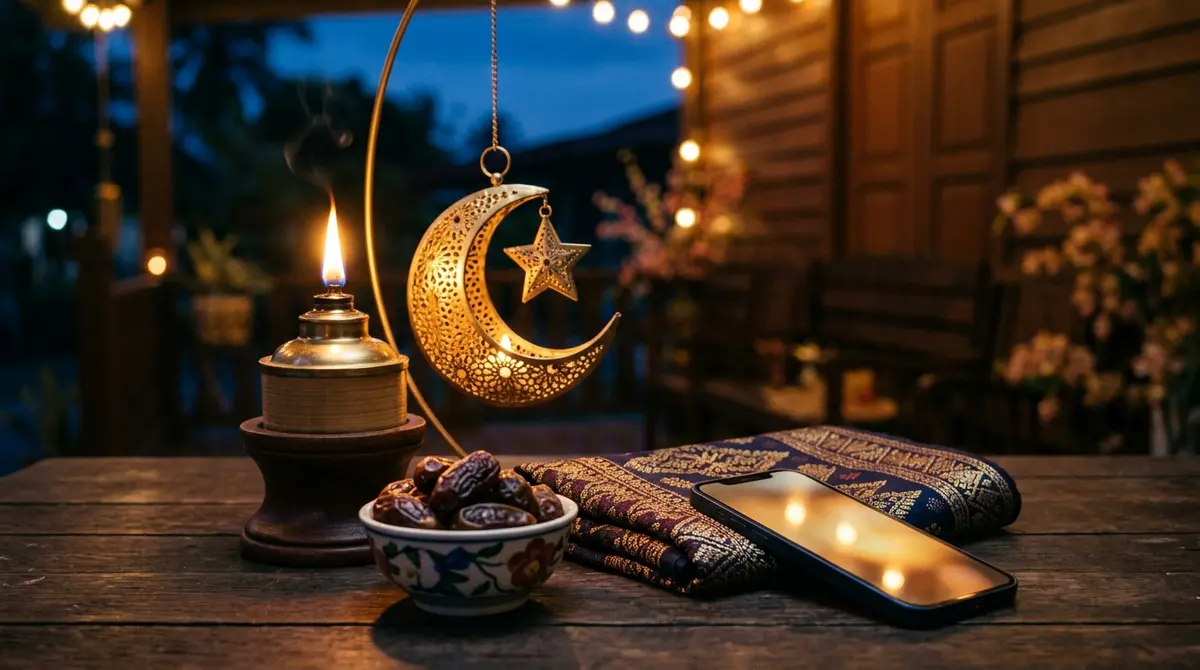
Ramadan 1448 AH is expected to begin around Monday 8 February 2027 in Malaysia, with Hari Raya Aidilfitri around Wednesday 10 March 2027, though both remain estimates until the official moon-sighting is announced. Plan in relative windows, the last week before Ramadan for prep demand and the two to three weeks before Raya for the shopping rush, rather than a fixed date. Facebook alone reaches 23.0 million Malaysians and Instagram 16.1 million (DataReportal, late 2025), so the audience is enormous, but Meta policy and JAKIM halal rules set firm guardrails.
If you sell modest fashion, food, hampers, groceries or travel in Malaysia, Ramadan is the single most important run of the year, and it opens the door to Raya. The tricky part is that the dates move, the demand arrives in distinct phases, and a careless religious claim can get your ad rejected or land you in legal trouble. This playbook maps the Ramadan window for 2027, the daily rhythm of fasting month, and the compliance lines you must not cross.
Ramadan is the moment your Malaysian audience shifts its whole daily rhythm, and the run into Hari Raya is the biggest spending window of the year for food, modest fashion, hampers, groceries and travel. Get the timing, the tone and the compliance right, and Ramadan becomes the build-up that feeds a strong Raya close. Get any of them wrong, and you either miss the wave or get your ads rejected. This guide covers the fasting-month run-up and hands off to the celebration itself. For the sale sprint and Aidilfitri creative, pair it with the Hari Raya ad playbook.
When Ramadan and Raya fall in 2027 (and why the date keeps moving)
Ramadan 1448 AH is expected to begin around Monday 8 February 2027, with Hari Raya Aidilfitri expected around Wednesday 10 March 2027. Both are estimates. The Islamic calendar is lunar, so festive dates shift roughly 11 days earlier each Gregorian year, and the official start is confirmed only when a moon-sighting committee sights the new crescent, usually announced a day or two beforehand by the Malaysian authorities.
This matters for planning because a date you copy from last year will be wrong. In 2026, for example, Awal Ramadan fell on Thursday 19 February and Raya landed in late March. In 2027 the whole window slides about 11 days earlier, into early February and early March. If you reuse a 2026 calendar, your campaigns will launch a week and a half too late.
The safe way to plan is to stop chasing a single fixed day and anchor to relative windows instead:
| Window | Rough 2027 timing (estimate) | What people are doing |
|---|---|---|
| Last week before Ramadan | Early February 2027 | Stocking up, bazaar prep, modest-fashion pre-orders |
| During Ramadan | About 8 Feb to 9 Mar 2027 | Fasting, iftar, sahur, charity, gifting, hampers |
| Pre-Raya rush | Last 2 to 3 weeks before 10 Mar | Baju raya, kuih, duit raya, home refresh, travel |
| Raya itself | From around 10 March 2027 | Celebration, open house, balik kampung |
Because these are estimates, build the shift into your calendar and confirm the official announcement when it comes. A practical habit is to pencil in your launch dates against the relative windows now, then move them by a day or two once the moon-sighting committee makes its call, rather than waiting for certainty before you start planning. The advertisers who win this season are the ones who have their creative approved and their audiences built before the official date is even confirmed, so treat the estimate as your working assumption and adjust at the margin. If Ramadan lands a day early or late, a campaign anchored to relative windows barely notices, while one pinned to a hardcoded date scrambles.
The audience you are actually reaching
The scale here is large enough that timing, not reach, is your constraint. Malaysia had 30.7 million social media user identities in October 2025, equal to 85.0% of the total population, and about 35.4 million internet users at the end of 2025, roughly 98.0% penetration (DataReportal, Digital 2026). On Meta's own platforms, Facebook's advertising reach in Malaysia was 23.0 million users and Instagram's was 16.1 million in late 2025.
In practice that means almost every fasting household you want to reach is reachable on Facebook or Instagram. The differentiator is not whether you can find them, it is whether your message lands at the right phase, at the right moment of the day, without breaking policy or tone. Everything below is about turning that reach into relevance.
Two things follow from a market this saturated. First, you are not competing for access, you are competing for attention against every other advertiser chasing the same festive spend, so creative quality and timing do more work than raw budget. Second, this audience is overwhelmingly mobile and vertical-video native, which means Reels, Stories and short-form video are where much of the attention sits during the fasting weeks, especially in the quiet late-night scroll after iftar. Build your festive assets for the phone first, keep the hook in the opening seconds, and make sure captions carry the message even with the sound off, because a lot of Ramadan browsing happens silently beside resting family members.
Phase the demand across the whole window
Ramadan is not one campaign, it is three overlapping phases of intent, and treating them the same is the most common mistake.
Phase one, pre-Ramadan prep. In the final week before fasting begins, demand spikes for groceries, cooking essentials, bazaar supplies, kitchenware and modest-fashion pre-orders. Shoppers are stocking up and planning ahead. This is the moment to run consideration and traffic ads, build custom audiences, and get your pixel learning before competition intensifies. If your funnel is not already live here, you are starting cold when everyone else is warm.
Phase two, during Ramadan. The mood turns reflective. This is the window for engagement, storytelling, gifting and hampers, and for charity themes handled sincerely. Purchase intent is steadier and more considered than the later rush, so lean into value, quality and meaning rather than blunt discounting. Keep audiences warm and moving down the funnel.
Phase three, the pre-Raya rush. In the last two to three weeks before Hari Raya, intent turns transactional. Baju raya, kuih, duit raya packets, home refresh purchases and balik kampung travel all peak. This is where conversion campaigns and clear offers do the heavy lifting, and where the warm audiences you built in phases one and two convert. This phase is the natural handoff to your Raya campaign.
If you run a big promotional event inside the window, the familiar mechanics of a countdown, tiered offers and genuine urgency all carry over, applied to the festive context. The difference during Ramadan is tone: a hard countdown timer that feels aggressive in a normal sale can jar against the reflective mood of the fasting weeks, so save the loudest urgency for the pre-Raya rush and keep the Ramadan-proper phase warmer and more considered.
Pre-Ramadan prep: get live before the fast begins
The week before Ramadan is quietly one of the highest-intent moments of the whole window, and it is easy to miss because it happens before the "official" season most people plan around. Households are buying in bulk, families are ordering baju raya early to beat the rush, and food businesses, from caterers to home bakers and dessert shops, are locking in iftar and hamper pre-orders.
Your job here is preparation, not the hard sell. Launch traffic and engagement campaigns that introduce your festive range, capture interest, and start building custom audiences from page engagers, video viewers and website visitors. Those audiences become the warm pool you retarget during Ramadan and convert during the Raya rush. If you sell modest fashion, this is when pre-order and lookbook content performs, and the tactics in the hijab fashion ads guide map directly onto this window. Established players like Jakel, a Malaysian textile and baju raya retailer since 1983, and Naelofar, a hijab and modest-fashion brand founded in 2014, run their festive collections and pre-Ramadan pushes precisely in this early stretch for the same reason: the earliest shoppers are the most decisive.
If you are still setting up campaigns from scratch, the mechanics of structuring and launching are covered in the pillar guide on how to run a Facebook ad.
The daily rhythm: sahur, iftar and dayparting
During Ramadan the clock reshapes attention. Two behavioural peaks are worth designing around.
The first is sahur, the pre-dawn meal, roughly 4am to 6am, when many people are awake, eating and scrolling. The second is the pre-iftar and after-iftar stretch, roughly 5pm to 7pm as families prepare to break the fast, then the calmer late evening once they have eaten and relaxed. Daytime fasting hours tend to be quieter for food and impulse buys, though people still browse and plan.
An important honesty note: these are behavioural patterns, not precise metrics. You will see confident figures online, claims like a specific percentage of users shopping before dawn or engaging after iftar, but we could not verify any of them against a neutral, dated, Malaysia-specific source, so we will not repeat them. Treat the windows as directional. The exact sahur and iftar clock times also move daily through the month and vary by location, because imsak and maghrib times shift, so a fixed schedule set on day one drifts by the end of Ramadan.
The practical response is to use dayparting deliberately rather than dogmatically. Weight delivery toward sahur and the evening if your product suits mealtimes, but read your own delivery reports and let real cost-per-result data decide where you concentrate budget. The full mechanics of ad scheduling are in the guide on dayparting and ad scheduling. For businesses that sell through conversation, sahur and the post-iftar hours are also strong windows for enquiry-led campaigns, because the customer is relaxed, awake and already on the phone. Click-to-message formats that open a chat let you capture that intent in the moment rather than sending the buyer to a form they will fill in later, if at all. Whatever your objective, the discipline is the same: pick the windows that match how your customers actually behave during the fast, then let your own numbers, not a generic best-time chart, confirm or correct the guess.
Charity, zakat and sedekah: handle with sincerity
Ramadan is a month of giving, and charity themes belong in this window when they are genuine. Zakat fitrah is paid before the Eid morning prayers but may be paid earlier during Ramadan, and it can now be paid online in Malaysia. The Federal Territories Mufti Office has ruled digital payment valid provided the payer makes the niat, the intention. The 2026 base rate started from RM8 in Selangor (RinggitPlus, 2026), which gives a sense of the accessible entry point for this obligation.
For the right kind of business, a zakat, sedekah or give-back angle can be both meaningful and effective, a portion of sales donated, a matched-giving drive, a hamper programme for those in need. The rule is sincerity over gimmick. Sacred obligations are not a marketing hook to be exploited, and audiences notice the difference immediately. If charity is not authentic to your brand, do not fake it. If it is, communicate it plainly and let the action speak. There is also a legal layer under the "RM1 from every sale" line and under any zakat collection you advertise, and the rules that reach a paid appeal are set out in the guide to charity and donation ad rules in Malaysia.
The pre-Raya rush and the handoff to Raya
As the fasting month nears its end, the mood flips from reflection to celebration. The final two to three weeks before Hari Raya, expected around 10 March 2027, are the commercial peak: baju raya, kuih and cookies, duit raya packets, home cleaning and refresh purchases, and balik kampung travel bookings.
This is where the audiences you built earlier earn their keep. Retarget your engagers and site visitors with clear conversion offers, introduce urgency around delivery cut-offs for Raya, and make your best sellers unmissable. Delivery deadlines are a genuine, non-manufactured form of urgency in this window, since a baju raya that arrives after Raya is worthless, so use them honestly.
This playbook stops at the threshold of the celebration. The creative, offers and open-house angles for Aidilfitri itself, plus the balik kampung and duit raya moments, are covered in the dedicated Hari Raya ad playbook. Plan the two as one continuous campaign: Ramadan builds and warms, Raya converts and celebrates.
Compliance guardrails you cannot skip
Two rules govern religious advertising in Malaysia, and both carry real consequences.
Meta's Personal Attributes policy. Meta prohibits ads that assert or imply a person's religion or beliefs. You must not address a viewer's assumed faith. Copy like Are you Muslim? or Calling all Muslims implies you know the person's religion and will get your ad rejected. What is allowed is referencing religion as an attribute of your offer or community. Shop our Raya collection, Order your iftar set, or Get ready for Hari Raya are all fine, because they describe the product and the occasion, not the person. The reliable pattern: talk about your offer and the festival, never about the viewer's beliefs.
Halal claims and JAKIM. In Malaysia, halal is a regulated claim, not a marketing adjective. JAKIM is the official certifying authority, and claims are governed by the Trade Descriptions (Definition of Halal) Order 2011. Describing a product as halal without proper certification is a false trade description and a legal offence, and only the JAKIM-issued halal logo is recognised. If you hold certification, display the logo truthfully. If you do not, keep the word halal out of your copy and imagery entirely, and describe your product on its other merits. Do not use lookalike logos or vague wording that implies certification you do not have. Because the exact scope of these rules can turn on the wording of the current orders and your specific product, treat this guide as orientation, read the full guide to halal claims in ad creative, and confirm anything borderline against the primary JAKIM and Trade Descriptions sources before you publish.
Tone: celebrate, do not exploit
Ramadan is a sacred month of fasting, spiritual reflection and charity, and the fastest way to damage a brand is to treat it as a costume for a hard sell. That means no misuse of sacred imagery or Quranic content to push product, no manufactured emotional exploitation of the season, and respectful creative throughout.
The brands that win this window read the room. They celebrate the values of the month, generosity, family, patience, gratitude, and let the product sit inside that context rather than shouting over it. Warm, human, story-led creative tends to outperform aggressive discounting during Ramadan proper, with the harder offers saved for the Raya rush. Because the mood and the shopper intent differ so much between the fasting month and the celebration, plan distinct creative for each phase rather than reusing one set of ads across the whole window. A platform like AdPlay.ai can keep the research, creative and launch for both phases in one place, which helps when you are managing several angles across a five-week run.
Budget and CPM: book early, without chasing a false number
Every major festive run pulls more advertisers into the auction, and Ramadan into Raya is the biggest such window in Malaysia. It is reasonable to expect more competition and rising pressure on delivery as the season builds. That is a well-established seasonal pattern.
Here is the honest part. We could not find a neutral, dated, Malaysia-specific figure for Ramadan CPM inflation, so we will not quote one. The percentages you will see quoted around the web, festive CPM jumps of a particular size, tend to come from ad-tool or agency blogs and are usually US and Q4-holiday oriented, not Malaysia Ramadan. Applying a US Christmas number to a Malaysian fasting month would be misleading.
What does not depend on the exact figure is your response, which is the same either way:
| Action | Why it matters |
|---|---|
| Lock budget and creative early | Avoids scrambling when the auction tightens |
| Get campaigns out of the learning phase before the rush | Stable delivery when competition peaks |
| Build warm audiences in phases one and two | Cheaper conversions in the pre-Raya sprint |
| Monitor cost per result daily | Lets you react to real cost movement, not a rumoured percentage |
| Front-load delivery deadlines in Raya messaging | Turns a real constraint into honest urgency |
Book your budget and creative early, treat rising competition as a planning assumption rather than a precise number, and let your own dashboard, not a secondhand statistic, tell you what the season actually costs you.
Your Ramadan-to-Raya pre-flight checklist
Before Ramadan begins, work down this list so nothing slips once the window opens:
- Confirm the official Ramadan and Raya dates when the authorities announce them, and set your campaign calendar in relative windows so a one-day shift does not break the plan.
- Launch pre-Ramadan prep campaigns in the final week before fasting, and start building custom audiences immediately.
- Map your creative to the three phases: prep, fasting month, and the Raya rush, with distinct messaging for each.
- Set dayparting around sahur and the pre and post-iftar windows, then adjust from your own delivery data.
- Verify every religious reference against Meta's Personal Attributes policy: describe the offer, never the viewer's faith.
- Confirm your JAKIM halal certification before using the word or logo, and remove any halal claim you cannot back with certification.
- Keep charity and zakat themes sincere, or leave them out.
- Line up your conversion offers and delivery cut-offs for the pre-Raya sprint, then hand off cleanly to your Raya campaign.
Ramadan rewards advertisers who plan the whole arc, respect the month, and let their warm audiences flow straight into Raya. Build patiently through the fasting weeks, stay inside the compliance lines, and the celebration close takes care of itself.
By the numbers
Frequently asked questions
When does Ramadan 2027 start in Malaysia?
Ramadan 1448 AH is expected to begin around Monday 8 February 2027, and Hari Raya Aidilfitri around Wednesday 10 March 2027. Treat both as estimates, not confirmed dates. The Islamic calendar is lunar, so festive dates shift roughly 11 days earlier each Gregorian year, and the official start is declared only when a moon-sighting committee confirms the new crescent, usually a day or two before. Aggregator sites converge on these dates, but the authorities announce the final call close to the day. For planning, anchor your campaign to relative windows, the last week before Ramadan and the two to three weeks before Raya, so a late shift of a day does not break your schedule.
When should I start my Ramadan ad campaign?
Begin warming audiences before the fasting month starts. Pre-Ramadan demand, groceries, bazaar supplies, kitchenware and modest-fashion pre-orders, builds in the final week before Ramadan, so your creative and pixel data should already be live by late January 2027. During Ramadan itself, keep engagement and consideration ads running, then shift budget into the pre-Raya push during the last two to three weeks before Hari Raya, expected around 10 March 2027. Because the exact dates depend on the moon-sighting, set your calendar in relative windows rather than fixed days. Starting early also lets your campaigns exit the learning phase before competition and auction pressure peak in the final stretch.
Can I say my product is halal in a Facebook ad?
Only if you hold valid certification. In Malaysia a halal claim is legally regulated. JAKIM, the Department of Islamic Development Malaysia, is the official certifying authority, and halal claims are governed by the Trade Descriptions (Definition of Halal) Order 2011. Describing a product as halal without proper certification is a false trade description and a legal offence, and only the JAKIM-issued halal logo is recognised. If you are certified, you can display the logo and reference it truthfully. If you are not, do not write halal in your copy, do not imply it with wording or imagery, and do not use lookalike logos. When in doubt, describe your ingredients and offer factually and leave the halal claim out entirely.
Is it against Meta policy to target Muslims for Ramadan ads?
You can promote Ramadan and Raya offers, but you cannot address a user's assumed personal faith. Meta's Personal Attributes advertising policy prohibits ads that assert or imply a person's religion or beliefs. Copy like Are you Muslim? or As a Muslim, you need this is not allowed, because it implies you know the viewer's religion. What is permitted is referencing religion as a characteristic of the service or community you promote. Shop our Raya collection or Break your fast with our iftar set is fine, because it describes the offer, not the person. The safe pattern is to speak about your product and the occasion, never about the viewer's beliefs. This applies across Facebook and Instagram placements.
What are the best times to run ads during Ramadan?
Two behavioural peaks matter. The first is sahur, the pre-dawn meal, roughly 4am to 6am, when many people are awake and on their phones. The second is the pre-iftar and after-iftar stretch, roughly 5pm to 7pm and the calmer late evening once the fast is broken. These are patterns, not guarantees, and there is no verified Malaysia-specific engagement percentage to quote, so treat the bands as approximate. Exact clock times also shift daily through the month and by location, because imsak and maghrib times move. Rather than hardcoding hours, use scheduling to lean into these windows, then read your own delivery data and adjust once you see when your audience actually responds.
Should I keep ads running during the fasting hours?
It depends on your goal. Daytime fasting hours are quieter for food and impulse purchases, since people are not eating, but they are far from dead for browsing, research and consideration. Many shoppers plan iftar menus, hampers and baju raya during the day and buy later. If your budget is tight, you can weight delivery toward sahur and the evening, but you do not have to switch off during the day. Test both. Watch cost per result by time block before you decide to pause any window. For gifting, travel and higher-consideration purchases, steady all-day delivery often works better than aggressive dayparting, because the decision takes longer than a single mealtime.
How is Ramadan advertising different from the Raya rush?
Ramadan is the fasting month, a period of spiritual reflection, restraint and charity. The mood is calmer and more considered, so it suits engagement, storytelling, gifting, hampers and zakat or sedekah themes handled with sincerity. The Raya rush, the two to three weeks before Hari Raya, is a high-intensity shopping sprint for baju raya, kuih, duit raya packets, home refresh and balik kampung travel. Your Ramadan ads should build audiences, warm them up and seed consideration, then hand off to conversion-focused Raya campaigns as the celebration nears. Think of Ramadan as the build and Raya as the close. Plan the two together so your warm audiences flow straight into the final sale push.
Do Facebook ad costs go up during Ramadan in Malaysia?
The auction generally heats up through any major festive run as more advertisers crowd in, and Ramadan into Raya is Malaysia's biggest such window. That is a well-known seasonal pattern, so expect more competition and plan for it. However, we have not found a neutral, dated, Malaysia-specific figure for Ramadan CPM inflation, so we will not quote a percentage. The percentages circulating online tend to come from ad-tool or agency blogs and are usually US and Q4-holiday oriented, not Malaysia Ramadan. The practical response is the same regardless of the exact number: lock your budget and creative early, get campaigns out of the learning phase before the crush, and monitor cost per result daily so you can react.
Sources
- 1.PublicHolidays.com.my - Awal Ramadan 2027 and 2028 (Malaysia) (2027)
- 2.PublicHolidays.com.my - Hari Raya Aidilfitri 2027 and 2028 (Malaysia) (2027)
- 3.DataReportal - Digital 2026: Malaysia (2026)
- 4.Meta Transparency Center - Personal Attributes advertising policy (2026)
- 5.AJobThing - Halal Certification Malaysia: Apply & Requirements (2026) (2026)
- 6.RinggitPlus - Your 2026 Zakat Fitrah Guide for Malaysians (27 Feb 2026) (2026)
Keep exploring
Turn ad research into winning ads
See what 16,000 Malaysian brands advertise, then generate on-brand creative, all in one tool.
7-day free trial · No credit card required